
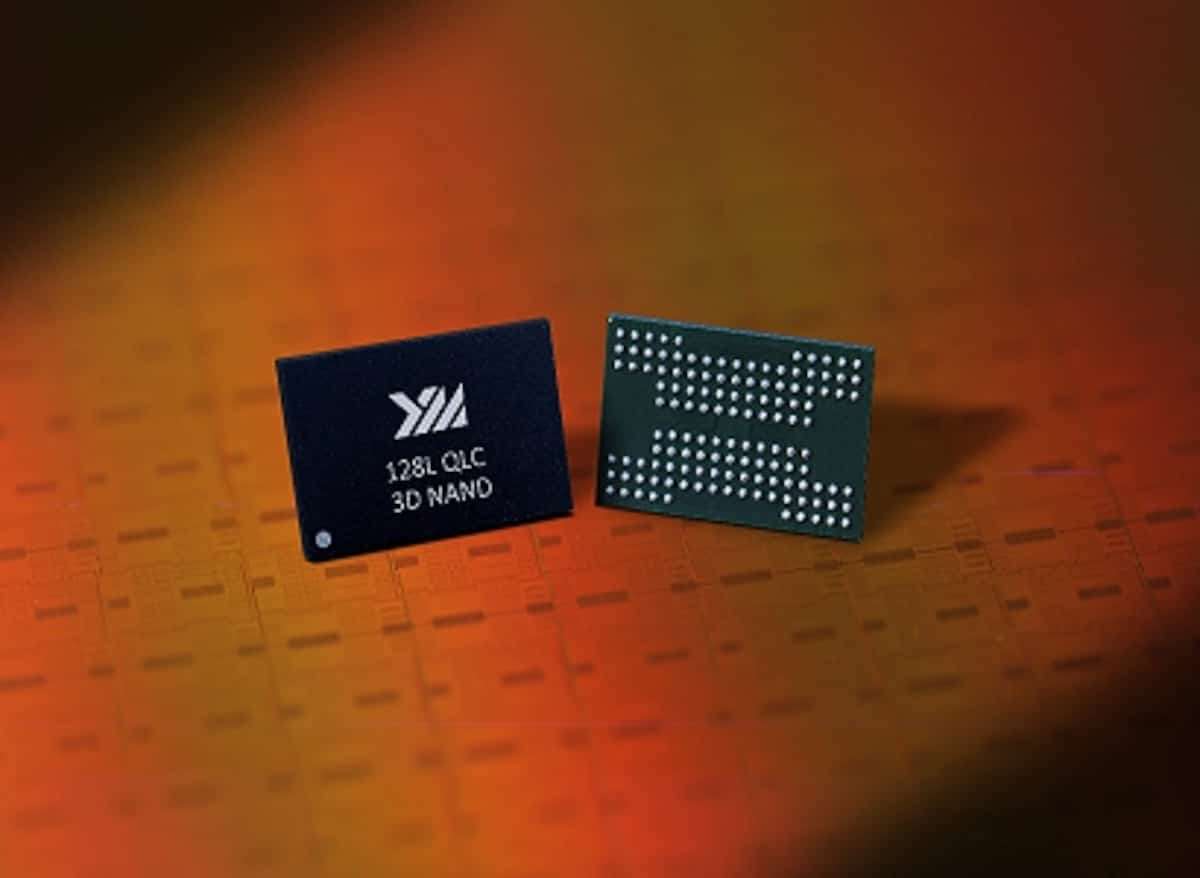
Yangtze Memory Technologies (YMTC), China’s largest NAND flash memory maker, wants up to 70% of the manufacturing equipment at its next plant to come from domestic suppliers. The company is preparing to build a fourth fab in Wuhan, where it plans to produce NAND memory with more than 300 vertically stacked layers, aimed mainly at data centers and AI systems. The move is meant to cut its reliance on foreign technology at a time when U.S. export restrictions on chipmaking equipment are squeezing Chinese manufacturers.
YMTC and Chinese NAND manufacturing in 20 seconds
- YMTC wants at least 60% of the equipment at its fourth fab to be Chinese-made, with a ceiling target of 70%.
- The plant will be in Wuhan, and construction could start in 2027.
- It will produce NAND memory with more than 300 layers, aimed mainly at data centers and AI applications.
- YMTC’s third fab already sources slightly over 50% of its equipment domestically.
- The company still depends on foreign suppliers for advanced processes such as lithography and inspection.
The information comes from a Reuters investigation published on November 6, 2026, citing two people familiar with the company’s plans. Talks with equipment makers are still at a preliminary stage, and YMTC has not yet placed formal orders for the new facility. The 70% figure is therefore a sourcing target, not a figure for equipment already under contract.
The decision reflects how far China wants to go in replacing foreign machinery for advanced memory manufacturing. YMTC already uses domestic equipment at various stages of production, but raising that share at a fab dedicated to NAND with more than 300 layers will require its local suppliers to also keep pace with increasingly demanding processes.
A Fourth Fab to Produce NAND With More Than 300 Layers
The new facility, called Fab 4, will be located in Wuhan, in China’s Hubei province, where YMTC is headquartered. Construction is planned for 2027, and the fab will be geared toward producing NAND memory with more than 300 vertically stacked cell layers.
NAND flash is a type of non-volatile storage that retains data even when power is disconnected. It is used in SSDs, smartphones, computers, and data center storage systems.
NAND manufacturing is based on stacking large numbers of memory cell layers. As the layer count rises, manufacturers can increase storage density and fit more data onto a chip of similar size. That matters especially for data centers, where capacity needs grow alongside the volume of data that AI applications must store and process.
YMTC’s push past 300 layers places the new fab in an advanced generation of NAND memory. However, the announcement includes no specifications on the chips’ final density, speeds, per-unit capacity, or the timeline for commercial production.
The fourth plant is also part of a broader industrial expansion. Reuters notes that YMTC’s third, fourth, and fifth fabs are each designed to reach a processing capacity of roughly 100,000 wafers per month once fully operational. Together, those facilities would more than double the company’s manufacturing capacity.
NAURA and AMEC Could Gain Ground Against Foreign Equipment Makers
The goal of using up to 70% Chinese equipment marks an increase in domestic sourcing compared with YMTC’s third fab, which is expected to begin operating in late 2026. At that facility, local suppliers already account for slightly more than half of equipment purchases.
Companies that could benefit from the new investment include NAURA Technology Group and Advanced Micro-Fabrication Equipment (AMEC). Both are involved in developing machinery for different stages of chip manufacturing.
The most immediate opportunities lie in processes such as wafer cleaning, polishing, and etching. In these stages, Chinese suppliers already have equipment in use on YMTC’s production lines, which could make expanding their presence at the fourth fab more feasible than replacing all foreign machinery at once.
Etching is especially important in stacked NAND manufacturing. The process creates structures and patterns in the materials deposited on wafers, including the vertical channels needed to build memory chips with hundreds of layers. As these structures grow taller, the precision and process control required also increase.
But the substitution still has limits. YMTC continues to depend on foreign suppliers for certain high-precision equipment, including lithography and inspection systems — the same bottleneck that has reportedly pushed YMTC and fellow Chinese memory maker CXMT to stockpile ASML lithography machines to cover years of planned expansion. These technologies are involved in sensitive manufacturing stages and cannot automatically be replaced by domestic machinery just by raising the overall share of purchases from Chinese companies.
That is why reaching 60% or 70% domestic equipment does not mean the fab could run entirely independent of foreign technology. How well local suppliers can meet the needs of each process will keep shaping the real degree of industrial self-sufficiency.
U.S. Sanctions and Financing Complicate the Expansion
YMTC’s strategy is directly tied to U.S. trade restrictions. The U.S. Department of Commerce added the company to its Entity List in December 2022. Since then, certain exports of U.S. technology and equipment to YMTC have required government authorization.
These limits have made it harder for Chinese manufacturers to access advanced machinery and have accelerated efforts to develop domestic suppliers. They also affect other Asian companies with facilities in China, such as Samsung Electronics and SK hynix, which face restrictions on bringing in certain equipment and upgrading their manufacturing processes in the country.
According to information gathered by Reuters, Samsung is converting its Xi’an fab to produce 286-layer NAND, while SK hynix is working to raise the technology at its Dalian plant from the current 192 layers to 240 or more. These figures illustrate the technological pressure among memory makers with facilities on Chinese soil, a gap that South Korea’s own industry association has warned is narrowing fast, now estimated at roughly a year in NAND and two in DRAM.
YMTC is also gaining ground in its home market. Data from research firm Omdia put its share of China’s NAND market at 38.5% in the second quarter of 2026, up from 28% a year earlier. During that period, it overtook Samsung Electronics to take the top spot in China, part of a broader push that also has YMTC looking to challenge Samsung in high-end enterprise SSDs for AI data centers.
However, the capacity expansion faces another obstacle: the money needed to build and equip the new fabs. Reuters reported on November 4 that Changjiang Memory Holdings (CCSH), YMTC’s parent company, had paused its process to go public in Shanghai.
The listing had been set to raise 33 billion yuan, roughly €6.6 billion based on the exchange rate reported by ChosunBiz. The company had applied to join Shanghai’s STAR Market in August and had planned to allocate shares to strategic investors between late October and early November. That timeline appears to have slipped.
The suspension adds uncertainty to one of the possible financing routes for the expansion. It does not mean YMTC has canceled the fourth fab, but it does raise questions about how it will fund the new facilities and the equipment purchases.
The project combines two industrial goals: increasing production of advanced NAND memory and reducing reliance on foreign suppliers. YMTC’s ability to deliver on both will depend on how its domestic equipment makers evolve and on whether financing is available to complete the new plants.
Frequently Asked Questions
What percentage of Chinese equipment does YMTC want to use?
The company is aiming for at least 60% of the equipment at its fourth fab to come from domestic suppliers, with a ceiling target of 70%. The figure is not yet backed by formal orders.
Where will YMTC build its fourth fab?
The new plant, called Fab 4, will be in Wuhan, in China’s Hubei province. Construction is planned for 2027.
What type of memory will YMTC’s new plant produce?
It will produce NAND memory with more than 300 vertically stacked cell layers, aimed mainly at data centers and AI applications.
Which Chinese companies could benefit from this project?
NAURA Technology Group and AMEC are among the likely beneficiaries of increased domestic equipment purchases. Their opportunities are concentrated mainly in wafer cleaning, polishing, and etching.
This article is also available in Spanish: «YMTC quiere fabricar sus chips NAND de más de 300 capas con hasta un 70 % de equipos chinos», on revistacloud.com.
