
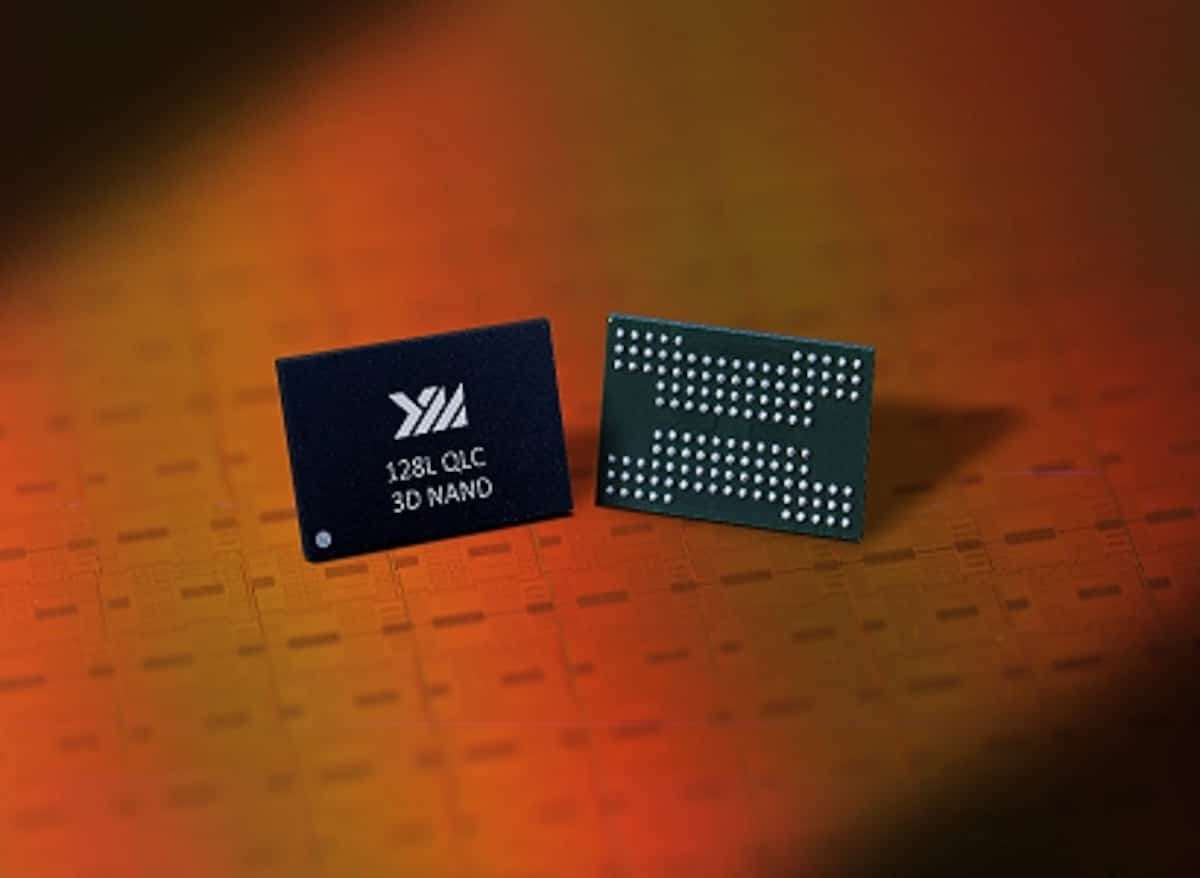
Yangtze Memory Technologies (YMTC), China’s leading NAND flash memory maker, wants to gain ground in high-end enterprise SSDs, a market increasingly tied to the growth of AI data centers. The company has expanded its presence in the global flash memory business and now faces the challenge of turning that growth into sales of server storage drives, a segment where Samsung holds a leading position.
YMTC and enterprise SSDs in 30 seconds
- YMTC is shifting part of its strategy toward enterprise SSDs, known as eSSDs, used in servers and data centers.
- AI-driven demand is increasing the weight of these drives in the NAND memory market.
- Counterpoint Research ranks YMTC third worldwide by NAND bit shipments in the second quarter of 2026, with a 14% share.
- Samsung led that period with a 25% share of shipments, followed by SK hynix with 22%.
- YMTC’s challenge is to win enterprise customers and grow revenue from higher-value products, on top of continuing to expand its technological capacity.
The shift in focus responds to a change in demand. Data centers increasingly need storage to hold datasets, indexes, intermediate results, and other content used by AI systems. In particular, the growth of inference, the phase in which models generate responses, is increasing the need for fast access to large volumes of information.
For YMTC, the growth of this market is an opportunity to move beyond a position focused mainly on consumer storage. However, manufacturing NAND memory at scale isn’t enough to compete in the enterprise segment: companies also need to develop reliable drives, offer suitable controllers, pass customer qualification testing, and guarantee supply over long periods.
Enterprise SSDs Gain Weight as AI Expands
Enterprise SSDs, or eSSDs, differ from drives built for personal computers in the capacity, performance, endurance, and continuous-operation requirements they must meet in servers. In data centers, these devices are part of infrastructure that manages large amounts of information and must handle sustained workloads.
According to Counterpoint Research, eSSDs accounted for 48% of NAND bits shipped worldwide in the second quarter of 2026, up from 26% in the same period a year earlier. The firm links the growth to the expansion of AI inference workloads and data centers’ storage needs.
The trend is also changing manufacturers’ priorities. High-capacity, higher-spec enterprise products can generate more revenue per unit of memory than consumer solutions, though the outcome depends on each supplier’s configuration, pricing, and product mix.
Samsung benefits from its experience in memory and its catalog of data center SSDs. Counterpoint Research credited it with 25% of NAND bits shipped in the second quarter of 2026. SK hynix came in second, with 22%, while YMTC reached 14% and overtook Kioxia in shipment volume.
These figures measure the amount of NAND memory shipped, not revenue, profit, or share of the enterprise SSD market specifically. The distinction matters: YMTC can gain volume share without reaching the same financial position as manufacturers with a stronger presence in high-end products.
From Winning NAND Share to Selling Higher-Value Storage
YMTC’s opportunity lies in expanding its presence in the server market. An analysis by Counterpoint Research published in October estimates that the company’s revenue from its enterprise business could approach 39% of its total revenue by 2028, up from a near-zero contribution in 2024. That’s a projection, not an achieved result, and it will depend on the company growing its customer base and sales.
Manufacturing technology is part of that strategy. YMTC uses its Xtacking architecture, which allows memory structures and peripheral circuits to be built separately and then bonded together. The company has advanced in many-layer 3D NAND and, according to Counterpoint, is producing 267-layer chips while developing technologies that exceed 300 layers.
Adding layers can help raise storage density, but it doesn’t by itself guarantee a commercial edge in enterprise SSDs. Selling these drives also requires controllers, firmware, compatibility validation, sustained reliability, and technical support for server makers and data center operators.
YMTC’s situation adds another difficulty. The company has been on the United States’ Entity List since December 2022, which limits its access to certain U.S. equipment and technology. The restrictions also complicate its expansion toward some international customers. As a result, gaining ground in China doesn’t guarantee it can carry over the same growth to major cloud providers in other markets.
The move toward eSSDs can help YMTC improve its product mix and raise the value of its sales, but the gap with Samsung isn’t measured in manufacturing capacity alone. The competition will depend on YMTC placing its drives on enterprise platforms, passing qualification processes, and meeting the supply demands of customers who can’t afford disruptions. For more on how Chinese memory makers are positioning against Samsung, see our coverage of YMTC’s goal to lead the global NAND market by 2027.
Frequently Asked Questions
What is an enterprise SSD, or eSSD?
It’s a solid-state storage drive designed for servers and data centers. It typically has to meet demanding requirements for capacity, performance, endurance, and continuous operation.
What global NAND share does YMTC have?
Counterpoint Research credited YMTC with 14% of NAND bits shipped during the second quarter of 2026. In that period, Samsung posted 25% and SK hynix 22%.
Why is demand for enterprise SSDs growing?
The expansion of data centers and AI workloads is increasing the need to store and access large volumes of information. Counterpoint calculated that eSSDs accounted for 48% of NAND bits shipped in the second quarter of 2026.
Can YMTC overtake Samsung in the enterprise market?
There’s no data yet to say it will. The company has gained NAND volume share, but it needs to grow its eSSD sales and clear technological, commercial, and regulatory hurdles to compete with established suppliers.
