
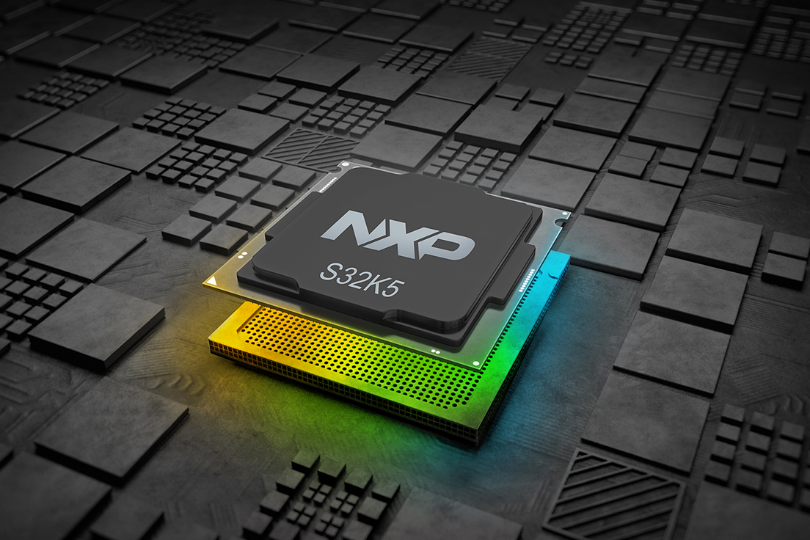
Volkswagen Group has chosen NXP Semiconductors as a strategic technology partner and will use the Dutch manufacturer’s S32K5 family of microcontrollers as the common building block for the zonal architecture of its future software-defined vehicles, across all its brands and segments. Both companies announced the agreement on October 26, 2026 in Wolfsburg, Germany, ahead of the International Suppliers Fair (IZB), and expect the first vehicle with the new architecture to arrive in 2027.
The keys to the Volkswagen-NXP agreement in 30 seconds
- Volkswagen Group will use NXP’s S32K5 microcontrollers in the zonal controllers of its future cars.
- The architecture is being developed by RV Tech, the joint venture between Volkswagen and Rivian, and will serve both automakers.
- The goal is to reduce the number of control units and unify technology across brands.
- The first vehicle with this architecture is expected in 2027.
- Neither company has disclosed the contract’s duration or value.
The agreement fits the shift the industry is undergoing toward the software-defined vehicle, where a car’s functions increasingly depend on code and less on dozens of independent control units. In a zonal architecture, the vehicle is divided into physical areas, each with a controller that groups nearby sensors and actuators, while one or more central processors handle automated driving and the infotainment system.
What the S32K5 Will Do Inside the Car
According to the joint statement, the S32K5 chips will be the main processors of the zonal controllers. They’ll handle connecting sensors and actuators, processing data from each zone of the vehicle, and managing lighting, body, comfort, chassis, and safety functions. Volkswagen and NXP say these chips make it possible to combine into a single component functions that previously required separate parts and control units, which reduces hardware complexity and makes it easier to deploy the same base across different models.
Lars Reger, NXP’s chief technology officer, says in the statement that the S32K5 is designed for safe real-time computing and for fast, secure over-the-air (OTA) updates, and calls its adoption in RV Tech’s architecture a milestone. AI-based functions, such as automated driving or advanced entertainment, are left to the high-performance processors of the central compute unit, which the announcement doesn’t detail.
Rivian, at the Center of the Strategy
Volkswagen isn’t designing the zonal architecture alone. It’s being developed by Rivian and Volkswagen Group Technologies (RV Tech), the joint venture the two automakers created to share the electronics and software base of their vehicles. According to the statement, the architecture will be used in cars from both companies, and each can add its own brand-specific functions. Rafael Sotomayor, NXP’s president and CEO, explains that they’re working with Volkswagen and with RV Tech to build a scalable foundation for the next generation of smart vehicles.
On Volkswagen’s side, Werner Tietz, the group’s head of research and development, argues that unifying key technologies across the group reduces complexity, leverages scale, and speeds up innovation, so digital improvements reach customers sooner and cars can be updated throughout their service life. The agreement is part of the automaker’s Group Target Picture 2030 plan.
Chips as a Strategic Matter
Volkswagen frames the alliance within a broader strategy of direct, long-term relationships with semiconductor manufacturers. Karsten Schnake, the group’s head of purchasing, says semiconductors are a strategic technology for the automotive industry and that the company wants to play a more active role in that value chain by defining its technical needs earlier. Stated goals include strengthening supply resilience and harmonizing technologies across brands and regions.
The context helps explain it. Europe’s auto industry went through a fresh supply scare in the fall of 2025 over the Nexperia crisis, the Netherlands-based, Chinese-owned chipmaker, which forced several automakers to watch their stock of basic components closely. The Volkswagen-NXP statement doesn’t mention that episode, but the push for direct agreements with key suppliers points in the same direction. NXP, for its part, has been building up its production capacity: Cloud News reported how NXP and VIS opened a new 300mm chip fab in Singapore and how it expanded its Malaysia plant to prevent another chip bottleneck.
What the announcement doesn’t clarify is the chip volume, the contract’s duration, or its financial value, nor which model will debut the architecture in 2027. Those details will determine the real scope of a deal that, for now, is presented as a long-term technology choice.
Frequently Asked Questions
What have Volkswagen and NXP agreed to?
Volkswagen Group will use NXP’s S32K5 microcontrollers as the common building block for the zonal controllers of its future software-defined vehicles, across all its brands.
What role does Rivian play?
The zonal architecture is being developed by RV Tech, the joint venture between Volkswagen Group and Rivian, and will be used in vehicles from both automakers.
When will the first car with this architecture arrive?
Volkswagen and NXP expect it in 2027, though they haven’t said which model it will be.
How much is the deal worth?
That hasn’t been disclosed. The statement doesn’t detail the value, the chip volume, or the contract’s duration.
Sources:
