
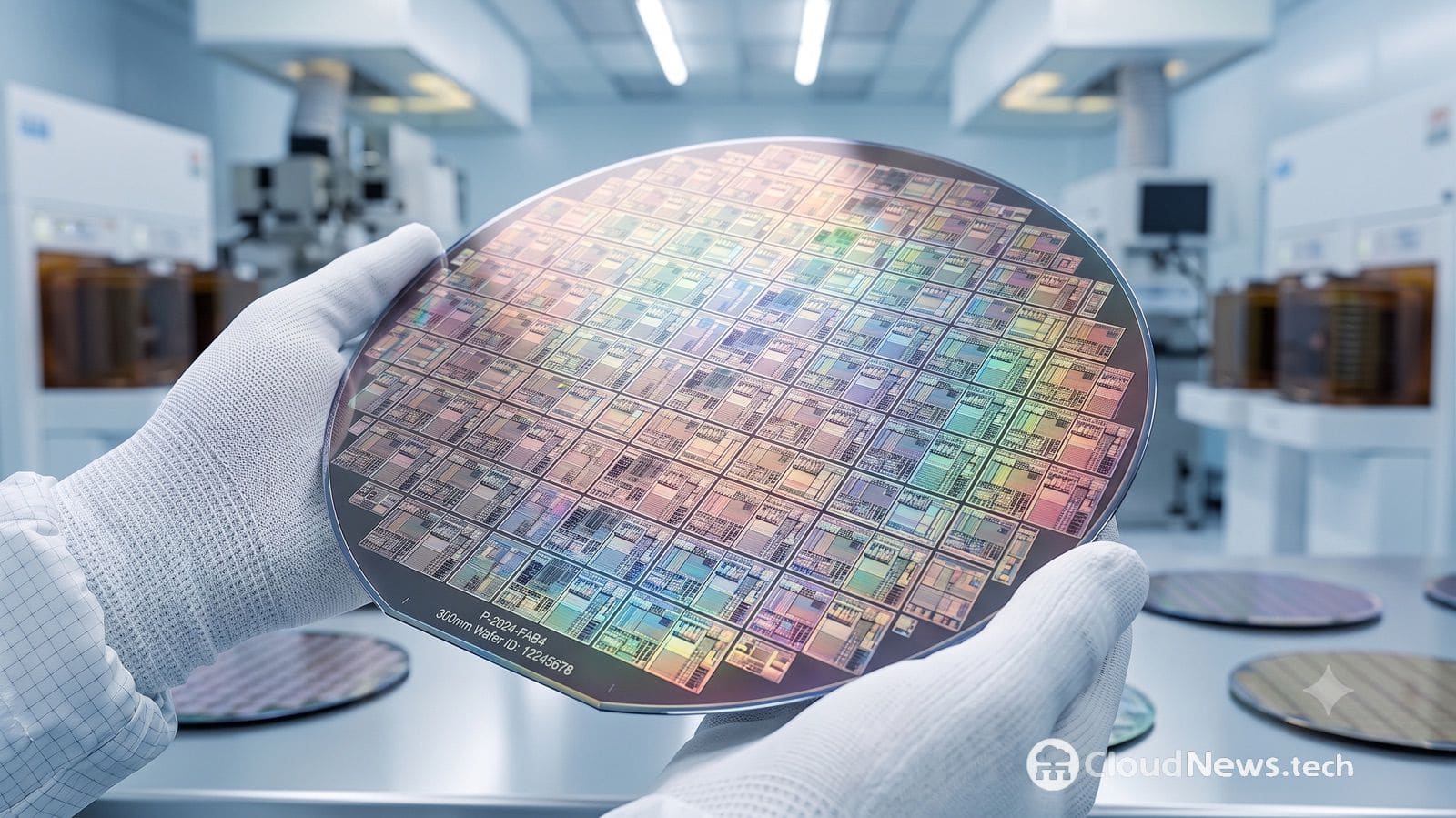
The expansion of AI data centers is starting to push demand pressure toward a less visible part of the semiconductor chain: 12-inch silicon wafers. Forecasts reported by Taiwanese outlet Commercial Times point to new long-term contract negotiations for 2027 with increases of 15% to 25% for epitaxial wafers and more than 40% for polished wafers. For some second-tier customers, the increase could exceed 50%.
The trend echoes what’s already happening elsewhere in Taiwan’s supply chain, where AI demand has been straining chip factories and pushing prices higher throughout 2026.
Silicon wafers in 20 seconds
- 2027 supply contracts for 12-inch wafers face new price increases.
- Epitaxial wafers could get 15% to 25% more expensive.
- Polished wafers could rise more than 40%, exceeding 50% for some customers.
- AI, memory, and advanced packaging demand are squeezing supply.
- Forecasts also point to further increases in 2028 negotiations.
This does not mean a GPU, a CPU, or a memory module will automatically become more expensive by the same percentage. The wafer is one of the materials involved before chip manufacturing, and its cost represents only part of the final structure. The most direct effect falls on the costs and supply conditions of semiconductor fabs.
The move is significant because it comes after several years in which wafer makers have had to absorb energy, raw material, construction, and capacity-expansion costs. In addition, many supply contracts signed during the previous stage of the cycle are now reaching their renewal periods.
AI is pushing the pressure back to the start of the chain
The silicon wafer market is already showing signs of recovery. SEMI reported in July that global silicon wafer shipments rose 7.4% year over year in the second quarter of 2026, to 3,573 million square inches. The organization attributed part of that growth to AI-related demand, which now extends from advanced logic and memory to other components tied to this infrastructure.
Forecasts for 2027 now point to additional pressure. The analysis reported by Commercial Times estimates that advanced CoWoS packaging capacity could grow 70.9% next year, while shipments of GPUs and AI-specific application-specific integrated circuits, known as ASICs, would rise 44.9%. A 36% increase is also expected in combined CPU shipments from Intel, AMD, and NVIDIA.
These are market estimates, not targets announced by those companies. Their relevance to wafers lies in the fact that more processor manufacturing means more 12-inch wafers at the early stages and more materials for advanced packaging. Other estimates from Morgan Stanley also point to strong growth in global CoWoS demand during 2027.
Memory adds a second source of pressure. TrendForce forecasts that DRAM bit supply growth in 2027 will stay below demand growth, as manufacturers devote a growing share of their capacity to high-bandwidth memory, or HBM, used in AI systems.
This creates a particular situation. Fabs need to increase production of both logic and memory chips at the same time that the packaging capacity needed to combine processors and memory in high-performance systems is also growing.
Epitaxial and polished wafers aren’t starting from the same place
The forecasts don’t point to a uniform increase across all wafers.
Polished wafers are the silicon substrate prepared for later manufacturing processes. Epitaxial wafers add a layer of monocrystalline silicon with controlled characteristics on top of that substrate for specific manufacturing processes.
According to the estimates reported by Commercial Times, new epitaxial wafer contracts for 2027 could see increases of 15% to 25%, while polished wafers would face increases of more than 40%. The difference would depend on the product, the customer, and the contract terms.
That’s also why there is no single “wafer price” that applies across the whole industry. Manufacturers negotiate different terms depending on diameter, specifications, volumes, agreement length, and customer profile.
Long-term contracts are gaining importance again
One of the central pieces of this forecast is the renewed pressure on long-term supply agreements, known as LTAs.
The spot market for 12-inch wafers is already trending upward. If spot market prices exceed the values of certain existing contracts during the fourth quarter of 2026, suppliers would have an additional reference point for negotiating 2027 renewals.
The result could be a very different renegotiation depending on the customer. Large buyers with long-term, higher-volume contracts may get different terms than secondary customers, who, according to the forecasts cited, could face increases of more than 50% on certain products.
The market is already paying closer attention to this balance between capacity and prices. Commercial Times estimates that GlobalWafers’ average selling price for 12-inch wafers could rise from about $92 in 2026 to $122 in 2027 and $166 in 2028. This is an analyst forecast about this specific company, not a general price for all wafers on the market.
Expected volumes would also grow. The cited estimate puts GlobalWafers’ shipments at 11,907 thousand wafers per quarter during 2026, versus 16,174 thousand in 2027 and 21,237 thousand in 2028.
This helps explain why the market can combine higher volumes with higher prices. Growing demand doesn’t guarantee that new capacity will arrive at the same pace, especially when building new industrial capacity requires significant investment and long lead times.
2028 is already part of the negotiations
The pressure wouldn’t necessarily end with 2027 contracts either. The forecasts cited by Commercial Times anticipate further increases in negotiations for 2028 if supply growth continues to lag behind demand.
Whether a new round of increases materializes will depend on how memory production, AI chips, advanced packaging, and wafer makers’ actual capacity evolve. How much of the projected demand ultimately materializes will also be decisive.
For now, the available data describes a market where a recovery in shipments coincides with growing AI-related demand. SEMI already detected year-over-year growth in global wafer shipments during the second quarter of 2026, while forecasts for 2027 point to even larger expansion across several of the segments that consume silicon.
For chip and memory makers, the most immediate impact wouldn’t necessarily be an equivalent price increase for every processor or GPU, but rather greater pressure on manufacturing costs and on the contracts that secure future capacity. How much of that pressure reaches finished hardware will depend on each supply chain and how prices evolve at the following stages.
AI is increasing demand for GPUs, CPUs, ASICs, HBM, and advanced packaging. That expansion is now starting to show up as well in a raw material much further back in the chain, but one that’s necessary to manufacture a large share of those components.
Frequently Asked Questions
How much could silicon wafers rise in price in 2027?
The cited forecasts point to increases of 15% to 25% for epitaxial wafers and more than 40% for polished wafers. Some second-tier customers could see increases of more than 50%.
Why are wafer prices rising?
The pressure mainly comes from the expected increase in AI and memory chip production, along with the expansion of advanced packaging and the renewal of long-term supply contracts.
Does a 40% wafer price increase mean GPUs will cost 40% more?
No. The wafer is just one component of a semiconductor’s manufacturing cost. The final price of a GPU, CPU, or memory chip also depends on fabrication, wafer yield, packaging, testing, additional components, logistics, and margins.
Could wafer prices rise again in 2028?
The forecasts reported by Commercial Times anticipate further increases in 2028 contracts if supply growth continues to lag behind demand.
via: ctee.com.tw
