
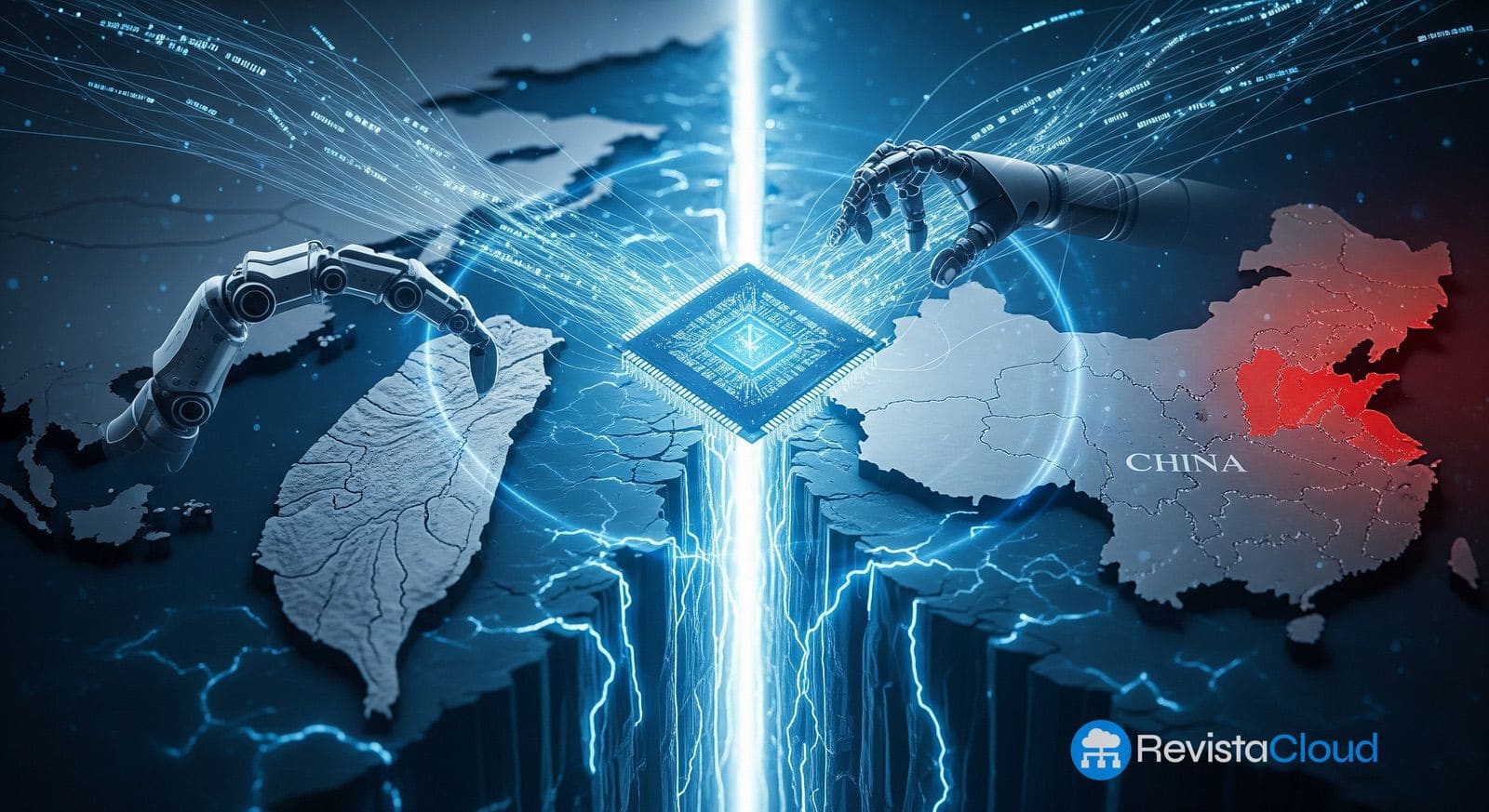
Demand for AI infrastructure is spreading the pressure from GPUs and HBM memory to a much wider part of the semiconductor industry. Taiwanese foundries head into the second half of 2026 with tighter capacity and fresh price hikes, both in advanced processes and in some mature technologies used for power management, interconnects, photonics, and other components essential to AI servers.
AI pressure on Taiwan’s factories in 20 seconds
- AI is taking up more capacity in both advanced processes and mature nodes.
- Average utilization of global 8-inch fabs could reach 90% in the second half of 2026.
- Prices for these processes have already risen between 5% and 15%.
- TSMC is tightening its 3 nm nodes in particular.
- TrendForce expects the pressure on capacity and prices to continue through 2027.
This helps explain why the current AI investment cycle reaches much further than the attention on NVIDIA and large accelerators suggests. Building an AI server takes many more semiconductors: power management circuits, controllers, network components, interposers, optical devices, and specialized chips.
A lot of those are still made on mature technologies.
And that’s where a second bottleneck shows up.
TrendForce estimates that average utilization of 8-inch fabs among the ten largest foundries will hit around 90% in the second half of 2026, against the 88% average forecast for the full year.
The rising demand also runs into a structural cut in some older lines. TSMC and Samsung have been shifting investment away from mature nodes toward advanced processes and advanced packaging, exactly where AI customers will pay a premium.
The result is a paradox: even as billions go into new factories, some kinds of available capacity are shrinking at the same time.
From 3 nm to power chips: AI needs many more wafers
The clearest pressure is still in advanced processes.
TSMC remains the world’s leading contract manufacturer and one of the biggest winners from AI spending. In Q2 2026, it booked $40.2 billion in revenue, and it expects between $44.6 billion and $45.8 billion for Q3.
The demand comes from GPUs, the accelerators big cloud providers design in-house, and other advanced circuits.
Counterpoint Research estimates the expanded global foundry market grew 23% year over year in Q1 2026, reaching $86 billion, driven mainly by GPU and AI ASICs. TSMC’s revenue rose 41% year over year in that period.
But even extraordinary demand can’t make capacity grow fast.
TSMC President and CEO C.C. Wei reminded people earlier this year that building a new fab takes two to three years. Even a sharp jump in investment does little for wafers produced in 2026 and only starts to help partway through 2027.
That gap between how fast AI demand climbs and how long factories take to build keeps supply tight.
Supply chain estimates from June put TSMC’s monthly capacity for 3 nm wafers at 160,000 to 175,000 in Q2, not enough to fully meet demand. Some industry sources then pointed to possible price increases of up to 15% in the second half of the year.
Counterpoint sees something similar: its data points to a cumulative rise of roughly 8% to 15% for TSMC’s N3 process during 2026, with N3 and N2 unlikely to ease much in the short term.
But the pressure no longer stops at the newest nodes.
8-inch fabs are back at the center of the market
One of the less visible effects of AI’s growth is showing up in facilities that use 8-inch (200 mm) wafers.
These fabs don’t make the most advanced GPUs, but they stay critical for many analog and power components.
AI servers need large numbers of power management integrated circuits (PMICs) and discrete power devices. As rack energy density climbs, so does the electronics required to distribute, convert, and control that power.
TrendForce notes this demand jump coincides with 8-inch wafer production cuts by major manufacturers like TSMC and Samsung.
Foundry prices on these lines rose between 5% and 15% from Q1 to Q2 2026, depending on the manufacturer and process. The sector is also lining up a third round of adjustments that could start in the second half of the year and run into 2027.
That tension hits specialized Taiwanese foundries directly.
Vanguard International Semiconductor, for one, has acknowledged that AI-related demand is outgrowing available capacity.
Its president, Fang Leuh, sees this as structural growth and expects shortages to be especially clear in 2027. The company plans to invest between 60,000 and 70,000 million Taiwanese dollars, about $1.85 to $2.16 billion, mostly in its new 12-inch factory in Singapore.
Vanguard is also negotiating new prices with customers for 2027 and expects next year’s increases to be no smaller than 2026’s.
UMC, Vanguard, and PSMC feel the new demand too
The shift is gradually reaching nearly all the major Taiwanese foundries.
The latest TrendForce data show TSMC, UMC, Vanguard, and PSMC all raised revenue in Q2 2026, helped by a mix of strong demand and higher prices.
United Microelectronics Corporation (UMC) has also stepped up investment to expand capacity, especially in Singapore and Taiwan.
This matters because AI demand is reaching technologies once seen as peripheral to the big accelerators.
TrendForce points to rising demand for power devices at 55 nm or larger, silicon interposers at 65/55 nm, and FPGAs made on 40/28 nm processes. Silicon photonics, integrated capacitors, and components used in advanced packaging are taking up capacity too.
PSMC is another example of how production is being reshuffled.
Logical capacity on 12-inch lines is gradually falling because certain HBM-related processes are taking part of those resources. Per TrendForce, PSMC made an initial price hike in Q1 and was preparing another for Q3.
So the pressure isn’t only about companies needing to make more chips.
There’s also internal competition among the factories themselves.
Manufacturers are giving more space to high-demand, higher-margin AI components while trimming or holding down production of less profitable products.
Price pressure could reach well beyond GPUs
This shift touches almost the whole electronics industry.
When a foundry hands capacity to AI chips, that same line stops being available for other products. If old factories are phased out gradually, supply can tighten just as new needs appear.
So price pressure may end up hitting products that seem to have little to do with ChatGPT, large language models, or data centers.
Cars, industrial equipment, telecommunications, computers, consumer electronics, and energy systems all use many of the same mature processes.
The situation is also helping manufacturers outside Taiwan.
Samsung recently raised prices for some foundry services after its 4 nm capacity in Pyeongtaek reached high utilization. At the same time, trouble getting capacity at TSMC is pushing some customers to look at alternatives.
So the competition isn’t necessarily heading toward a price war. With several lines near full capacity, manufacturers have more room to pass costs and investments on to customers.
And the problem doesn’t look confined to 2026.
TrendForce expects prices for mature nodes to keep trending up through 2027, and Counterpoint doesn’t see much relief in the N3 and N2 advanced processes either.
The industry is answering with new factories, expansions, and more investment. But there’s an unavoidable lag between deciding to build a production line and getting the first commercial wafers.
While that new supply is being built, Taiwan will keep a critical share of global capacity, and a big part of the strain from AI’s growth.
The AI bottleneck can no longer be measured in GPUs alone. It’s increasingly measured in wafers, production lines, and the years it takes to build new factories.
Frequently Asked Questions
Why is AI driving up chip manufacturing costs?
AI servers need advanced GPUs or ASICs, but also many power, communications, interconnect, and control chips. That extra demand is taking up capacity across both advanced nodes and certain mature factories.
How much have 8-inch fab prices risen?
TrendForce estimates average increases of 5% to 15% from Q1 to Q2 2026, with more hikes planned for the second half of the year and into 2027.
Is TSMC struggling to meet demand?
Demand for advanced processes stays very high. Market estimates say 3 nm capacity is still tight despite expansion, as TSMC keeps raising investment and building new facilities.
When might supply improve?
There’s no set date; it depends on the process. Analyses from TrendForce and Counterpoint suggest some constraints and price pressure will last through 2027, especially in areas directly tied to AI infrastructure.
