
India and the Netherlands have opened talks to deepen cooperation on semiconductors, green hydrogen, critical minerals, the clean-energy transition, and advanced manufacturing. India’s Minister of Commerce and Industry, Piyush Goyal, met with the Netherlands’ Minister for Economic Affairs and Climate Policy, Heleen Herbert, during his official visit to the Netherlands from October 24 to 27, 2026, according to the news agency ANI.
India and the Netherlands on chips and energy in 20 seconds
- Goyal and Herbert discussed semiconductors, green hydrogen, critical minerals, and clean energy.
- They want to use the India-EU free trade agreement to strengthen supply chains.
- No new agreement was announced during this visit.
- The basis remains the strategic partnership the two countries signed in May 2026.
Goyal himself summed up the meeting on X as a productive one in which both sides explored deeper cooperation in those areas and ways to leverage the trade treaty with the European Union to expand exchanges. The reports published don’t mention any signed agreements or investment figures: for now, this is a round of talks within a trip that also includes meetings with Dutch business leaders on technology, manufacturing, clean energy, and trade connectivity.
A Relationship That Already Had Its Signing Moment in May
Goyal’s visit comes five months after a bigger political leap. During Prime Minister Narendra Modi’s trip to the Netherlands on May 16 and 17, 2026, the two governments elevated their relationship to a strategic partnership and adopted a joint plan for 2026-2030 covering trade, investment, defense, semiconductors, artificial intelligence, quantum computing, space, and maritime cooperation. According to India Briefing and IBEF, that visit produced 17 outcomes.
Among them was a memorandum between Tata Electronics and ASML to support the semiconductor plant the Indian group is building in Dholera (Gujarat), the country’s first front-end fab, a memorandum on critical minerals between India’s Ministry of Mines and the Dutch Ministry of Foreign Affairs, and a joint plan to develop green hydrogen, along with a working group on renewable energy. This week’s conversation revisits those fronts, but doesn’t detail concrete progress on any of them.
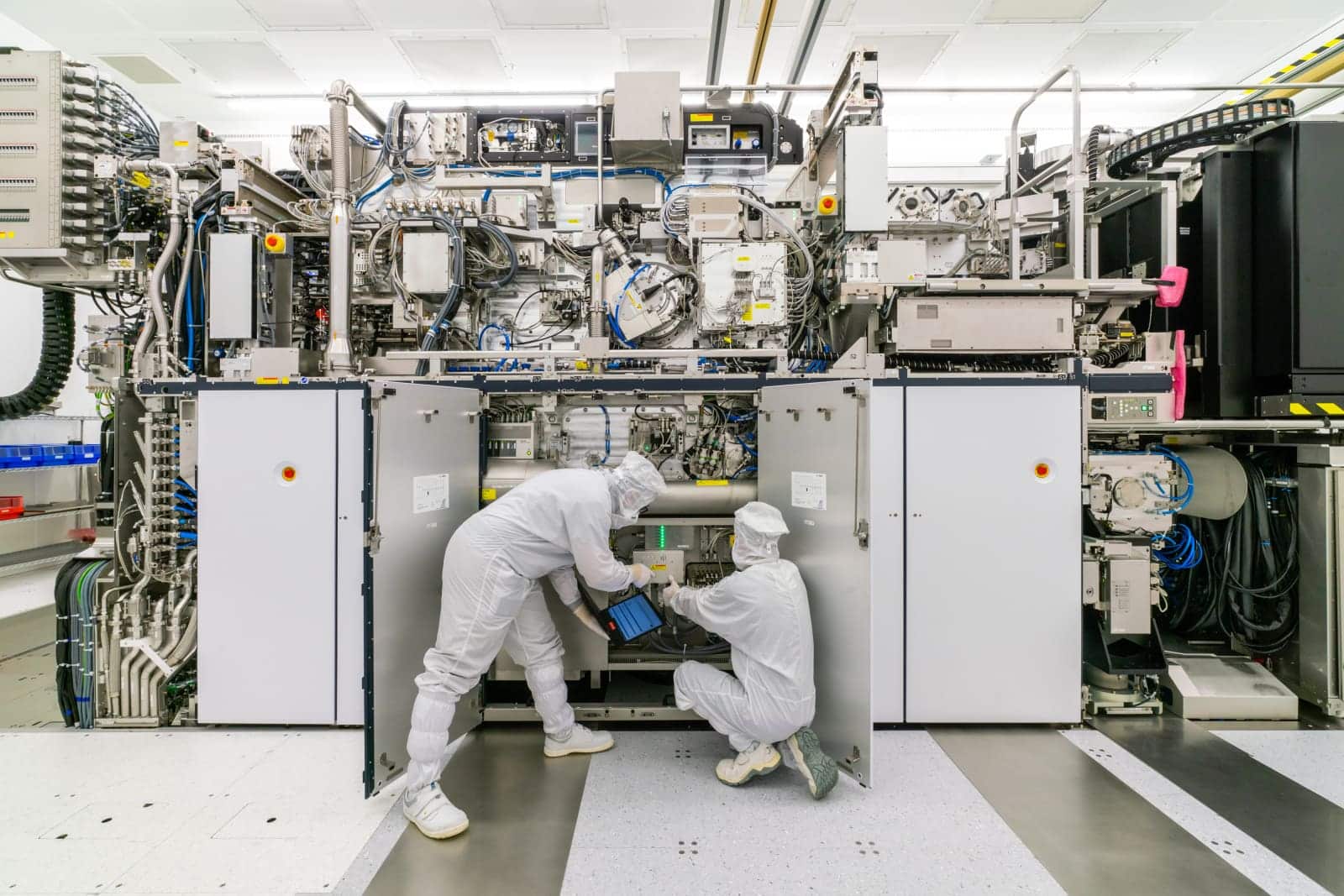
ASML’s role explains much of India’s interest. The Dutch company is the world’s only maker of EUV lithography machines, and its equipment shapes the plans of any country wanting to produce advanced chips. Cloud News has reported how India has expanded its tech ambitions beyond phones into chips, cloud, and AI, and how ASML is capping its orders for 2029 and 2030, two factors weighing on Dholera’s timeline.
Falling Trade and a Treaty Still Pending
The trade figures help explain the push to expand exchanges. According to data from India’s Department of Commerce cited by India Briefing, goods trade between the two countries totaled $23.287 billion in fiscal year 2025-26, down from $27.758 billion the previous fiscal year, a drop driven mainly by falling Indian exports, from $22.763 billion to $17.501 billion. Even so, the Netherlands was India’s second-largest trading partner within the EU, behind only Germany, and is its fourth-largest source of foreign direct investment, with $55.6 billion accumulated between April 2000 and December 2025, around 7% of the total.
The other piece is the free trade agreement between India and the European Union. Negotiations concluded in January 2026, and the European Commission sent the proposals for its signature and conclusion to the Council in September, but the treaty still needs the relevant approvals before it can take effect, with no known date. Goyal and Herbert discussed leveraging it once it arrives, which for now is more an intention than an available tool.
For Europe, the interest cuts both ways. India offers a market, skilled labor, and an alternative to China in electronics and energy supply chains, while the Netherlands brings semiconductor equipment technology, expertise in water and port infrastructure, and a developing hydrogen industry. What’s still missing, for now, is turning those conversations into contracts and timelines.
Frequently Asked Questions
What did India and the Netherlands agree in October 2026?
No new agreement was announced. Ministers Piyush Goyal and Heleen Herbert discussed cooperating on semiconductors, green hydrogen, critical minerals, and clean energy.
What is ASML’s connection to India?
In May 2026, Tata Electronics and ASML signed a memorandum to support the semiconductor plant Tata is building in Dholera, in the state of Gujarat.
How much do India and the Netherlands trade?
According to India’s Department of Commerce, $23.287 billion in fiscal year 2025-26, down from $27.758 billion the previous fiscal year.
Is the India-EU trade agreement in effect?
No. Negotiations concluded in January 2026, but the treaty still needs approvals before it can take effect.
Sources:
- Devdiscourse (ANI): India, Netherlands discuss deeper cooperation in semiconductors, critical minerals, clean energy
- All India Radio: Commerce Minister Piyush Goyal to visit Germany and the Netherlands
- India Briefing: India-Netherlands Strategic Partnership 2026-2030
- IBEF: India and Netherlands deepen strategic partnership with 17 agreements
