
ASML, the Dutch semiconductor lithography equipment maker, is starting to manage demand for its most advanced machines with production capacity that isn’t growing at the same pace as orders. The company has confirmed that customer interest already extends to 2029 and 2030, that planned supply for 2027 and 2028 will fall short of total demand, and that it’s exploring ways to expand production. It has also wrapped up new commercial price negotiations that will start showing up in 2027 results.
ASML and the EUV equipment shortage, in 20 seconds
- Some customers already want to reserve lithography equipment for 2029 and 2030, though that doesn’t mean all those orders are formally confirmed.
- ASML admits its planned capacity for 2027 and 2028 won’t cover all demand.
- The company is looking at expanding 2028 production beyond the previously announced 30% increase.
- New price negotiations will start partially affecting 2027 results.
- The pressure mainly comes from AI infrastructure expansion and demand for advanced chips.
The update follows third-quarter 2026 results, published on October 14. ASML posted net sales of €11.662 billion and net profit of roughly €5 billion. For full-year 2026, it raised its sales guidance to a range of €44–45 billion.
The financial figures matter, but the industrial message carries further: chipmakers are planning investments years in advance, and the supplier of the equipment needed to produce the most advanced semiconductors admits it won’t be able to meet all that demand under its current plans.
ASML Shifts From Taking Orders to Managing Limited Capacity
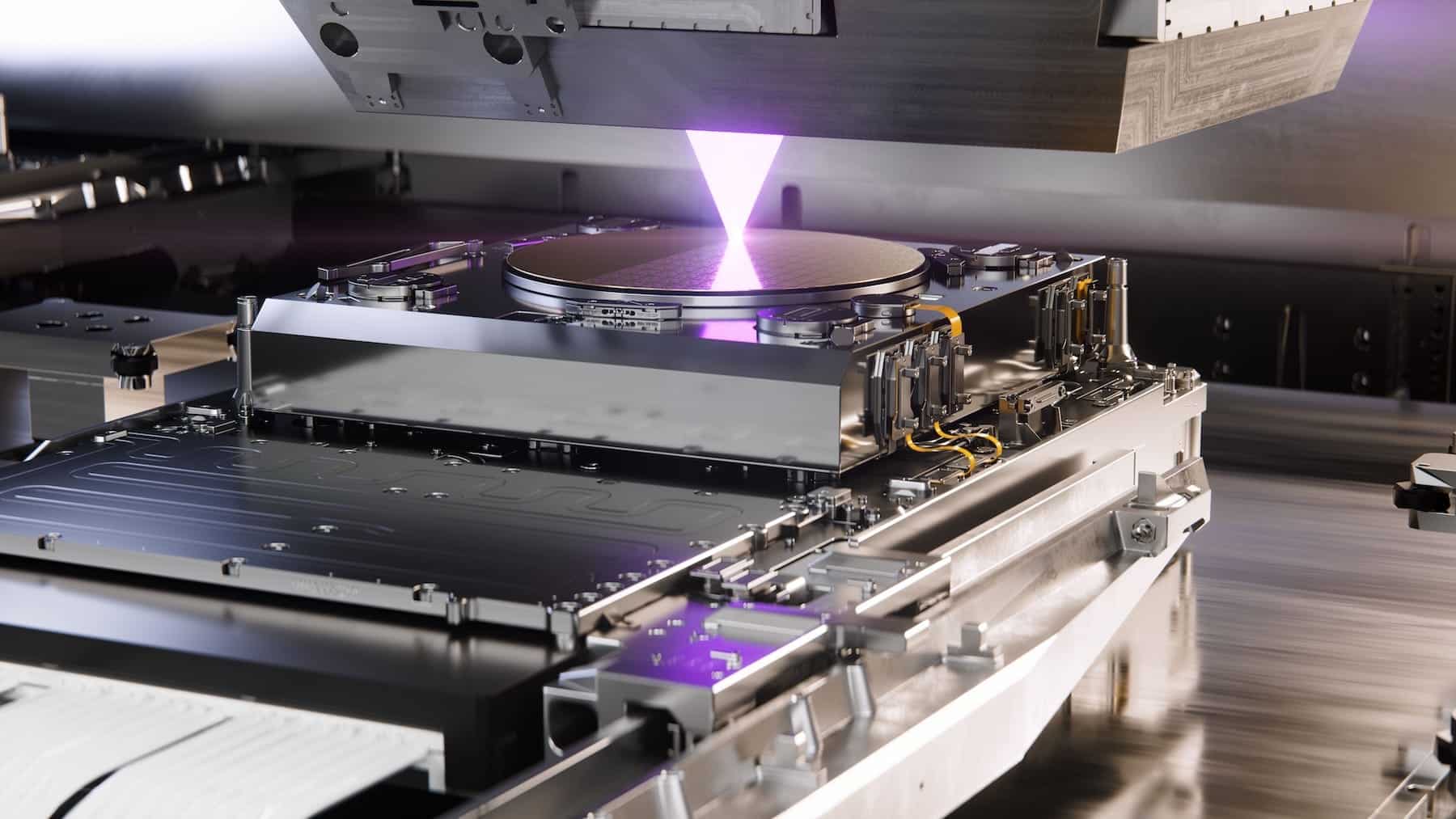
ASML is the sole supplier of extreme ultraviolet (EUV) lithography systems used to manufacture certain advanced chips. These machines project extremely small patterns onto silicon wafers and are an essential piece of the most sophisticated production processes.
Developing this equipment requires specialized technology, a complex supply chain, and manufacturing processes that are hard to scale up quickly. That’s why a sudden jump in demand doesn’t automatically translate into more available machines a few months later.
In its third-quarter results, the company said customers keep raising their short- and medium-term demand forecasts for equipment, driven mainly by their expectations about the scale and duration of AI-related investment. Some have already expressed interest in placing orders for 2029 and even 2030.
That nuance matters. ASML has confirmed interest in reserving equipment for those years, but it hasn’t said all those contacts have turned into firm orders. The headline about managing long-term orders reflects growing pressure on industrial capacity, but it shouldn’t be read as a general cancellation of reservations or a freeze on all future orders.
The more immediate constraint sits in the earlier years. The company expects planned supply for 2027 and 2028 won’t be enough to cover its customers’ needs. In the second quarter, it had announced plans to boost production capacity for certain low-numerical-aperture EUV lithography systems and deep ultraviolet (DUV) immersion equipment by around 30% in 2027, while also considering an additional 30% expansion in 2028.
The new outlook suggests that plan could fall short. ASML is evaluating how to raise 2028 capacity beyond the increase it had already announced, though it hasn’t yet specified the additional volume it will be able to manufacture or a final timeline.
AI Is Pushing Up Both Prices and Lead Times
ASML’s demand is tied to the capacity growth chipmakers need to serve data centers, AI accelerators, and other advanced processors. Companies like TSMC, Samsung, and Intel are among the sector’s key customers, and their investment decisions drive demand for lithography equipment.
The expansion isn’t limited to EUV systems. ASML has also pointed to strong demand for DUV equipment and for upgrades to machines already installed in fabs. These upgrades can boost the productivity of part of the existing infrastructure and provide additional capacity without relying solely on delivering brand-new systems.
That option can ease some bottlenecks, but it doesn’t fully replace the need to expand equipment manufacturing. The company is sticking with its expansion plans and studying new options, while its customers try to secure ahead of time the machinery they’ll need for their next chip generations.
The second change is commercial. ASML has wrapped up a new round of price negotiations and said part of their effect will show up in next year’s results — a move that follows an earlier 10% price hike on ASML spare parts accepted by Samsung and SK hynix. The company hasn’t published a flat, across-the-board increase that applies to every product or a single percentage for all machines, so it wouldn’t be accurate to describe the adjustment as an identical hike across its entire lineup.
Tight capacity can strengthen the manufacturer’s negotiating position, but it also raises the bar for its own organization: it has to expand production, coordinate suppliers, and meet commitments to customers who are planning investments spanning several years. Manufacturing these machines can’t scale up overnight, and an industrial expansion requires resources, specialized staff, and highly complex components.
Record Results and Sales Guidance of Up to €45 Billion
Third-quarter results give a sense of the business’s scale. ASML billed €11.662 billion, up from €9.326 billion the previous quarter, and posted a 57.5% gross margin. Net profit came in at around €5 billion.
For the fourth quarter, the company expects net sales of between €14.2 billion and €15.2 billion, with a gross margin near 57%. For all of 2026, it expects revenue of between €44 billion and €45 billion, with a gross margin of roughly 56%.
These figures reflect the business’s growth, but they don’t remove the uncertainty around available capacity in the coming years. The company itself acknowledges that its current plans for 2027 and 2028 won’t be enough to satisfy all the demand its customers expect. Expanding production will therefore be one of the variables to watch in upcoming results.
It’s also worth distinguishing between revenue growth and equipment availability. ASML can grow its sales through system deliveries, services, and productivity upgrades, but that doesn’t mean every customer can get machines exactly when they want them. The tension between supply and demand could extend beyond 2028, though how it plays out will depend on chipmakers’ investments and the capacity ASML manages to add.
Frequently Asked Questions
Why is there a shortage of ASML EUV machines?
Demand for equipment is rising because of investment in advanced chips and AI data centers. ASML says its planned capacity for 2027 and 2028 won’t be enough to meet all customer demand.
Does ASML already have confirmed orders for 2029 and 2030?
The company has confirmed that some customers have expressed interest in placing orders for those years. Its statement doesn’t say all those requests have turned into firm orders.
When will ASML’s machine prices go up?
ASML has said the effects of its new commercial negotiations will partially show up in 2027 results. It hasn’t announced a uniform percentage increase for all its equipment.
How much does ASML expect to earn in 2026?
The company’s guidance puts 2026 net sales between €44 billion and €45 billion. For the fourth quarter, it expects between €14.2 billion and €15.2 billion.
