
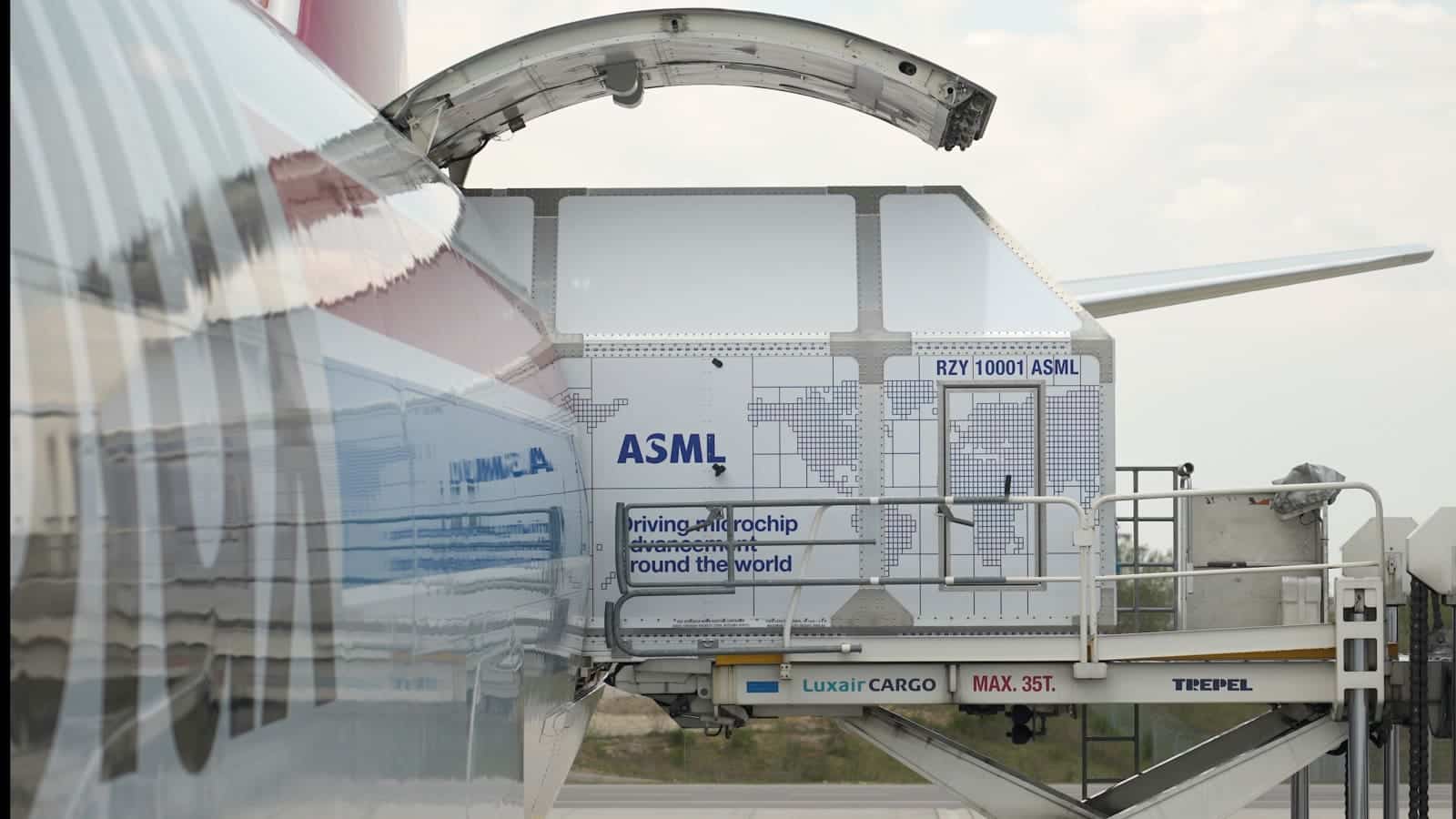
ASML, the world’s leading manufacturer of semiconductor lithography equipment, will raise the price of the spare parts it supplies in South Korea to Samsung Electronics and SK Hynix by 10%, according to a report from the South Korean trade publication The Elec. The increase will apply to deliveries starting in January 2027 and will affect components for extreme ultraviolet (EUV) and deep ultraviolet (DUV) lithography systems. The two companies are said to have accepted the adjustment after negotiating with the supplier.
The key facts on ASML’s price increase in 20 seconds
- ASML will raise the price of spare parts for its lithography equipment supplied in South Korea by 10%.
- Samsung and SK Hynix are said to have accepted the increase after negotiating with the company.
- The new prices will apply to deliveries starting in January 2027.
- The increase covers parts for EUV and DUV systems, from consumables to major components.
- The price increase comes as the expansion of AI data centers drives up demand for chipmaking equipment.
The move stands out because, according to sources cited by The Elec, ASML chose to apply a blanket 10% increase to spare parts rather than limiting the adjustments to specific components. The decision could raise maintenance costs at factories that use its equipment, although the effect on each manufacturer will depend on the number of machines installed, the parts that need replacing, and how often servicing is required.
The report refers to the South Korean market and to lithography system spare parts. It doesn’t confirm an equivalent increase for all of ASML’s customers elsewhere in the world, nor does it mean that all of its new equipment will automatically become more expensive by the same proportion.
An increase affecting consumables and critical components
According to The Elec, ASML communicated the proposal to Samsung Electronics and SK Hynix through its South Korean subsidiary in early September. Talks with both companies’ purchasing departments ended with acceptance of the new pricing, which will take effect for deliveries made from January 2027.
The adjustment covers consumable parts that are replaced periodically, as well as major components that need replacing due to failures or performance loss. These include optical elements, light sources and precision motion systems, all of which are necessary for lithography equipment to function.
The economic significance goes beyond the purchase price of a machine. Semiconductor manufacturing systems require maintenance, calibration and part replacement throughout their service life. When the cost of those components rises, the operating expenses of the facilities that depend on them can also increase.
The Elec notes that ASML has traditionally adjusted the prices of certain parts when raw material costs rose sharply or when specific components became hard to source. Applying a uniform 10% increase is, according to industry sources cited by the outlet, unusual.
One of those sources says the increase reflects both the broader rise in component costs and ASML’s interest in capturing a larger share of its customers’ profits. This latter interpretation comes from an industry source and is not an official explanation confirmed by the company.
AI demand is putting pressure on suppliers
The price increase comes as chipmakers expand their capacity to meet demand linked to artificial intelligence (AI). Data centers need advanced processors and large amounts of memory, including high-bandwidth memory (HBM), used alongside AI accelerators.
Samsung and SK Hynix are two of the world’s leading memory manufacturers. To expand production and manufacture new generations of chips, they need to invest in specialized equipment and keep their existing facilities running. Lithography systems are part of that industrial infrastructure.
ASML holds a particularly important position because it’s the only supplier of EUV lithography equipment, a technology used to manufacture certain patterns on the most advanced semiconductors. Its DUV systems are also used at numerous stages of production. The availability of spare parts and the cost of maintaining these machines therefore have consequences for its customers’ operations.
Growing orders for equipment and components don’t immediately translate into greater supply. Suppliers need time to expand their facilities, train staff and increase manufacturing capacity. If demand grows faster than available production, their negotiating position can improve.
The Elec also links the increase to rising raw material costs and other industrial expenses. The outlet cites similar moves from other equipment suppliers: Applied Materials is reported to have raised prices on both new and existing products, while Tokyo Electron and Advanced Energy Industries have also announced adjustments on some product lines. Demand for ASML’s equipment has also been fueled from an unexpected direction: Chinese memory makers have been stockpiling DUV systems to lock in years of expansion before export controls tighten further.
These moves don’t prove that the entire industry will apply identical increases, but they show that equipment manufacturers are trying to pass part of their costs on to customers at a time of heavy investment in semiconductor capacity.
ASML is also negotiating the price of its machines
The spare parts price increase comes as ASML negotiates possible increases in the prices of its equipment. According to The Elec, the company is discussing adjustments with major customers, although the outcome of those talks hasn’t been confirmed for all of them.
The outlet notes that The Information reported in July that ASML had told Chinese manufacturers and other customers about a 10% price increase on certain DUV equipment. Some customers are said to have accepted the change, while Taiwan Semiconductor Manufacturing Company (TSMC), ASML’s largest customer, reportedly opposed the increases.
Negotiations over new equipment are separate from the spare-parts increase announced for South Korea. It shouldn’t be assumed that Samsung and SK Hynix have automatically accepted a 10% increase on every machine they buy, since the available information refers specifically to replacement parts.
ASML reported revenue of €8,193 million in 2025 from its services, spare parts and equipment-upgrade business for installed systems, according to figures compiled by The Elec. That activity accounted for roughly 25% of its total sales, which came to €32,667 million. The outlet also states that the company expected growth of more than 30% for that business in 2026.
These figures help explain why spare parts and maintenance carry weight in ASML’s business: revenue continues after the initial sale of the equipment. However, they don’t make it possible to calculate how much additional money the 10% increase will generate, since the volume of parts affected and the specific weight of the South Korean market in that revenue haven’t been published.
The new pricing will take effect in January 2027. Until then, the economic impact will depend on the purchases Samsung and SK Hynix make and the terms they can agree with the supplier. For now, the information comes from trade media and industry sources, not from a public statement by ASML confirming every detail of the deal.
Frequently asked questions
When will ASML raise the price of its spare parts?
The new prices will apply to deliveries starting in January 2027, according to the report published by The Elec.
Which companies have accepted the 10% increase?
Samsung Electronics and SK Hynix are said to have accepted the increase after negotiating with ASML, according to industry sources cited by the South Korean outlet.
Which components will become more expensive?
The increase will affect spare parts for EUV and DUV lithography equipment, including consumables and major components that are replaced due to failures or performance loss.
Will ASML’s new equipment also go up by 10%?
That hasn’t been confirmed. This report refers to spare parts supplied in South Korea; any price increases for new equipment are part of a separate negotiation process.
