
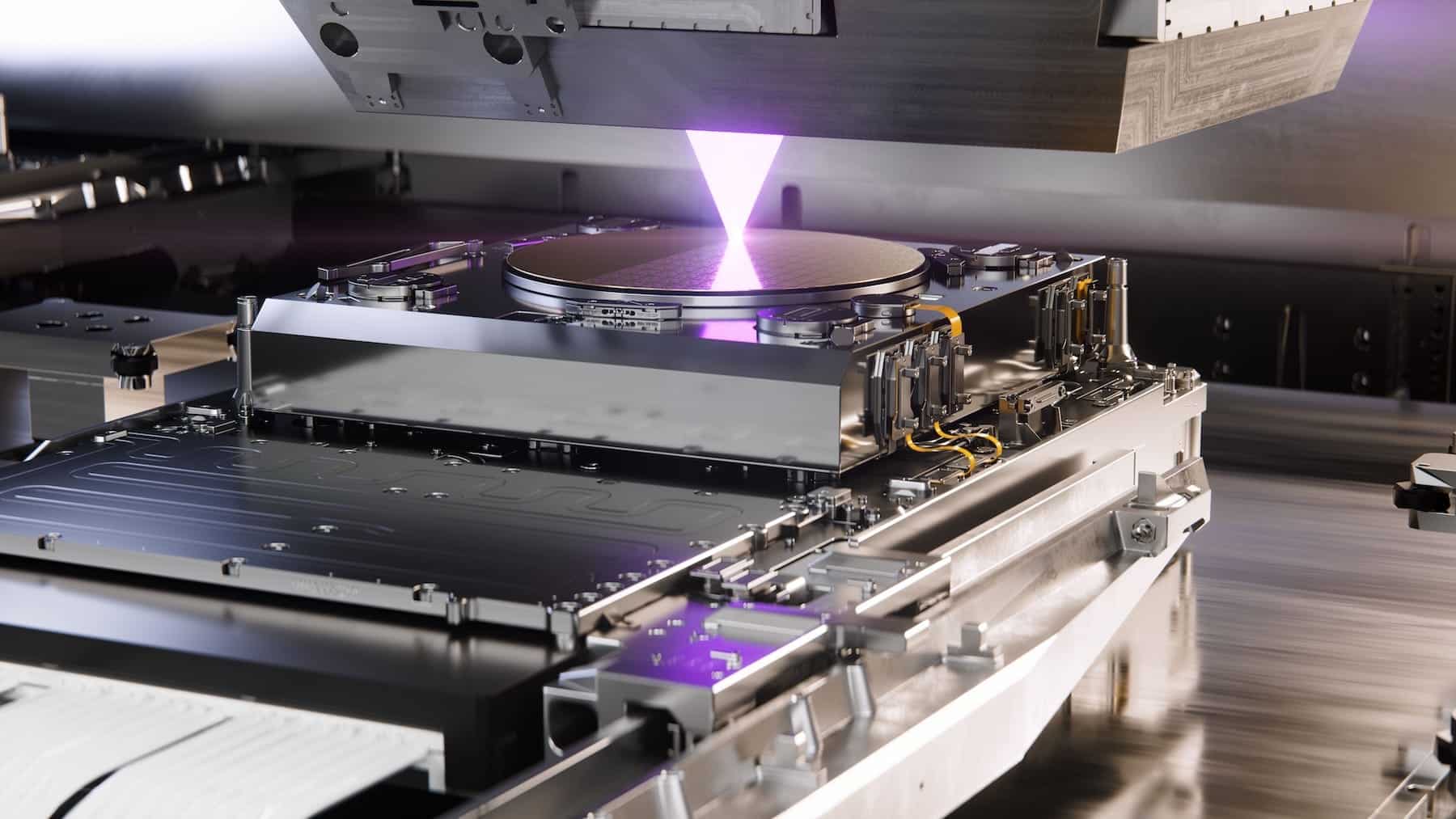
Europe is being left out of an increasingly strategic part of the global semiconductor race. ASML, the Dutch maker of the lithography machines used by the world’s leading chip companies, sold no chip manufacturing systems in Europe at all during the second quarter of 2026, according to Frank Heemskerk, the company’s executive vice president for global public affairs. The executive attributed the situation to a lack of investment and new fabs on the continent.
ASML and Europe’s chip gap in 30 seconds
- ASML says it isn’t selling any chip manufacturing systems in Europe, even as its global business sees strong demand.
- The company posted €9.33 billion in revenue in the second quarter and sold 86 new lithography systems worldwide.
- Demand is being driven especially by investment tied to artificial intelligence and the expansion of advanced chips.
- Brussels presented its Chips Act 2.0 proposal in June to reduce dependencies and boost European semiconductor production.
- The European Court of Auditors considers it highly unlikely the EU will hit its 2030 target of a 20% share of global chip production value.
The paradox is especially striking because ASML is riding a wave of strong international demand. In its second-quarter results, published on July 15, the company reported €9.33 billion in net sales, €2.92 billion in net profit, and 86 new lithography systems sold during the period. Of those, EUV systems accounted for €3.8 billion in sales, including the sale of one High NA machine.
The issue, then, isn’t that the chipmaking-equipment industry has slowed down. The problem is where the new manufacturing capacity is actually being built.
ASML Sells Its Machines Wherever the Fabs Are Being Built
Heemskerk’s remarks were made in Amsterdam and reported by the Dutch news agency ANP. The executive said ASML currently isn’t selling equipment in Europe because the continent isn’t investing at the pace needed and isn’t building enough chip fabs. He also noted that the United States, China, and India are all trying to attract investment from ASML and other companies in the sector.
ASML holds an especially unique position within this industry. The Veldhoven-based company is the only maker of extreme ultraviolet (EUV) lithography systems capable of producing some of the most advanced chips. These machines print the patterns onto silicon wafers needed to manufacture advanced generations of processors and memory.
The technology also has a direct link to the expansion of artificial intelligence. Major manufacturers are ramping up capacity to produce processors for data centers, AI accelerators, and high-bandwidth memory. ASML said in its latest results that AI-related investment is driving demand for advanced logic and memory chips.
In 2025, ASML reached €32.7 billion in net sales, up 15.6% from 2024. Revenue from lithography systems reached €24.47 billion, while services and options for the installed base contributed another €8.19 billion. The company itself attributed much of its logic growth to rising AI-related demand and also pointed to investment in high-bandwidth memory (HBM) as one of the drivers of the memory market.
Europe is part of that value chain, but advanced chip manufacturing is concentrating in other regions. Chinese manufacturers such as CXMT and YMTC have reportedly been stockpiling ASML equipment to lock in years of expansion, while TSMC, Samsung, and Intel are also among the fabs using ASML equipment in their production processes as the United States and Asia absorb most of the new industrial investment.
Chips Act 2.0: Brussels Tries to Change the Pace
ASML’s warning comes just as the European Union is trying to overhaul its industrial strategy for semiconductors. The European Commission presented its Chips Act 2.0 proposal on June 3, 2026, with measures designed to strengthen chip manufacturing, reduce strategic dependencies, and increase European capacity in both advanced and more conventional semiconductors.
The proposal is part of a broader technological-sovereignty package that also includes initiatives on artificial intelligence, cloud services, and open-source software. Brussels directly links semiconductors to its goal of expanding Europe’s ability to develop and deploy artificial intelligence, since data centers and AI systems need growing amounts of compute capacity.
The first European Chips Act was approved after the global supply crisis triggered by the pandemic. Its goal was to increase Europe’s manufacturing capacity and reduce exposure to external disruptions. The Commission says the measures adopted since then have helped mobilize more than €52 billion in public and private investment.
But the European Court of Auditors reached a far more cautious conclusion in its report published in 2025. The auditors considered it highly unlikely that the EU will reach its 2030 target of accounting for 20% of the value of global microchip production.
The report calculated that the Commission’s own projections pointed to a European share of 11.7% by 2030, up from 9.8% in 2022, even factoring in the expected increase in manufacturing capacity. To get closer to the 20% target, the auditors said, productive capacity would need to grow at a much faster pace.
The problem also isn’t limited to the money earmarked directly for building fabs. The Court of Auditors identified factors such as access to raw materials, energy costs, and geopolitical competition as additional obstacles. Much of the required investment, moreover, comes from member states and the private sector, not directly from the Commission’s budget.
Europe Needs More Than Just Fabs to Compete in AI
ASML’s own reading goes beyond simply building new manufacturing plants. Heemskerk said Europe needs to generate demand within the continent and strengthen other links in the chain, from chip design to data centers and cloud services.
The connection to artificial intelligence is direct. Building a semiconductor fab requires enormous investment and many years before reaching full production. But a competitive tech industry also needs companies that design processors, equipment makers, materials suppliers, data centers capable of consuming those chips, and cloud services that turn that compute capacity into products.
The Chips Act 2.0 proposal specifically includes the idea of stimulating European demand for semiconductors alongside boosting production. Brussels is proposing to strengthen the capacity to design and manufacture both advanced and conventional chips and to reduce dependence on third countries.
ASML’s situation offers a concrete signal of where the problem lies. Europe has one of the most important technological assets in the global semiconductor industry, yet during the second quarter it generated no orders for new manufacturing systems within its own market, according to the company’s statement.
Meanwhile, ASML’s global business keeps growing. The company raised its full-year 2026 sales guidance in July to a range of between €43 billion and €45 billion, and announced plans to increase its production capacity for low-numerical-aperture EUV systems by 30% in 2027 compared with 2026. The company is also studying another 30% increase for 2028.
That leaves an increasingly visible gap between Europe’s ability to design chipmaking technology and the continent’s ability to attract the fabs that use that technology.
For artificial intelligence, the issue carries an added dimension. Advanced models need data centers with huge amounts of accelerators and memory, and that hardware depends on an industrial chain that begins long before a model ever reaches a server. If Europe can’t attract enough semiconductor manufacturing, it will also remain dependent on investment decisions made outside the continent to expand part of the infrastructure its own AI economy needs.
The Chips Act 2.0 proposal aims precisely to correct that dependence, but it still has to translate into industrial investment and sufficient demand. The absence of ASML system sales in Europe during the second quarter doesn’t by itself determine the outcome of European policy, but it does offer a concrete data point about the current distance between Brussels’ ambitions and the pace at which new industrial capacity is being built.
Frequently Asked Questions
Did ASML sell no machines in Europe during the second quarter of 2026?
According to Frank Heemskerk, ASML’s executive vice president for global public affairs, the company sold no chip manufacturing systems in Europe during that period. The statement was reported by the Dutch news agency ANP.
How much revenue did ASML report in the second quarter of 2026?
ASML reported €9.33 billion in net sales and €2.92 billion in net profit. It sold 86 new lithography systems worldwide during the quarter.
What is the Chips Act 2.0?
It’s the European Commission’s proposal, presented in June 2026, to strengthen Europe’s semiconductor industry, reduce strategic dependencies, and support both advanced and conventional chip production.
What is Europe’s target for global chip production?
The EU set a 2030 target of reaching a 20% share of the value of global microchip production. The European Court of Auditors considers it highly unlikely that the target will be met at the current pace of investment.
