
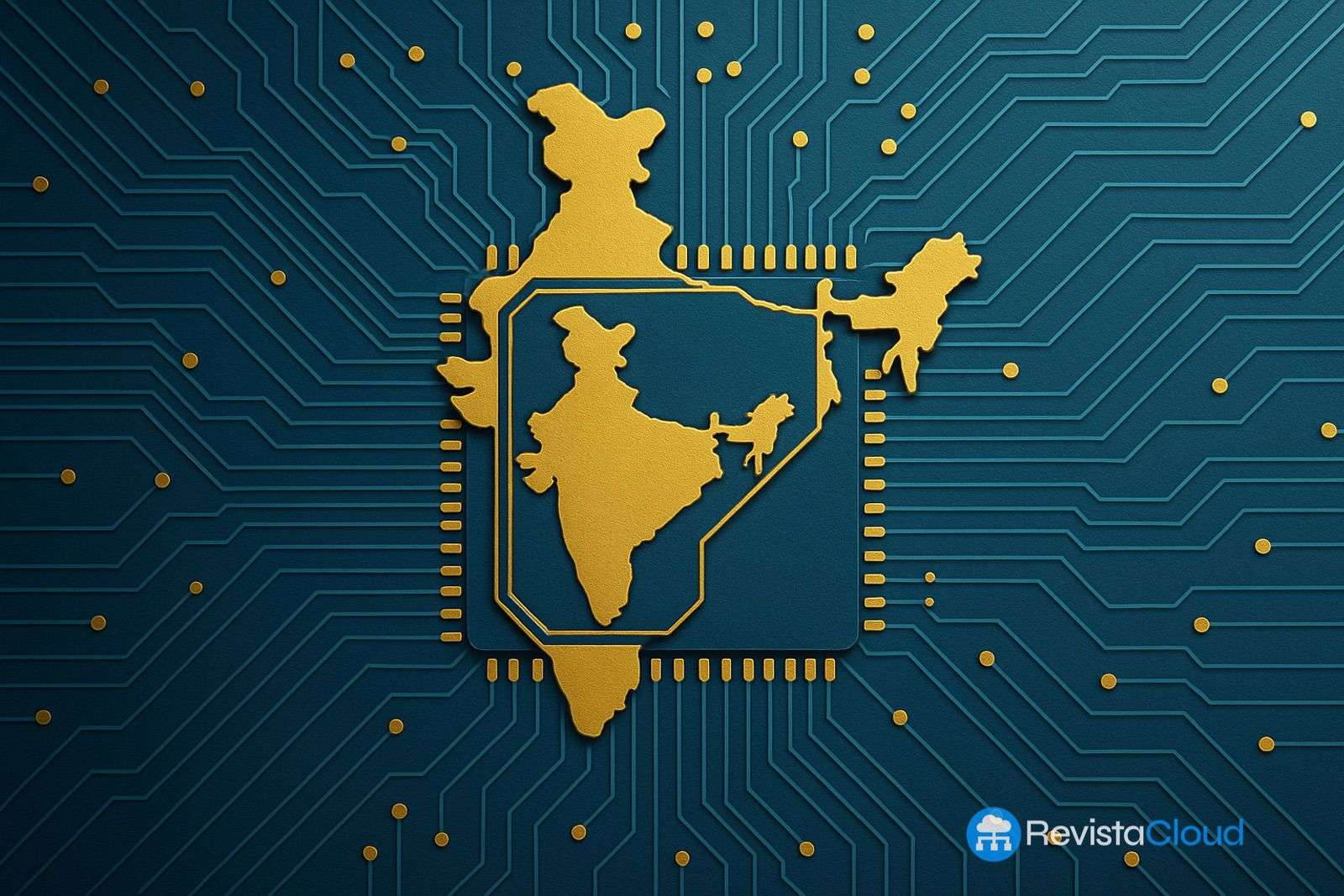
India is expanding its technology strategy well beyond assembling electronic devices. In recent weeks, moves have piled up in component manufacturing, semiconductor production and packaging, cloud infrastructure, and specialized talent training, while companies such as Microsoft, ASML and Dixon Technologies increase their presence in the country.
India’s tech expansion in 30 seconds
- India already has five semiconductor projects in commercial production, according to local reports cited by DIGITIMES.
- Microsoft has launched its fourth cloud region in India, in Hyderabad, as part of a $20.5 billion investment commitment.
- Dixon Technologies wants to diversify from phones into components, computer hardware, and other manufacturing categories.
- ASML has begun operations in India, though it ties any expansion to the progress of Tata Electronics’ fab in Dholera.
- Taiwan is strengthening its ties with India’s technical universities to compete for chip and AI talent.
The picture these moves paint is broader than a country looking to become an alternative for making phones. India is trying to occupy several links of the tech supply chain at once, from electronics manufacturing and chip assembly to design, data centers, cloud services, and engineer training.
That shift also raises the stakes. Building factories is only part of the process. The availability of suppliers, equipment, materials, electricity, logistics, research, and specialized professionals will determine how much value stays inside the country.
From phones to a more diversified electronics industry
One of the clearest examples is Dixon Technologies, one of India’s leading electronics manufacturers. The company is expanding beyond smartphones and aims to move into components, computer hardware, and other manufacturing categories.
Its stated goal is to rank among the world’s ten largest electronics manufacturing services (EMS) companies within five years. Diversification is part of the company’s next growth phase, which until now has been closely tied to assembling electronic devices.
The move matters because growth in final device manufacturing doesn’t by itself guarantee that a country develops a local supply chain. The more components, modules, and processes carried out domestically, the larger the number of associated industrial activities can become.
That’s exactly the base India is trying to widen. The local electronics industry has grown around phone manufacturing, but the next phase includes displays, precision components, camera modules, batteries, computer equipment, and other categories.
In parallel, the Indian government is pushing the second phase of its semiconductor program. Semicon 2.0 carries a budget of 127.5 billion rupees, roughly €1.27 billion at the approximate exchange rate, and widens the focus toward design, materials and machinery, new fabs, assembly and testing, R&D, and talent training.
India starts adding semiconductor production
Chip manufacturing is one of the most significant changes. On September 17, Suchi Semicon began commercial production at an outsourced semiconductor assembly and test (OSAT) plant in Palsana, in the state of Gujarat. That same day, a CDIL Semiconductor facility in Mohali, Punjab, also started commercial production.
According to information gathered by DIGITIMES from local sources, both facilities brought to five the number of semiconductor projects in commercial production in India, alongside facilities run by Micron, Kaynes Semicon, and CG Semi in Sanand, Gujarat.
The country still has to build a much broader chain to compete in advanced manufacturing. A KPMG report published during SEMICON India 2026 estimates that India’s semiconductor demand could reach roughly $90 billion in 2029-2030, up from about $44 billion in 2025-2026. The study points to design and packaging as especially immediate paths for value creation, while materials, equipment, and wafer fabrication require progressive development.
The industry itself is pushing for that depth as well. A Moneycontrol analysis based on conversations with companies such as Tata Electronics, NXP, Renesas, Applied Materials, ASML, and Infineon notes that fabs are only the beginning, and that India needs to develop suppliers, materials, logistics, energy, research, and specialized staff.
ASML ties its expansion to the progress of Tata’s fab
ASML’s arrival illustrates that dependency between different links in the chain. The Dutch maker of semiconductor manufacturing equipment has begun operations in India with an initial team of between 20 and 30 graduate engineers.
The company has indicated that any further expansion will depend on the progress of the 12-inch wafer fab that Tata Electronics is building in Dholera. ASML had already signaled its interest in the Indian market, and the connection shows just how much building a semiconductor industry depends on several projects moving forward at the same time.
Agreements to bring in foreign technology and capabilities have also taken shape. Nexperia and Tata Electronics announced a partnership in September to manufacture and package chips in India, with Nexperia’s power-control chip production at Tata’s Dholera facility and assembly and testing operations at the Jagiroad packaging plant.
The cloud becomes another piece of the AI strategy
The tech expansion isn’t limited to hardware. Microsoft has opened its fourth cloud region in India, in Hyderabad, as part of the $20.5 billion investment commitment announced for the country.
The infrastructure is geared toward AI workloads and expands Azure’s capacity within India. The move also strengthens Hyderabad’s position as one of the country’s tech hubs and lets Microsoft serve customers from infrastructure based in India.
Data center development is becoming more important as generative AI use grows. Companies need compute, storage, and network capacity close to their users and data, while regulated sectors may have specific requirements on where certain workloads are processed.
For India, having local cloud infrastructure adds another layer to its tech strategy: the country isn’t just trying to manufacture devices and components, it also wants to host part of the compute capacity used by businesses and AI services.
Talent becomes a strategic resource
Industrial and data center expansion requires professionals able to design chips, develop software, run fabs, and work with AI systems.
Taiwan is strengthening precisely those ties with India’s university system. According to DIGITIMES, Taiwanese representatives are stepping up contact with India’s engineering sector at a time of growing international competition for professionals specialized in semiconductors and AI.
Training also features in Semicon 2.0’s plans. India’s Ministry of Electronics and Information Technology says around 70,000 design engineers have been trained over the past four years, and the next phase aims to expand capabilities toward systems design and precision manufacturing.
This piece can matter as much as the fabs themselves. A semiconductor plant needs specialized engineers and technicians, but also suppliers capable of working with specific materials, precision equipment, and industrial processes that require accumulated experience.
India is therefore trying to build several layers at once. Phone and other device manufacturing provides an industrial base; the new semiconductor projects extend the chain toward more complex components; cloud hubs add compute capacity; and training programs try to cover the need for professionals.
The outcome is still under construction. Commercial production at the first facilities has already begun, but building a complete semiconductor chain requires fabs, suppliers, equipment, materials, energy, logistics, research, and talent to grow in a coordinated way. The coming years will show how far the announced projects turn into sustained industrial capacity.
Frequently asked questions
Which tech sectors is India developing?
The strategy spans electronics manufacturing, semiconductors, chip design, packaging and testing, cloud infrastructure, artificial intelligence, and training specialized professionals.
Is India already manufacturing semiconductors?
Yes. According to local reports gathered by DIGITIMES, five semiconductor projects had already reached commercial production as of September 2026, although building a complete manufacturing chain is still underway.
What role does Microsoft play in India’s tech expansion?
Microsoft has opened a fourth cloud region in India, located in Hyderabad, as part of its $20.5 billion investment commitment to the country.
Why does talent matter for the chip industry?
Fabs and tech hubs need engineers and technicians specialized in design, manufacturing, packaging, equipment, and AI systems. India is expanding training programs and strengthening international ties to develop that talent.
