
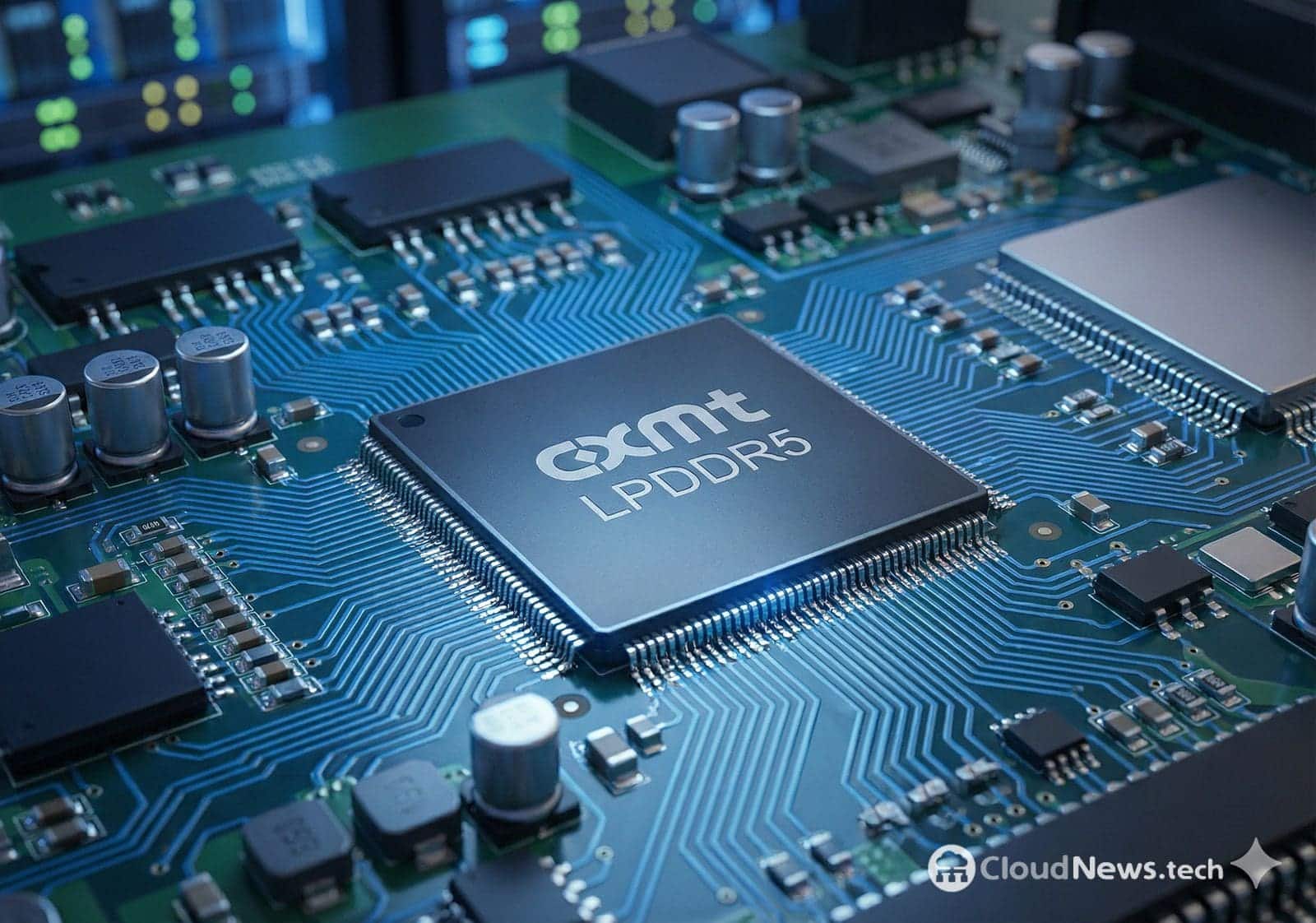
Charles Kau, former chairman of Taiwanese memory maker Nanya Technology and known in the industry as the “DRAM godfather,” has ruled out TSMC entering DRAM memory manufacturing and warned that the expansion of China’s CXMT could trigger a global memory oversupply. According to TrendForce and Taiwanese outlets TechNews and Economic Daily News, CXMT is building ten wafer fabs, and much of that capacity could come online within two years.
Charles Kau’s warnings in 20 seconds
- Kau believes TSMC won’t make DRAM, and TSMC itself has denied it.
- CXMT is building ten fabs that could come online within two years.
- Kau doubts the 4F² DRAM cell will reach mass production anytime soon.
Kau has an unusual career path: before chairing Nanya, he held executive roles at TSMC and Intel, and according to TrendForce, he personally led the early development of China’s YMTC. His comments come after several reports claimed TSMC was exploring 3D DRAM production at NVIDIA’s request — rumors we already looked at when explaining why TSMC’s “3D DRAM” isn’t aimed at making DDR or LPDDR. TSMC has denied those reports through a spokesperson and reaffirmed it is focused on its foundry business.
Why TSMC wouldn’t make DRAM
Kau’s argument, reported in indirect speech by Taiwanese outlets, is that leading advanced logic chip manufacturing doesn’t automatically translate into knowing how to make memory, because they are fundamentally different technologies. He points to VIS (Vanguard International Semiconductor), whose foray into memory failed and which ended up returning to foundry work. He adds that tighter integration between logic and memory, for example through 3D stacking, doesn’t force TSMC to make DRAM itself: it can package memory made by others.
CXMT and the risk of a memory glut
The more consequential warning concerns China. CXMT, China’s largest DRAM maker, is building ten wafer fabs in Beijing, Shanghai and other cities, and much of that capacity could be operational within two years. For Kau, that could lead to a global oversupply and squeeze Taiwanese manufacturers. CXMT still relies on mature processes because it lacks access to EUV lithography under export restrictions, but its growth is already showing up in its results: the company expects nearly $20 billion in nine-month profit on the back of the DRAM boom.
Kau is also skeptical of CXMT’s plan to launch DDR5 RDIMM modules based on the 4F² cell before year-end, an architecture denser than the 6F² the whole industry uses today. According to him, capacitor scaling and current leakage are obstacles neither Samsung nor Micron have solved, and he doubts CXMT will reach mass production despite its heavy R&D investment. Micron, in fact, has already ruled out bringing the 4F² cell into production. It’s worth noting that his warnings about an oversupply are an opinion, not a numbers-based forecast, and they come amid a DRAM shortage and price surge driven by AI demand.
Frequently Asked Questions
Who is Charles Kau?
The former chairman of Nanya Technology, with prior roles at TSMC and Intel, known as the “DRAM godfather.”
Is TSMC going to make DRAM memory?
TSMC has denied it and Kau also rules it out, because logic and memory require different technologies.
Why is CXMT a concern?
Because it is building ten fabs that could come online within two years and, according to Kau, could trigger a global DRAM oversupply.
Sources:
This article is also available in Spanish: «El «padrino de la DRAM» descarta que TSMC fabrique memoria y alerta por CXMT», on revistacloud.com.
