
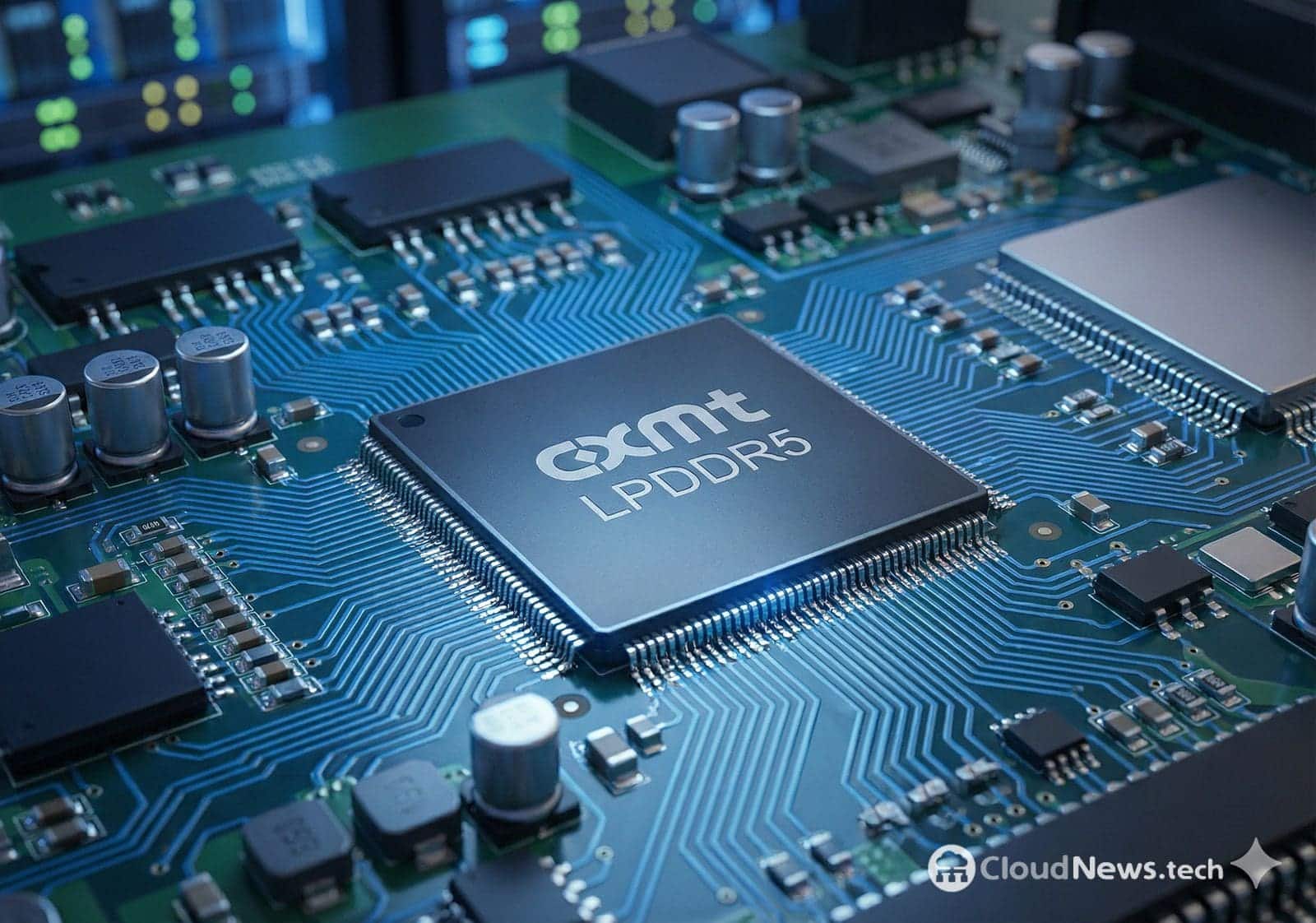
CXMT (ChangXin Memory Technologies), China’s largest DRAM memory maker, expects to have earned between 131 billion and 132.5 billion yuan in the first nine months of 2026, about $19.6 billion to $19.8 billion, compared with a loss of 5.3 billion yuan in the same period a year earlier. The company disclosed the figures in a preliminary update to the Shanghai Stock Exchange, ahead of its full quarterly accounts, and attributes the swing to the memory shortage driven by demand for AI servers.
CXMT’s results in 30 seconds
- Expected net profit of 131 billion to 132.5 billion yuan between January and September, after a 5.3 billion yuan loss a year earlier.
- Estimated revenue of 265 billion to 270 billion yuan, more than eight times the 32.1 billion yuan posted in 2025.
- The third quarter alone would contribute around 54 billion yuan in profit, by CXMT’s own calculation.
- It went public in July, and TrendForce already credits it with 9.5% of global DRAM revenue.
The update, reported by The Paper, Bloomberg and The Next Web, is the company’s own estimate, not an audited report. It comes alongside a proposal from chairman Zhu Yiming to buy back between 1 billion and 2 billion yuan in shares over the next twelve months, which could go toward employee incentive plans or be cancelled. CXMT attributes the improvement to rising DRAM prices since the second half of 2025, increased capacity, and better utilization of its fabs, with more chips per wafer, without giving figures for any of those factors.
A Third Quarter That Keeps Accelerating
The results published so far make it possible to track the quarter-by-quarter trend. In the first quarter, CXMT earned 33 billion yuan on revenue of 50.8 billion, according to Caixin. In the first half, its first report as a public company, revenue reached 150.3 billion yuan and net profit 77.6 billion, according to Reuters, above the 66 billion to 75 billion yuan range it had guided at its IPO.
Subtracting those figures from the new guidance, the third quarter would have brought in 114.7 billion to 119.7 billion yuan in revenue and 53.4 billion to 54.9 billion yuan in profit, versus about 99.5 billion yuan in revenue and 44.6 billion in profit in the second quarter. That’s a calculation based on figures reported at different times, and the final number will depend on the quarterly report. Based on the company’s own figures, net profit would equal almost half of revenue, a very high margin for a manufacturer that, at the end of 2025, had accumulated about 36.7 billion yuan in losses, according to Caixin.
The Effect of the DRAM Shortage
The backdrop is a memory market where supply isn’t keeping up with demand. TrendForce calculates that global DRAM revenue grew 59.5% in the second quarter versus the first, to about $154.7 billion, with manufacturers’ inventories at historic lows. In that period, CXMT doubled its DRAM revenue to $14.6 billion and reached 9.5% of the market, behind Samsung (39.4%), SK hynix (24.9%) and Micron (23.3%). For the third quarter, the firm expected further increases of 13% to 18% in contract prices for conventional DRAM.
The major manufacturers have put much of their new capacity toward HBM memory and products for AI servers, leaving less supply for the conventional DRAM that CXMT makes, such as LPDDR5X for phones and DDR5 for computers and servers. Counterpoint Research notes that the market is watching whether it will use its IPO proceeds to expand capacity in HBM and LPDDR6. Both Micron and YMTC have warned that the shortage could last for years, though those are forecasts from the industry itself, which also benefits from it.
From IPO to China’s Most Valuable Company
CXMT, founded in 2016 in Hefei, Anhui province, debuted on the Shanghai Stock Exchange on July 27. It raised 57.92 billion yuan, about $8.6 billion, the largest IPO by a mainland Chinese chipmaker according to Reuters, and its shares jumped 466% on the first day. Only 6.73% of its shares were freely tradable at the time. As of the close on October 16, its market cap stood at around 3.06 trillion yuan, according to The Next Web, placing it among the country’s most valuable listed companies.
The company says it began mass production of its fifth-generation DRAM in September, something independent evaluators haven’t verified. It also operates under US export restrictions on advanced manufacturing equipment, which haven’t stopped it from stockpiling ASML machines or preparing $5.2 billion to expand its production. Its growth now hinges on two factors it doesn’t control: how long memory prices stay high, and how far those restrictions go.
FAQ
How much has CXMT earned in 2026?
According to its preliminary update, between 131 billion and 132.5 billion yuan from January to September, about $19.6 billion to $19.8 billion. A year earlier it lost 5.3 billion yuan in the same period.
Why is it making so much money now?
Because of rising DRAM prices since the second half of 2025, driven by demand from AI servers, and because of its increased production capacity, according to the company itself.
What share of the DRAM market does CXMT have?
TrendForce credits it with 9.5% of global DRAM revenue in the second quarter of 2026, behind Samsung, SK hynix and Micron.
Are these final results?
No. It’s a preliminary estimate reported to the Shanghai Stock Exchange. The final figures will come with the third-quarter report.
Sources:
- The Next Web: China’s CXMT swings to a nearly $20B profit as memory prices soar
- The Standard (Reuters): China’s CXMT posts first-half profit after revenue surge
- Caixin Global: Memory shortage works out for Chinese chipmaker CXMT
- Business Day (Reuters): CXMT surges 466% in blockbuster Shanghai stock market debut
- Evertiq (TrendForce): DRAM industry revenue surges 59.5% in Q2 as supply lags demand
- Counterpoint Research: AI demand reshapes DRAM rankings in Q2 2026
