
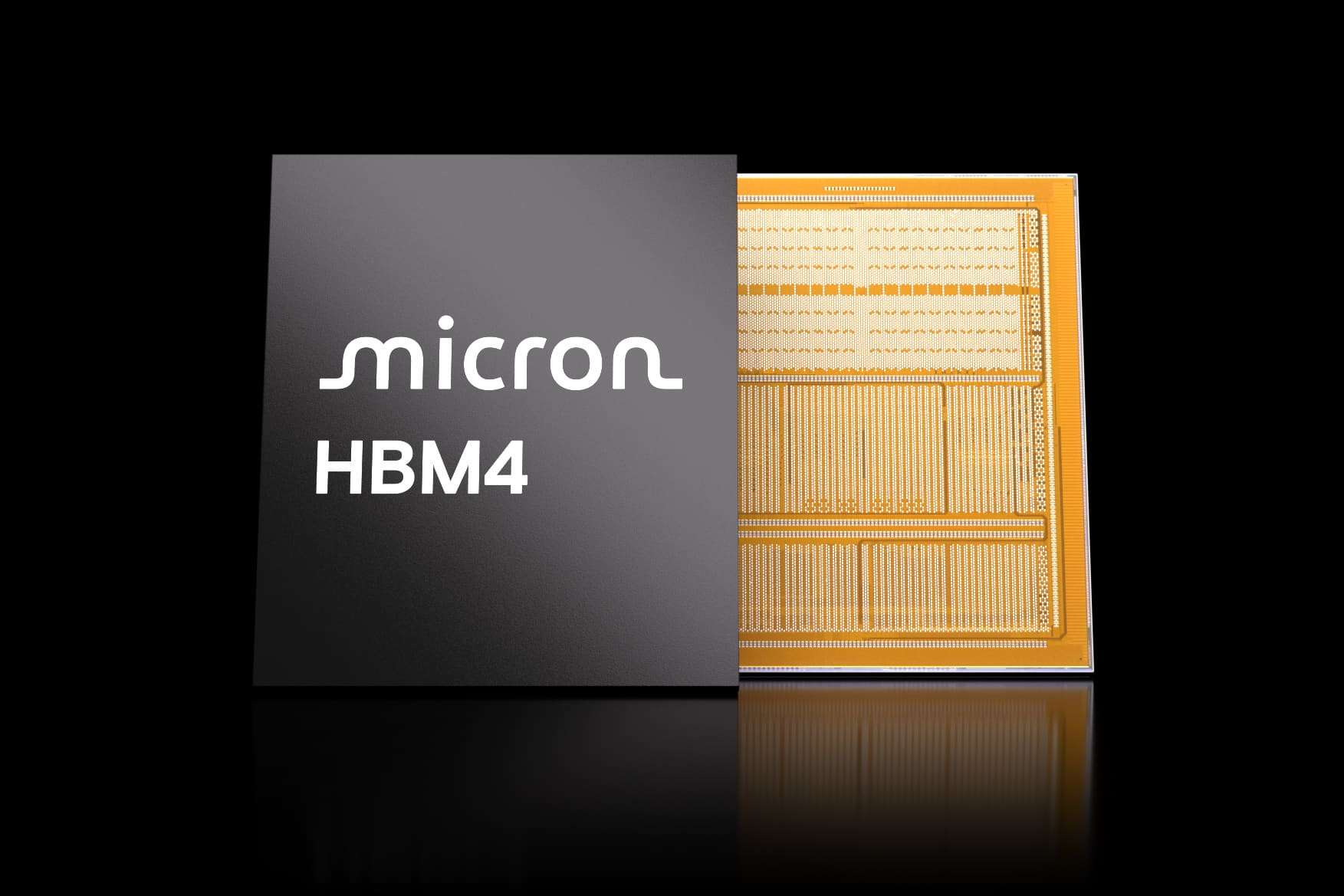
Micron Technology has just issued a warning that affects the entire memory market: even as new fabs come online in 2027 and 2028, the company still doesn’t see when supply will be able to catch up with demand that keeps growing. The chipmaker expects the DRAM and NAND market to stay tight through 2027 and 2028, driven largely by the expansion of artificial intelligence (AI) and by the growing amount of memory data centers need.
Micron’s memory shortage in 30 seconds
- Micron expects a tighter memory market in 2027 and 2028 than in 2026.
- New fabs will add capacity, but will need months to reach meaningful production.
- HBM consumes more manufacturing capacity than conventional DRAM, and its demand keeps growing.
- New nodes deliver smaller bit-per-wafer gains than previous generations.
- More than 75% of Micron’s 2027 production is already committed to customers.
The warning comes after an extraordinary fiscal 2026 for Micron. The company closed the year with revenue of $133.188 billion, up from $37.378 billion a year earlier, while net income climbed from $8.539 billion to $84.969 billion. In the fourth fiscal quarter alone it generated $54.229 billion in revenue. Demand tied to artificial intelligence is one of the main factors behind this expansion.
But the most interesting figure isn’t in the financial results. It’s in the manufacturing capacity Micron expects to have available in the coming years, and in how fast demand is growing.
The company says it has no visibility into when memory supply will be able to catch up with growing demand, even though it expects a gradual improvement in industrial capacity during 2028.
Building a fab doesn’t mean instantly having more memory
Micron is expanding capacity in several countries, but the timelines show why the supply increase will be gradual.
In Idaho, the first new fab, ID1, is expected to start producing wafers in mid-2027. The second, ID2, is slated for late 2028. In Japan, the expansion of a DRAM fab should also deliver initial output by late 2028. In Taiwan, Micron expects significant shipments from its Tongluo facility by mid-2027.
In Singapore, the company is also preparing advanced HBM packaging capacity, with initial production expected in early 2027. The country’s new NAND fab is expected to start production during the second half of 2028.
The problem is that the first wafer doesn’t equal full production.
Micron explains that new cleanrooms need time to be equipped, qualified, and to reach meaningful output. Even after the first wafers come out, volume ramps up gradually over several quarters.
That’s why a fab that starts production in late 2028 doesn’t automatically close the existing gap at that same moment.
Construction is also shaped by factors outside memory makers’ control. Micron cites long build times, a shortage of skilled workers, regulatory permits, and the need for new energy infrastructure.
AI is changing the memory math
The other side of the equation is demand.
Data centers need more and more memory to run AI workloads. But the problem isn’t simply about installing more gigabytes of conventional DRAM.
HBM, or high-bandwidth memory, has become one of the most important products for AI accelerators. Making it uses DRAM capacity and requires advanced packaging processes, which is part of why major AI labs like OpenAI and Anthropic are now weighing direct memory purchases from manufacturers.
Micron expects HBM bit shipments to grow faster than conventional DRAM through 2028. The company also notes that more advanced HBM generations consume a growing amount of wafer capacity relative to the amount of conventional memory that same capacity could otherwise produce.
That creates additional pressure.
Even as Micron builds more capacity, a growing share of it must go to higher-value, higher-demand products like HBM. At the same time, traditional servers also need more memory.
The company expects server unit shipments to grow at high double-digit rates during 2026 and 2027, which keeps pressure on data center DRAM demand into 2028.
And it’s not just data center AI. Micron also points to smartphones, high-end PCs, automotive, industrial, robotics, and AI-enabled consumer devices as markets that could increase memory content per device.
New nodes don’t solve the problem on their own either
There’s another, less visible factor: making memory with more advanced technology doesn’t mean each new generation delivers the same capacity increase as previous ones.
Micron notes that technology transitions are delivering smaller bit-per-wafer gains with each new node. That means the industry needs more cleanroom space and more fabs to achieve supply growth equivalent to that of previous generations.
The situation is especially complicated because the industry is going through several transitions at once.
Existing capacity has to adapt to new DRAM generations, while HBM demand forces the industry to dedicate additional resources to specific products. In NAND, some manufacturers are also shifting space that was previously used for NAND toward DRAM production, narrowing the room to quickly increase storage supply. Other memory makers, such as CXMT, which is putting $5.2 billion into expanding its own production, are racing to add capacity under the same pressure.
The result is a market where building more fabs is necessary, but not enough to guarantee that supply will quickly catch up with demand.
Micron already has a good chunk of 2027 committed
The situation also shows up in Micron’s relationships with its major customers.
The company says more than 75% of its 2027 production is already committed through strategic supply agreements. What’s more, conversations with customers are moving toward 2028, and some agreements extend as far as 2031.
These agreements give Micron greater visibility into future demand and let customers lock in a share of available capacity.
They also explain why the company is increasing its investments.
Micron plans to raise its capital spending in fiscal 2027 compared with its previous plans, with much of the increase aimed at speeding up cleanroom availability by late 2028 and beyond.
The company isn’t saying the new fabs are pointless. Quite the opposite. They’re needed to increase supply. What it’s warning is that additional capacity will arrive while demand keeps advancing too.
That imbalance explains Micron’s message: 2028 may bring more memory to the market, but not necessarily the end of the shortage.
The chipmaker expects both DRAM and NAND to remain supply-constrained through 2027 and 2028. In DRAM, it expects industry bit shipment growth in the low-twenties percent range over those two years, while in NAND it puts growth at roughly the mid-twenties percent range. Even so, it expects the industry to continue facing supply constraints in both markets.
For the tech sector, the consequence is that memory will remain a strategic component of AI’s expansion. And while manufacturers expand fabs in the United States, Japan, Taiwan, and Singapore, the capacity now under construction will take years to turn into large-scale production.
That’s why the problem Micron describes isn’t simply a temporary chip shortfall. It’s a race between industrial capacity, new memory technologies, and computing demand that keeps growing.
Frequently asked questions
When does Micron expect the memory shortage to end?
Micron says it expects a gradual supply improvement in 2028, but currently has no visibility into when supply will catch up with demand. The company expects DRAM and NAND to remain supply-constrained through 2027 and 2028.
Which new Micron fabs will start production in 2028?
Micron’s second Idaho fab, ID2, is expected to produce its first wafers in late 2028. Micron also expects initial output from its DRAM expansion in Japan by late that year and from its new NAND fab in Singapore during the second half of 2028.
Why is HBM putting pressure on memory supply?
HBM requires DRAM capacity and advanced packaging processes. Micron expects HBM demand to grow faster than conventional DRAM through 2028, and notes that newer generations consume a growing share of capacity.
How much of Micron’s 2027 production is already committed?
Micron says more than 75% of its 2027 production is already committed through strategic agreements with customers. Some negotiations and agreements already extend to 2031.
