
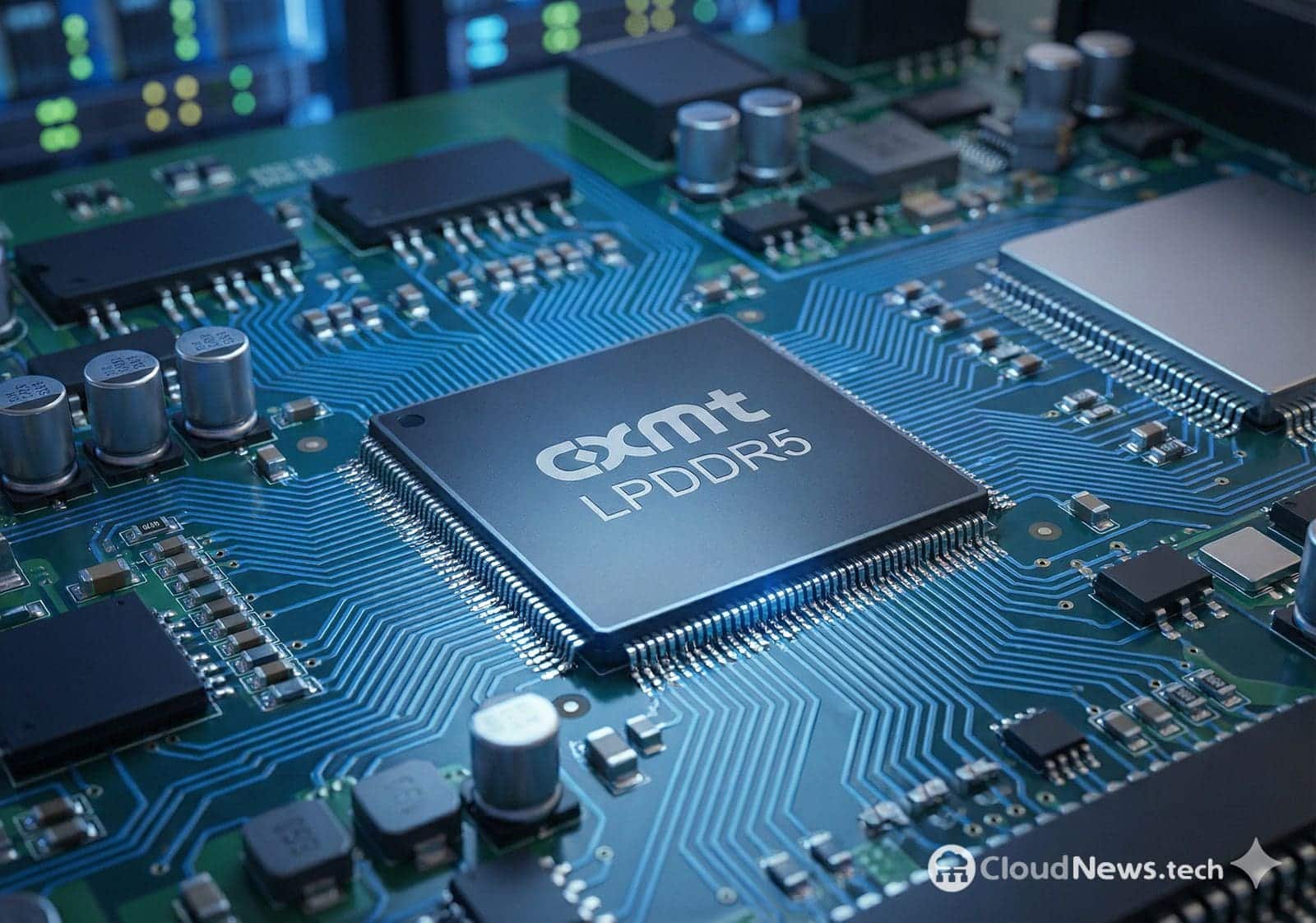
ChangXin Memory Technologies (CXMT) has publicly left the door open to working with major international customers as speculation grows about a possible relationship with Apple. The Chinese manufacturer hasn’t confirmed a contract with the U.S. company, but says it’s willing to explore opportunities with top-tier clients. The statement comes after Apple reportedly tested CXMT’s DRAM in products such as the iPhone and MacBook, at a time of memory shortages and sharp price increases.
The key facts on a possible Apple-CXMT deal in 20 seconds
- CXMT says it’s open to working with top-tier customers, but doesn’t confirm a contract with Apple.
- Apple has reportedly already tested CXMT’s DRAM for the iPhone and MacBook.
- Initial talks reportedly center on devices sold in the Chinese market.
- CXMT is producing around 300,000 wafers per month and is preparing new fabs.
- Washington has significant reservations about a possible business relationship between the two companies.
The distinction matters, because CXMT’s statement by itself doesn’t confirm that Apple has added the manufacturer to its supply chain. In early August, reporting from Reuters already indicated that Apple was testing CXMT’s chips across different product lines and that the two companies had held preliminary talks about supplying memory for some devices sold in China. Apple and CXMT did not confirm those negotiations at the time.
The statement now circulated by CXMT is, however, an unusual step. The manufacturer says it maintains an open stance toward exploring partnerships with top-tier customers around the world and claims its products can compete with leading international suppliers on performance, quality, and supply reliability. CXMT doesn’t explicitly mention Apple in that statement.
Apple Is Looking for a Fourth Option in a DRAM Market Under Pressure
Apple’s interest in CXMT has an industrial explanation. Memory has become one of the most strained components in the tech supply chain due to the massive growth of AI data centers.
Samsung Electronics, SK hynix, and Micron continue to dominate global DRAM, but a growing share of their investment and capacity is being directed toward server products and, especially, high-bandwidth memory (HBM).
For Apple, having an additional supplier would mean reducing its dependence on the three major manufacturers and gaining more leverage when negotiating prices and volumes.
The company is reportedly already running qualification tests on CXMT memory. According to reports published during July and August, these evaluations have included the iPhone and MacBook, although passing technical tests doesn’t automatically translate into commercial orders.
| Situation | Known status |
|---|---|
| Apple testing CXMT DRAM | Yes, per published reports |
| Testing in iPhone | Yes, per those reports |
| Testing in MacBook | Yes, per those reports |
| Confirmed commercial contract | No |
| First possible market | Devices sold in China |
| CXMT confirms negotiating with Apple | Not directly |
| CXMT open to considering major international clients | Yes |
The distinction between qualification and supply matters. Large manufacturers test components from different suppliers to check performance, power consumption, quality, and stability before adopting them into a product. A company can complete this process and ultimately receive no orders at all.
Apple would also gain an additional tool for negotiating with Samsung, SK hynix, and Micron, even if CXMT ends up covering only a limited share of its needs.
The current shortage makes that alternative more valuable. Demand from AI data centers is diverting investment toward higher-margin memory and has contributed to rising prices for conventional DRAM used in computers and mobile devices.
CXMT Is Preparing a Massive Capacity Expansion
The possibility of supplying a company the size of Apple also depends on CXMT’s actual capacity.
The Chinese manufacturer already operates three large 300mm DRAM fabs, two in Hefei and one in Beijing, which together add up to roughly 300,000 wafers per month, according to figures reported by Reuters and TrendForce.
The company also has new projects underway. It has also been advancing its process technology, adopting High-k Metal Gate (HKMG) on newer DRAM generations to help close the gap with the leading suppliers.
Available reports point to additional fabs in Shanghai and Hefei and the possibility of building a second plant in Beijing. If the currently planned projects hit their targets, capacity could eventually exceed 600,000 wafers per month.
| CXMT expansion | Approximate capacity |
|---|---|
| Current capacity per industry sources | ~300,000 wafers/month |
| Alternative estimate for end of 2026 | ~350,000 wafers/month |
| New fabs in development | Shanghai and Hefei |
| Potential capacity with expansions | >600,000 wafers/month |
These figures require some caution, since the available estimates use different methodologies and reference points. Some sources place CXMT’s current capacity around 300,000 wafers per month, while other analyses put it at approximately 350,000 by the end of 2026. It isn’t appropriate to simply add figures from different sources together.
The expansion has another dimension: CXMT is no longer competing solely in older-generation memory.
The company has DDR5 and LPDDR5X products and is putting resources into HBM, precisely the segment growing around AI accelerators.
Recent reports even indicate that CXMT has started risk production of HBM3E, with possible commercial production during 2027. That should be treated as industry information rather than a commercial launch confirmed by the company itself.
The growth is already reshaping the market split. Recent estimates place CXMT at around 10% of the global DRAM market during the second quarter of 2026, up from roughly 4% a year earlier.
That advance is turning the Chinese manufacturer into an increasingly hard-to-ignore alternative for large buyers looking to diversify their suppliers.
Washington Is the Biggest Obstacle to a Deal
The technology side may not be the hardest part of a possible relationship between Apple and CXMT.
The Chinese company appears on the U.S. Department of Defense’s 1260H list, which identifies companies considered linked to China’s military. That listing doesn’t by itself amount to a blanket ban on buying its memory for commercial products, but it turns any relationship with a U.S. multinational into a politically sensitive matter.
The U.S. administration has also pressured Apple not to buy memory chips from Chinese manufacturers such as CXMT and Yangtze Memory Technologies (YMTC), according to reports published during August. The arguments cited include national security and the U.S. goal of moving a larger share of semiconductor manufacturing back to the country.
Apple thus finds itself facing two needs pulling in different directions.
On one hand, it needs more memory suppliers in a market where supply is scarce and prices have risen. CXMT can provide additional capacity and strengthen Apple’s negotiating position against Samsung, SK hynix, and Micron.
On the other, using Chinese components could create new tensions with Washington precisely as Apple is ramping up its industrial commitments in the United States.
The talks known so far seem to be seeking a middle-ground solution: eventually using CXMT memory in devices sold in the Chinese market. That way, Apple could free up part of the supply from its traditional vendors for other markets.
The decisive step is still missing.
CXMT has publicly shown its willingness to work with major international customers, and Apple has tested its memory. Neither circumstance confirms that a future iPhone will actually include DRAM from the Chinese company.
But the picture is very different from a few years ago. CXMT is rapidly increasing capacity and market share while Apple needs to diversify a supply chain under pressure from AI demand.
If it ultimately becomes a supplier, the shift would carry implications that go well beyond the iPhone: one of the world’s largest semiconductor buyers would have added to its supply chain a Chinese manufacturer capable of directly competing in advanced DRAM with Samsung, SK hynix, and Micron.
Frequently Asked Questions
Does Apple already buy DRAM from CXMT?
There is no publicly confirmed commercial contract. Apple has reportedly tested CXMT memory in products such as the iPhone and MacBook and has held talks about possibly supplying devices sold in China.
Has CXMT confirmed a deal with Apple?
No. CXMT has said it is open to exploring partnerships with top-tier customers worldwide, but it hasn’t named Apple or confirmed a contract.
How much memory can CXMT manufacture?
Industry sources currently put its capacity at around 300,000 wafers per month. New fabs and expansions could push it above 600,000 wafers per month, though that’s future capacity that will roll out gradually.
Why is Apple interested in CXMT?
Adding another supplier would let Apple diversify its DRAM supply and gain more leverage when negotiating with Samsung, SK hynix, and Micron, especially during the current memory shortage.
