
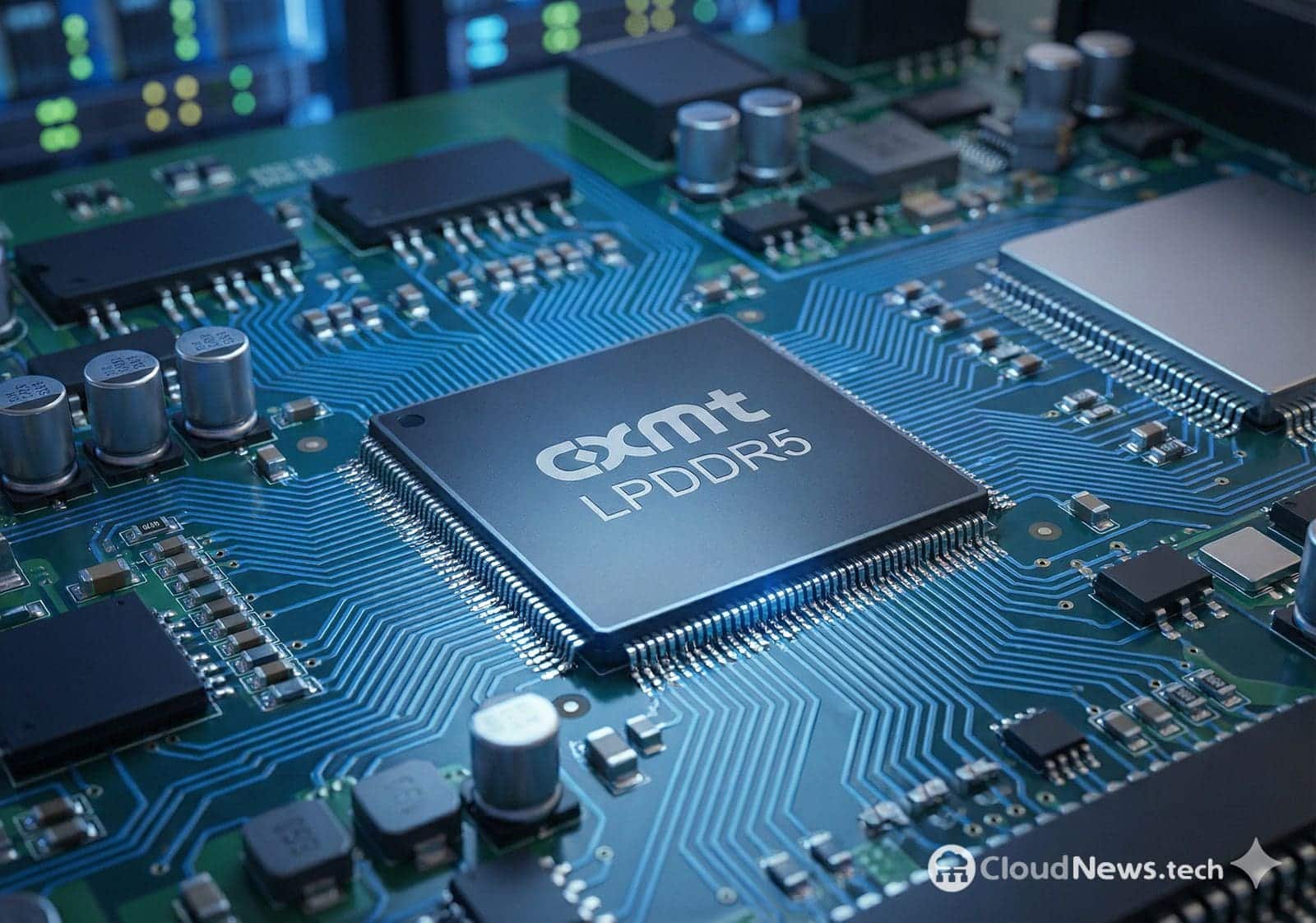
Apple is evaluating ChangXin Memory Technologies (CXMT) as a possible fourth DRAM supplier, but the Chinese manufacturer’s available capacity could be a bigger obstacle than the political tension between Washington and Beijing. An estimate attributed to Goldman Sachs suggests CXMT could produce nearly 10,000 billion GB of DRAM by 2028, roughly half of Chinese demand at that point, which would sit around 20,000 billion GB.
Apple and CXMT in 20 seconds
- Apple is testing CXMT DRAM for products like the iPhone and MacBook.
- The company is chasing more supply in a tense market driven by AI memory demand.
- Goldman Sachs estimates CXMT could meet around 50% of China’s DRAM demand in 2028.
- CXMT is expanding its factories fast, but its output will still be in heavy demand inside China.
- For Apple, adding CXMT could raise capacity, though it doesn’t guarantee lower prices.
That data matters because it helps frame the possible relationship between Apple and CXMT. Apple may want a new supplier to lean less on Samsung Electronics, SK hynix, and Micron, but CXMT doesn’t have unlimited memory sitting around waiting for new clients.
Apple has publicly admitted that memory market conditions are hitting its costs. In its third-quarter fiscal 2026 earnings, the company said it paid more for memory in March than in December, and more still in the June quarter, and it expected further price pressure after September.
Tim Cook was blunt about the need to diversify: the top-tier DRAM market is basically split among three suppliers, and a fourth maker could help supply. But he also admitted the effect on prices is far less clear.
Apple would need hundreds of millions of GB from CXMT
One market estimate figures Apple sells around 50 million iPhones a year in China. If each device used an average of 12 GB of DRAM, that demand would come to roughly 600 million GB a year.
Treat that as an approximation, since the real volume depends on how each model sells and which memory configurations Apple actually uses.
Based on some estimates of CXMT’s D1a/G4 process output, meeting that 600 million GB would take about 6.6% of its projected capacity by the end of 2026.
On its own that doesn’t look unmanageable. The problem is who else competes for the same production.
CXMT has growing domestic demand from makers of phones, PCs, servers, and data centers. Its current and potential customers include major Chinese tech companies that also need to lock in memory amid a global shortage.
So Apple wouldn’t be tapping a factory with spare capacity, but a supplier whose output is increasingly spoken for.
Recent reports say CXMT is already near its capacity limits for this year, with little room to add large international clients.
That’s why the Chinese manufacturer may not need to compete with aggressive discounts.
The situation is almost the reverse of what Apple usually finds when it brings on a new supplier.
CXMT is doubling capacity, but Chinese demand grows faster
CXMT is running one of the biggest expansions in the global DRAM industry.
Counterpoint Research estimates its capacity will rise from around 320,000 wafers a month to 420,000 in 2027, helped by new facilities in Shanghai, Beijing, and Hefei. Longer term, the company plans to double capacity by 2030 and triple it by 2035.
TrendForce forecasts even more ambitious figures for later phases. CXMT currently runs three large 12-inch wafer factories and is building new sites that could push total capacity past 600,000 wafers a month once every project is finished.
But more wafers don’t automatically mean enough chips for every customer.
The chart attributed to Goldman Sachs shows that gap clearly.
By that estimate, CXMT’s output would go from about 2,500 billion GB in 2024 to around 4,000 billion in 2025, then keep climbing toward 10,000 billion GB in 2028.
Total DRAM demand in China, though, would grow even faster.
By 2028 it could approach 20,000 billion GB, so CXMT would meet about half of it.
That’s a big step for China’s semiconductor self-sufficiency, but it also means the country would still need a lot of memory made by Samsung, SK hynix, and Micron.
And the forecast doesn’t mean those 10,000 billion GB would be freely available to clients like Apple. Much of that output would go to domestic buyers.
AI is making DRAM harder to buy for everyone
CXMT’s growth lands in one of the strangest stretches the memory market has seen in years.
AI is soaking up large chunks of production capacity.
Traditional manufacturers are steering more of their investment and advanced lines toward HBM (High Bandwidth Memory) for AI accelerators and high-performance DRAM for servers.
That leaves less flexibility for other segments.
The effect already shows in computers, phones, and consumer electronics. Apple has said it expects memory costs to keep rising and that the supply chain has limited room to offset it.
CXMT benefits here because it stands out as a real fourth option in DRAM.
The company is also moving from traditional products toward LPDDR5 and DDR5, which Counterpoint expects to make up about 75% of its output as capacity grows.
That’s exactly the kind of memory smartphone, PC, and server makers want.
But the shortage also strengthens CXMT’s hand.
Apple usually uses its huge purchase volume to get better terms. In this market, CXMT may have less reason to offer steep discounts, since it already has enough customers to absorb its production.
CXMT can help Apple but is unlikely to replace Samsung, SK hynix, and Micron
Adding CXMT would help Apple even if its chips weren’t cheaper.
A fourth supplier would spread the supply risk.
Apple might use CXMT DRAM mainly in devices sold in China and keep more Samsung, SK hynix, and Micron memory for other regions.
The company is already testing CXMT chips in products like the iPhone and MacBook, but there’s no official confirmation that CXMT has been approved as a commercial vendor yet.
The political side is still unsettled too.
CXMT is among the companies the U.S. flags as sensitive on national security grounds. Apple could buy certain commercial components, but there are restrictions on transferring U.S. technology and on how much technical collaboration is allowed.
That’s especially awkward for Apple, since it usually works closely with suppliers to customize memory and other parts for its designs.
Even if Washington offered more regulatory certainty, the industrial reality remains: CXMT first has to satisfy an enormous and growing domestic demand.
The Chinese manufacturer could become a key part of Apple’s supply chain, but the available figures don’t suggest it can replace its three main suppliers in the short term.
The more likely outcome is less dramatic: CXMT can give Apple an extra source of DRAM and some negotiating leverage as China ramps up its self-sufficiency.
Even so, by 2028, if Goldman Sachs’s production forecasts hold, China’s industry alone would still need to import roughly half the DRAM it consumes.
Frequently Asked Questions
Is Apple already buying DRAM from CXMT?
Apple is testing and qualifying CXMT memory for products like the iPhone and MacBook, but large-scale commercial adoption hasn’t been confirmed yet.
How much memory would Apple need from CXMT?
An estimate based on 50 million iPhones sold a year in China and 12 GB per device suggests about 600 million GB a year. That’s a rough calculation, not an official Apple figure.
What will CXMT produce by 2028?
An estimate attributed to Goldman Sachs puts its output at around 10,000 billion GB of DRAM in 2028, roughly half of expected demand in China. That’s a projection, not existing capacity.
Will CXMT let Apple buy cheaper memory?
Not necessarily. Tim Cook has said more suppliers can clearly help with supply, but the effect on prices is uncertain. Today’s high demand also gives CXMT more negotiating power.
