
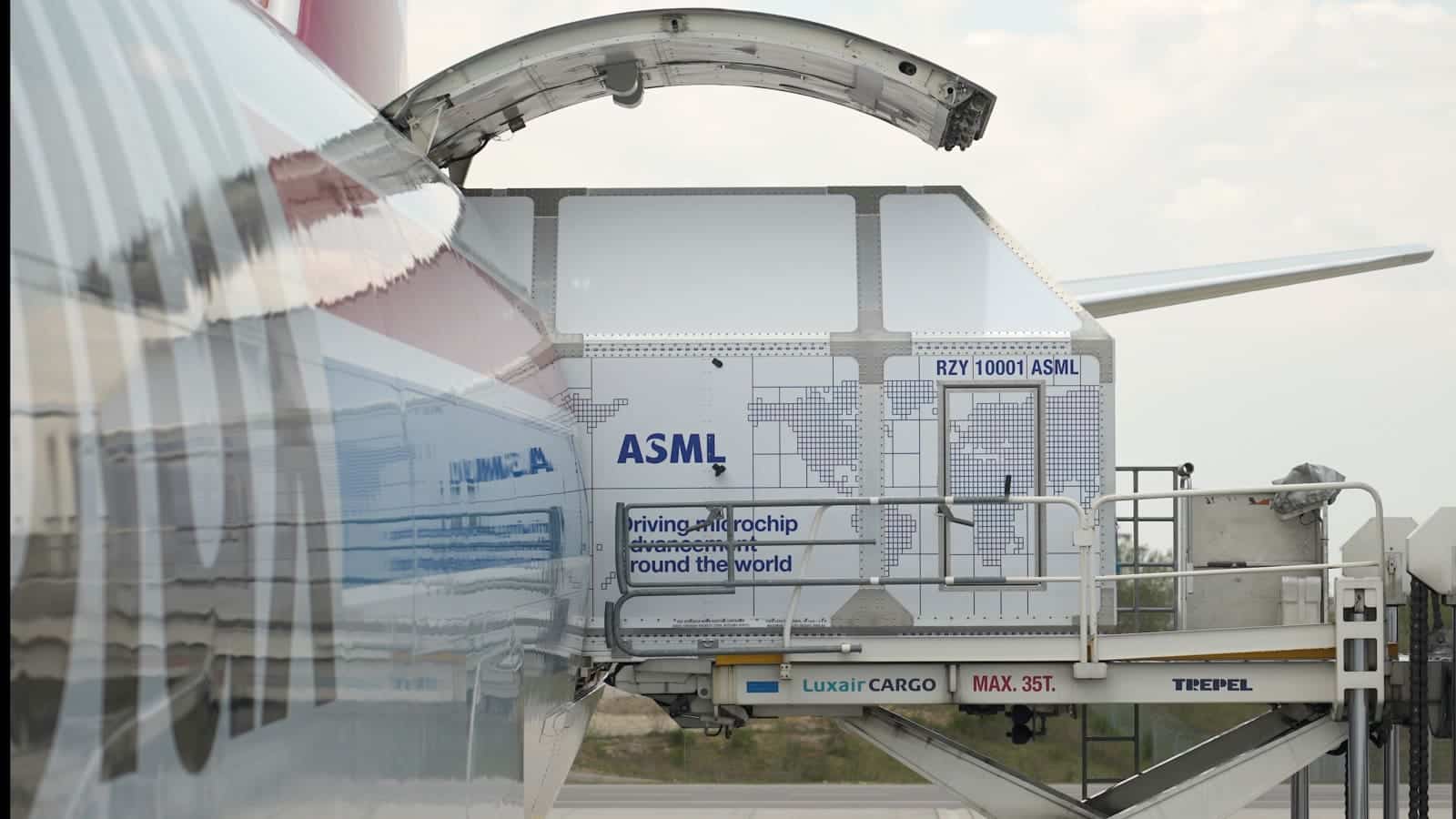
The European Union is negotiating with China over a possible way out to keep Sindlhauser Materials, a German supplier linked to ASML’s supply chain, from running out of the materials it needs for its business. The company has been hit by export restrictions imposed by Beijing after Chinese entities were added to the latest round of European sanctions against Russia. According to Bloomberg, the lack of immediate alternatives could put Sindlhauser’s continued operation at risk in the coming months.
The China-EU-ASML supplier dispute in 30 seconds
- Sindlhauser Materials, based in Germany, supplies specialized materials for industrial coating processes and is part of ASML’s supply chain.
- China added the company to its export control list in July 2026, in response to European sanctions against Chinese entities.
- According to Bloomberg, Sindlhauser relies almost entirely on China for the rare earths and other critical minerals it needs.
- Brussels is negotiating with Beijing a possible rollback of restrictions on a Chinese company in exchange for easing the measures affecting the German supplier.
- There is no confirmed agreement yet, and the Chinese company that could benefit from any eventual European concession has not been publicly identified.
The case shows how trade and geopolitical tensions can reach specialized companies that occupy discreet but necessary positions in industrial supply chains. Semiconductor manufacturing depends on complex equipment and an extensive network of material, component, and service suppliers. A disruption at any one of those links can become a problem for other manufacturers, even when the affected company doesn’t produce chips directly — it’s the same underlying fragility behind Samsung and SK hynix’s own move to reduce their exposure to China-linked equipment suppliers.
Sindlhauser’s situation also highlights a broader difficulty for Europe: diversifying the supply of critical raw materials takes time, while export restrictions can have immediate effects. That’s why Brussels is trying to find a diplomatic solution that keeps supply flowing while it works to reduce its dependence on China — a dependence that also shows up on the demand side, where ASML itself has warned that it sold zero chipmaking machines in Europe last quarter even as its global business keeps growing.
From sanctions on Russia to restrictions on Sindlhauser
The dispute traces back to July 23, 2026, when the European Union approved its 21st package of sanctions against Russia. Among the measures was the inclusion of 14 companies based in China, four of them in Hong Kong, accused of supporting Russia’s military complex or of helping companies evade European sanctions.
Beijing’s response came the following day. China added another 14 European entities to its export control list, Sindlhauser Materials among them. A dispute tied to the war in Ukraine ended up affecting the supply chain of a German company linked to the semiconductor industry.
Being placed on the Chinese list restricts the supply of goods subject to dual-use controls — materials and technologies that can have both civilian and military applications. The measures also cover restrictions on foreign intermediaries that attempt to supply those Chinese-origin goods to the affected entities, though Beijing authorities can grant exceptional authorizations.
The scope of these restrictions is especially delicate for Sindlhauser. According to Bloomberg, the company sources practically all the rare earths and other critical minerals it needs from China. German authorities have looked into alternative supply options and recycling, but no immediate solution has been found that removes the risk.
The possibility that the company might have to shut down in the coming months, if the restrictions continue, adds pressure to the negotiations. For now, that scenario is a risk flagged by the sources cited by Bloomberg, not an announced closure.
What Sindlhauser supplies to the semiconductor industry
Sindlhauser Materials is based in Kempten, in the German state of Bavaria, and has worked since 1995 with materials used in industrial coating processes. Its catalog includes metals, alloys, ceramics, and rare earths, used in vacuum coating techniques to deposit thin layers on different surfaces.
These processes can modify the properties of materials and have applications in fields such as optics, sensors, and semiconductors. The company also offers technical consulting and materials recycling services.
However, it hasn’t been publicly detailed which specific materials or components Sindlhauser supplies to ASML. So it isn’t possible to say precisely which of the Dutch manufacturer’s machines or processes would be affected if supply were disrupted.
The relationship with ASML helps explain the European concern, but it’s worth distinguishing between being part of its supply chain and directly supplying components essential to all of its machines. The available information doesn’t support the claim that the German company is the sole supplier of a given material, nor that a disruption would automatically bring lithography equipment production to a halt.
Even so, depending on raw materials from a single country can reduce a company’s ability to respond when trade restrictions appear. Finding another supplier isn’t simply a matter of finding a similar material: it can require checking its composition, quality, and behavior in the industrial processes where it’s used.
Brussels explores a diplomatic way out and looks for alternative suppliers
According to Bloomberg, the European Union is negotiating a possible trade-off with China: lifting certain trade restrictions on a Chinese company accused of helping Russia in its war against Ukraine, in exchange for Beijing easing the measures affecting Sindlhauser. The identity of the Chinese company hasn’t been disclosed, and for now there is no confirmed agreement.
The talks follow contacts held in Beijing on October 8 and 9 between Maroš Šefčovič, the EU’s trade commissioner, and Wang Wentao, China’s commerce minister. Both backed improvements to the transparency of the procedures used to add and remove companies from restriction lists, as well as measures to make it easier to remove them once legal requirements are met.
That commitment provides a framework for further talks, but it doesn’t mean Sindlhauser has already secured an exemption, or that China has agreed to remove its name from the list. The outcome will depend on the decisions made by the authorities and the terms both sides may agree on.
In parallel, the EU is looking to diversify where it sources critical minerals. Reuters reported on October 14 that Brussels is considering closer cooperation with Vietnam to reduce Europe’s dependence on China. The initiative is part of a broader effort to widen the sources of raw materials needed for strategic industrial sectors.
That diversification, however, won’t necessarily solve Sindlhauser’s immediate problem. Developing alternative suppliers can require new business relationships, production capacity, and technical checks. The negotiation with Beijing is aimed at buying time and preventing a specialized company from running out of materials before other viable options exist.
Frequently Asked Questions
Why has China restricted supply to Sindlhauser?
The company was added to China’s export control list after the EU approved sanctions against Chinese entities as part of its package of measures against Russia, in July 2026.
What is Sindlhauser’s relationship with ASML?
Sindlhauser is part of ASML’s supply chain and works with materials for industrial coatings. The specific products it supplies to the Dutch manufacturer haven’t been publicly detailed.
Could Sindlhauser shut down because of the Chinese restrictions?
Bloomberg has reported that a lack of raw materials could force the company to close in the coming months if the restrictions continue. No definitive shutdown has been announced.
Has the EU reached an agreement with China to save the supplier?
There is no confirmed agreement. According to Bloomberg, Brussels is negotiating a possible trade-off, while the EU is also looking for ways to diversify its supply of critical minerals.
