
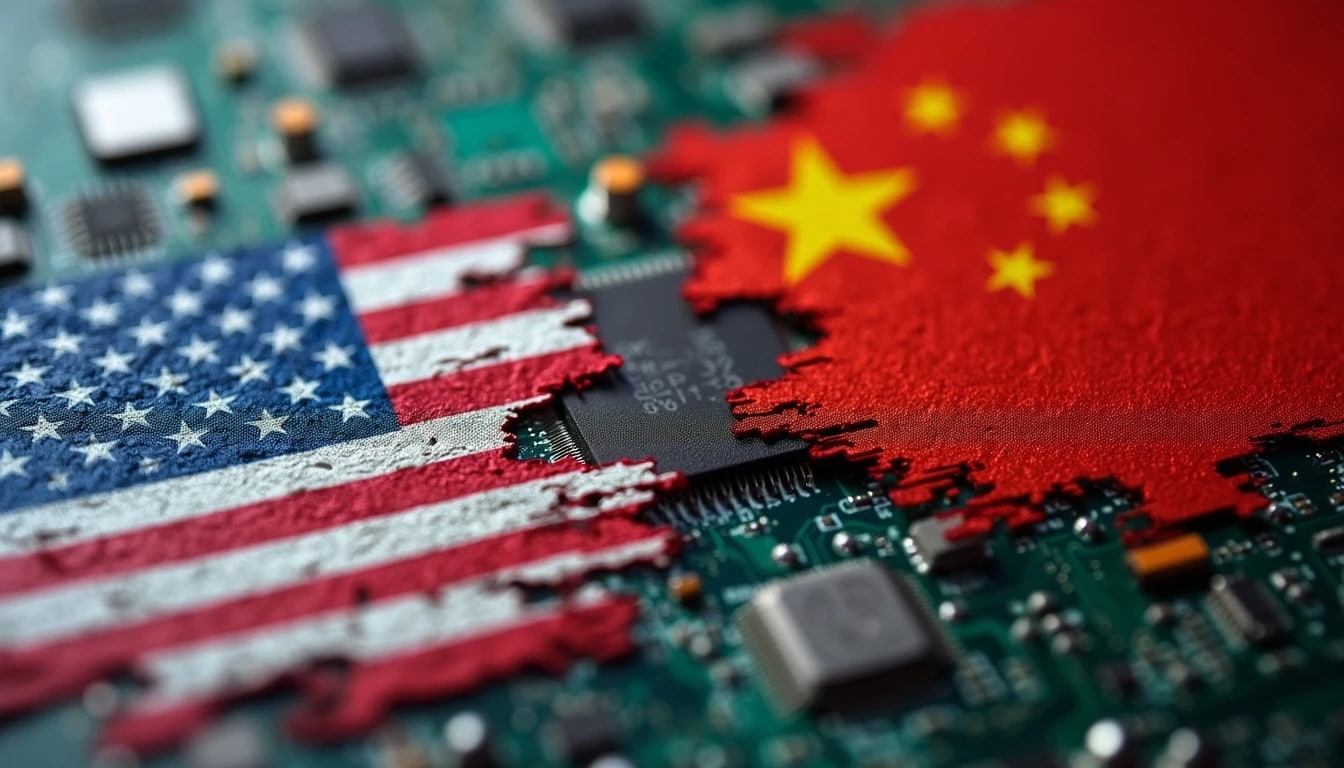
Samsung Electronics and SK hynix have begun reviewing a critical part of their supply chain for materials, components, and equipment for semiconductors. The move, first reported by ETNews and picked up by TrendForce, points to reducing dependence on suppliers linked to China, not so much due to an immediate technical issue but because of the risk that new U.S. restrictions could disrupt future purchases, exports, or certifications.
This measure mainly affects photoresist strip equipment, used to remove photoresist residues during manufacturing, and rapid thermal processing or RTP systems, which apply controlled heat to wafers. According to available information, the two South Korean companies are evaluating alternatives to equipment from Mattson Technology, a firm founded in the United States but acquired in 2016 by Chinese capital and now part of Beijing E-Town Semiconductor Technology.
Mattson is not currently listed on the Entity List maintained by the U.S. Department of Commerce, but the possibility of future designation has started influencing purchasing decisions. In an industry where an installed tool can remain in a line for years, the risk is significant: if a supplier becomes subject to restrictions, any operational dependence might turn into a production, compliance, or export problem.
Regulatory risk weighs as much as price
This news indicates a significant shift in how memory manufacturers manage their procurement. For years, decisions about manufacturing equipment have been guided by performance, cost, support, stability, and the ability to integrate into the line. These factors remain, but now an additional filter has been added: the geopolitical exposure of the supplier.
ETNews notes that Samsung and SK hynix have already begun discussions with domestic and international suppliers of PR strip and RTP equipment. Decreasing Mattson’s share in new facilities could partly be explained by performance or price comparisons, but the increasing likelihood of future U.S. sanctions seems to be a growing concern within the industry.
The Entity List is particularly relevant because it restricts certain companies’ access to U.S.-made goods, software, or technology without a special license. In December 2024, the Bureau of Industry and Security added 140 entities to this list, including companies involved in semiconductor manufacturing and tools, citing the need to curb China’s advanced chip capabilities.
For Samsung and SK hynix, the issue isn’t just whether to buy from a specific company. It’s about preventing a seemingly operational decision from contaminating the entire production chain. If a piece of equipment, a component, or technology is linked to a restricted company, it could complicate exports to the U.S., global customer agreements, or access to incentives and public programs.
| Element Affected | Manufacturing Use | Risk Being Mitigated |
|---|---|---|
| PR strip | Removal of photoresist residues after lithography processes | Dependence on equipment that could become restricted |
| RTP | Fast, controlled thermal treatments of wafers | Exposure to suppliers with regulatory risks |
| Components and consumables | Parts used in manufacturing processes | Traceability and potential contamination of the supply chain |
| Shared suppliers with China | Supplies to both Chinese and South Korean manufacturers | Risk of control, regulatory pressure, or indirect transfer |
Mattson, a US firm under Chinese control
Mattson Technology exemplifies the complexity of the semiconductor supply chain. For years, it was an American equipment provider for chip manufacturing. In 2016, E-Town Capital completed its acquisition, taking over more than 50% of the company’s shares, which was publicly traded in the U.S.
This change of ownership doesn’t automatically mean its equipment is unsafe or that its products will stop functioning. The issue is broader: in today’s export control environment, a company with Chinese ownership can become a point of friction even without sanctions. The risk stems not just from current circumstances but from what might happen over a manufacturing line’s lifespan.
For memory manufacturers, replacing tools isn’t trivial. Semiconductor lines are validated over long periods; any change can impact performance and yield, and approving new suppliers involves testing, engineering, and time. Therefore, such decisions are often made proactively. Waiting for an explicit sanction could be too late.
TSMC’s move on 2-nanometer lines
The potential reorganization of Samsung and SK hynix isn’t isolated. TSMC, the world’s largest contract chipmaker, has already removed Chinese equipment from its 2-nanometer lines to safeguard its advanced fabs from possible U.S. restrictions. According to reports from Nikkei and specialized media, TSMC has excluded AMEC and Mattson tools from its most advanced processes.
The logic is similar. In cutting-edge processes, the risk of regulatory interruption can outweigh the cost savings from alternative suppliers. A 2-nanometer node is a critical platform for high-value clients, with tight capacity commitments and strategic importance.
Such decisions may also impact Western and Japanese suppliers. Applied Materials, ASML, Lam Research, Tokyo Electron, and KLA are potential beneficiaries of decreased Chinese provider presence in certain areas, alongside South Korean equipment manufacturers seeking to fill gaps in PR strip, RTP, consumables, and other process segments.
“De-Chinese-ization” is selective, not complete
Talking about a “chip supply chain without China” would be an exaggeration. The semiconductor industry still relies on a global network of suppliers, materials, chemicals, components, assembly, logistics, and machinery where China has a direct or indirect presence. What Samsung, SK hynix, and TSMC are doing is more precise: reducing exposure in points where regulatory changes could interrupt production or hinder international sales.
This reduction is selective, focusing on sensitive tools and components, suppliers with Chinese ownership or control, and advanced or strategic lines. It also affects relationships with common suppliers. ETNews reports that some Samsung and SK hynix vendors have been asked to exercise greater caution when working with Chinese chipmakers.
The nuance is important because concerns now extend beyond technology theft. According to testimony collected by the Korean source, the fear has shifted from tech leaks to supply chain risks. It’s a changing era: companies now ask not only who might copy their technology but also who could block, contaminate, or condition their production lines.
| Used to be more concerning | Now more important |
|---|---|
| Acquisition price | Future sanction risk |
| Technical performance | Supply chain traceability |
| Tech leakage risk | Supply disruption risk |
| Point-specific approval | Exposed over the entire lifespan of the tool |
| Purchasing per tool | Designing a supply chain compatible with geopolitical restrictions |
South Korea aims to protect its memory position
Samsung and SK hynix are central to the global memory market. SK Hynix leads in HBM for AI workloads, and Samsung is trying to strengthen its position in this segment as well, amid ongoing demand from AI servers that strains advanced DRAM production. In this context, any supply disruption could have broader consequences beyond a single factory.
The pressure is twofold. South Korea needs to maintain access to the U.S. market, cloud clients, and Western equipment; simultaneously, it has industrial and commercial interests in China, which has been a key market and production hub for memory chips for years. Reducing reliance on Chinese suppliers doesn’t mean cutting ties with China but preparing a supply chain capable of operating if regulatory conflicts escalate.
This case underscores that chip manufacturing decisions are no longer confined within fab walls. They also involve Washington, Beijing, Seoul, Tokyo, Taipei, and Brussels. Technology remains central, but industrial policy shapes which suppliers are acceptable, what tools can be used, and which clients are excluded from certain flows.
An opportunity for Korean suppliers
The gradual withdrawal of certain Chinese tools could open opportunities for South Korean equipment and component vendors. ETNews suggests that competition is emerging among global manufacturers and Korean firms to substitute Mattson equipment, and some initiatives may focus on domestically developing certain tools.
This aligns with a broader trend: countries with semiconductor industries aim to capture more value locally, not just assemble or operate fabs. Equipment, materials, chemicals, wafers, gases, consumables, testing, and control software have become strategic pieces. Controlling more of the supply chain reduces exposure and enhances bargaining power.
Still, replacing suppliers is not immediate. Manufacturing tools must prove stability, performance, compatibility with existing processes, and long-term support. In memory, where margins depend on scale and yield, poor transitions can be costly.
Samsung and SK hynix’s approach isn’t about abrupt breaks with Chinese suppliers but about prudence. Leading manufacturers are building a buffer in case additional sanctions force rapid adjustments.
FAQs
What are Samsung and SK hynix doing?
According to ETNews, they are reviewing their supply chains for materials, components, and equipment to lessen reliance on China-linked suppliers in sensitive areas.
Which equipment is under review?
Primarily photoresist strip equipment used to remove photoresist residues and rapid thermal processing systems for controlled wafer heating.
Is Mattson Technology sanctioned by the U.S.?
Currently, Mattson isn’t listed on the Entity List. Industry concerns focus on potential future restrictions.
Why does Chinese control matter for Mattson?
Because in an export control context, Chinese ownership or influence can increase regulatory risks for manufacturers selling globally or relying on U.S. technology.
Who could benefit from these changes?
Major suppliers like Applied Materials, ASML, Lam Research, Tokyo Electron, and KLA, as well as South Korean manufacturers capable of certifying alternative tools and components.
via: etnews
