
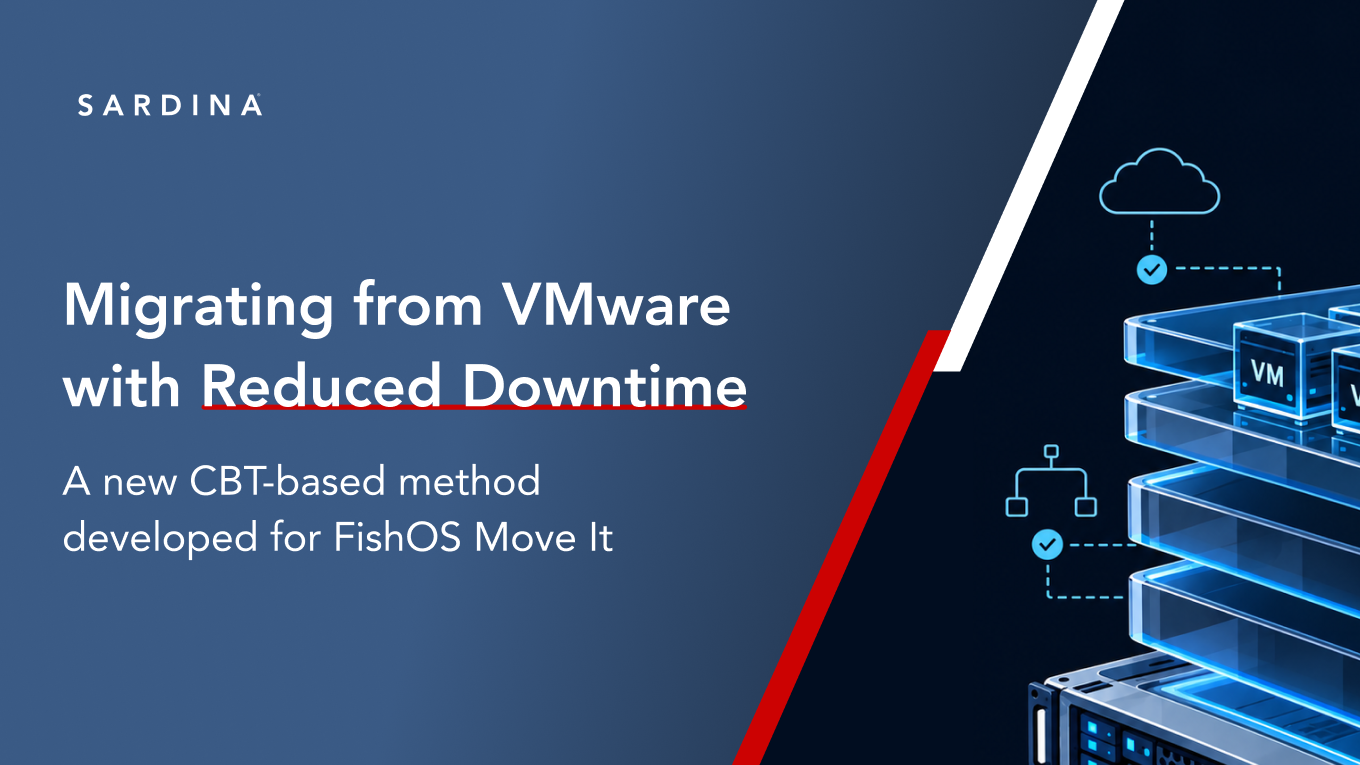
Sardina Systems, the British company behind the OpenStack-based FishOS platform, has validated a method for migrating virtual machines from VMware without using VDDK, the disk library that Broadcom pulled from public download in August 2026. The new feature, announced on October 26, combines that VDDK-free disk access with Changed Block Tracking (CBT) to sync only the changes and shorten the final cutover. The company has not published figures or explained how it accesses the disks.
The VMware-to-FishOS migration without VDDK in 20 seconds
- Sardina Systems adds a VDDK-free migration path with incremental sync to FishOS Move It.
- CBT detects changed blocks while the source machine keeps running.
- The goal is to reduce the data left to transfer at cutover, and with it the downtime.
- It’s validated in testing, with no published timings or data volumes.
VDDK (Virtual Disk Development Kit) is VMware’s kit that lets third-party tools read virtual machine disks, and most migration tools relied on it. As Platform9 and Virtualization Howto documented, its download pages stopped working on August 25, 2026 with no prior notice, and Broadcom told customers the library is no longer available and that it reserves its kits for authorized partners. Alternative paths have since appeared, such as OpenVDDK, an open reimplementation of the library.
How sync works with CBT
The method is part of FishOS Move It, Sardina Systems’ migration tool. First, the virtual machine’s full disk is copied while it keeps running on VMware. Then CBT, a vSphere feature that records which disk blocks have changed since the last copy, lets later syncs transfer only those differences. When cutover time comes, the machine is stopped and only what changed since the last pass is left to copy, before booting it on OpenStack.
The idea of live migrations with CBT isn’t new, and many tools used it by leaning on VDDK. What Sardina is presenting is combining CBT with its own disk access that doesn’t rely on that library. According to the company, Move It already offered a VDDK-free migration that has been used in production, and the new path adds the incremental option. Sardina says it cuts downtime compared with many other VDDK-free migration flows and that it’s ready to roll out with its customers.
What the announcement doesn’t say
The announcement leaves several questions open. It doesn’t detail what mechanism it uses to read VMware disks without VDDK, doesn’t give downtime figures, data volumes or transfer speeds, and explains that validation was done in a test environment, without further detail. The company itself acknowledges that actual downtime depends on the source environment, the data volume, network capacity and each workload’s requirements, and that every project needs its own assessment and cutover plan.
It is, besides, a commercial announcement. Sardina is aiming the feature at cloud and hosting providers, telecom operators and companies with narrow maintenance windows, such as banking and healthcare, and encourages checking whether a project qualifies for its offer to migrate to FishOS for 1 euro, which the company launched in January 2024 after Broadcom’s acquisition of VMware. To back up the demand, it cites a 2026 SUSE survey in which around 55% of 114 European IT leaders were either considering alternatives to VMware or had already decided to migrate, a trend Gartner has also tracked in its own forecasts of VMware alternatives.
For teams planning to leave VMware for OpenStack, the news adds one more option at a time when the lack of VDDK has complicated many tools. Before choosing, it’s worth asking for tests on your own workloads, measuring downtime in a pilot, and checking what happens with large disks and heavy-write machines, which tend to need the most cutover time.
Frequently asked questions
What has Sardina Systems announced?
A migration path from VMware to its OpenStack-based FishOS platform that skips VDDK and syncs changes incrementally with CBT to cut final downtime.
What is CBT?
Changed Block Tracking is a vSphere feature that records which blocks of a virtual disk have changed, so later copies transfer only those differences.
Why does migrating without VDDK matter?
Broadcom pulled VDDK’s public download in August 2026, and most migration tools depended on that library to read VMware disks.
How much downtime does it cut?
Sardina hasn’t published figures. The company says downtime depends on the environment, the data volume and the network.
Sources:
- Sardina Systems: VMware-to-OpenStack Migration Without VDDK Using CBT
- Platform9: Broadcom Cut Public Access of Virtual Disk Development Kit (VDDK) Overnight
- Virtualization Howto: Leaving VMware Just Got Harder After Broadcom Pulled VDDK Downloads
- PR.com: Sardina Systems Announces Migration for VMware Customers Following Broadcom Acquisition
