
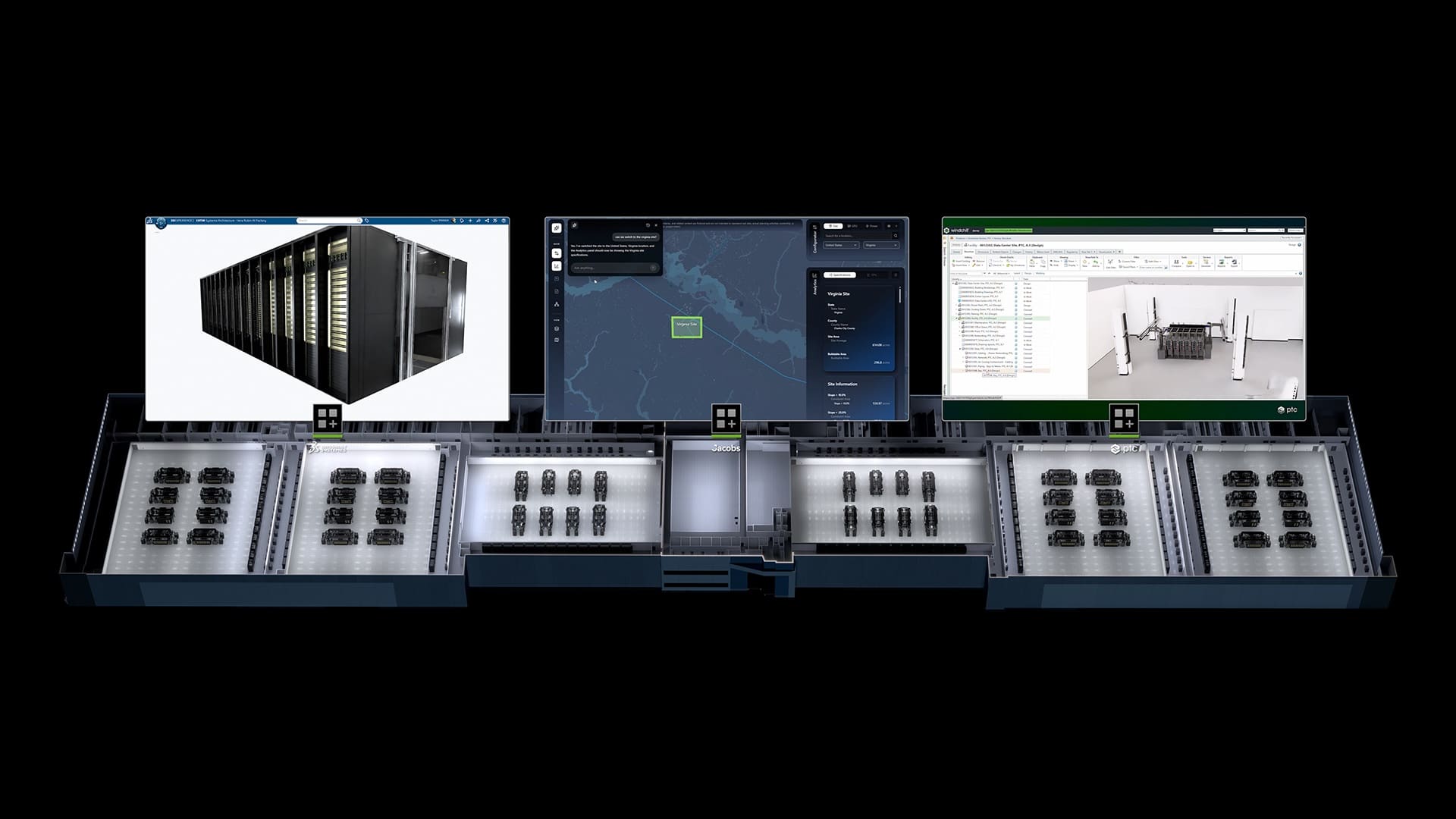
NVIDIA has brought together GE Vernova, Hitachi Energy, Schneider Electric, Siemens Energy, Phaidra, and Emerald AI around its DSX platform to design the power grid and the AI factory as a single system, from the substation to the rack. The company explained it on October 21, 2026 on its blog, timed with the GTC Berlin conference, starting from a clear premise: power has become the main bottleneck for building AI infrastructure.
NVIDIA DSX and the power bottleneck in 20 seconds
- NVIDIA puts pending orders for electrical equipment at more than $300 billion.
- In the United States, more than 200 GW of projects are waiting to connect to the grid.
- DSX simulates the grid, substation, and data center together and matches consumption to the grid’s state.
- Phaidra says it’s getting 10% more compute within the same power budget.
According to NVIDIA, part of the problem comes from how things have been done until now: the power grid, the building, and the compute systems are designed separately, each with its own teams and tools. The pitch behind the DSX AI Factory Platform is to plan, simulate, and operate everything at once, so the AI factory stops being just a massive load on the grid and starts behaving like a flexible asset.
The pieces of DSX that come into play
NVIDIA splits the platform into several blocks. DSX Sim, together with SimReady assets (digital models of equipment ready for simulation), makes it possible to reproduce the grid, the substation, and the AI factory in the same environment using models supplied by power equipment makers. DSX Flex syncs the data center’s demand with the grid’s state and with whatever on-site generation the facility has.
DSX MaxLPS aims to squeeze more compute out of every available watt, and DSX Exchange shares signals securely across compute, grid, power, cooling, and operations. The underlying idea isn’t new to the company’s messaging: Revista Cloud already reported that NVIDIA wants to squeeze more tokens out of every megawatt in its AI factories.
What each energy partner brings
The blog post details each company’s role, though in several cases these are designs still in development rather than already-deployed products:
- GE Vernova brings its experience connecting the grid to the facility and powering the racks.
- Hitachi Energy has gotten its battery energy storage system qualified under NVIDIA DSX Ready.
- Schneider Electric, with AVEVA and ETAP, is developing validated reference architectures for power and cooling for NVIDIA Vera Rubin, plus a digital twin of the AI factory built on Omniverse. AVEVA’s engineering software is combined with SimReady assets, OpenUSD, and Omniverse.
- Siemens Energy is preparing a reference design for grid-aware, resilient electrical infrastructure aligned with Vera Rubin’s DSX design. It’s also exploring using RAPIDS, Metropolis, and Isaac Sim in its Noedra digital-twin platform.
DSX Ready is the program NVIDIA uses to qualify third-party equipment for its AI factories, and Revista Cloud already explained how NVIDIA created DSX Ready to qualify batteries and cooling.
Phaidra and Emerald AI put numbers on the savings
The two cases with concrete figures come from software companies. Phaidra has integrated DSX Flex, DSX Max-Q, and DSX Exchange into its self-learning agents and says it’s getting roughly 10% more compute within the same power limit. That’s a figure from the company itself, with no public detail on which facilities or workloads it was measured on.
Emerald AI has integrated its Conductor platform into DSX Flex to help utilities tap grid capacity that’s currently underused. According to its models, that approach could unlock up to 100 GW on the existing U.S. grid. That’s a modeled estimate, not capacity already available. The company was already part of the Emerald AI, Google, and NVIDIA alliance to make AI power consumption more flexible.
NVIDIA is pairing the announcement with the Omniverse DSX blueprint and the Vera Rubin DSX AI factory reference design, and several of these partners are showing their proposals at GTC Berlin. The blog post doesn’t include pricing, commercial availability dates, or specific deployment commitments.
Frequently asked questions
What is NVIDIA DSX?
It’s NVIDIA’s platform for designing, simulating, and operating AI factories, with tools such as DSX Sim, DSX Flex, DSX MaxLPS, and DSX Exchange.
Why is power holding back AI data centers?
According to NVIDIA, there’s more than $300 billion in pending orders for electrical equipment and more than 200 GW of projects waiting to connect to the grid in the United States.
Which energy companies are working with NVIDIA DSX?
GE Vernova, Hitachi Energy, Schneider Electric (with AVEVA and ETAP), and Siemens Energy, along with software companies Phaidra and Emerald AI.
What is DSX Flex?
It’s the part of DSX that matches the AI factory’s power draw to the grid’s state and to the facility’s own on-site generation.
Sources:
