
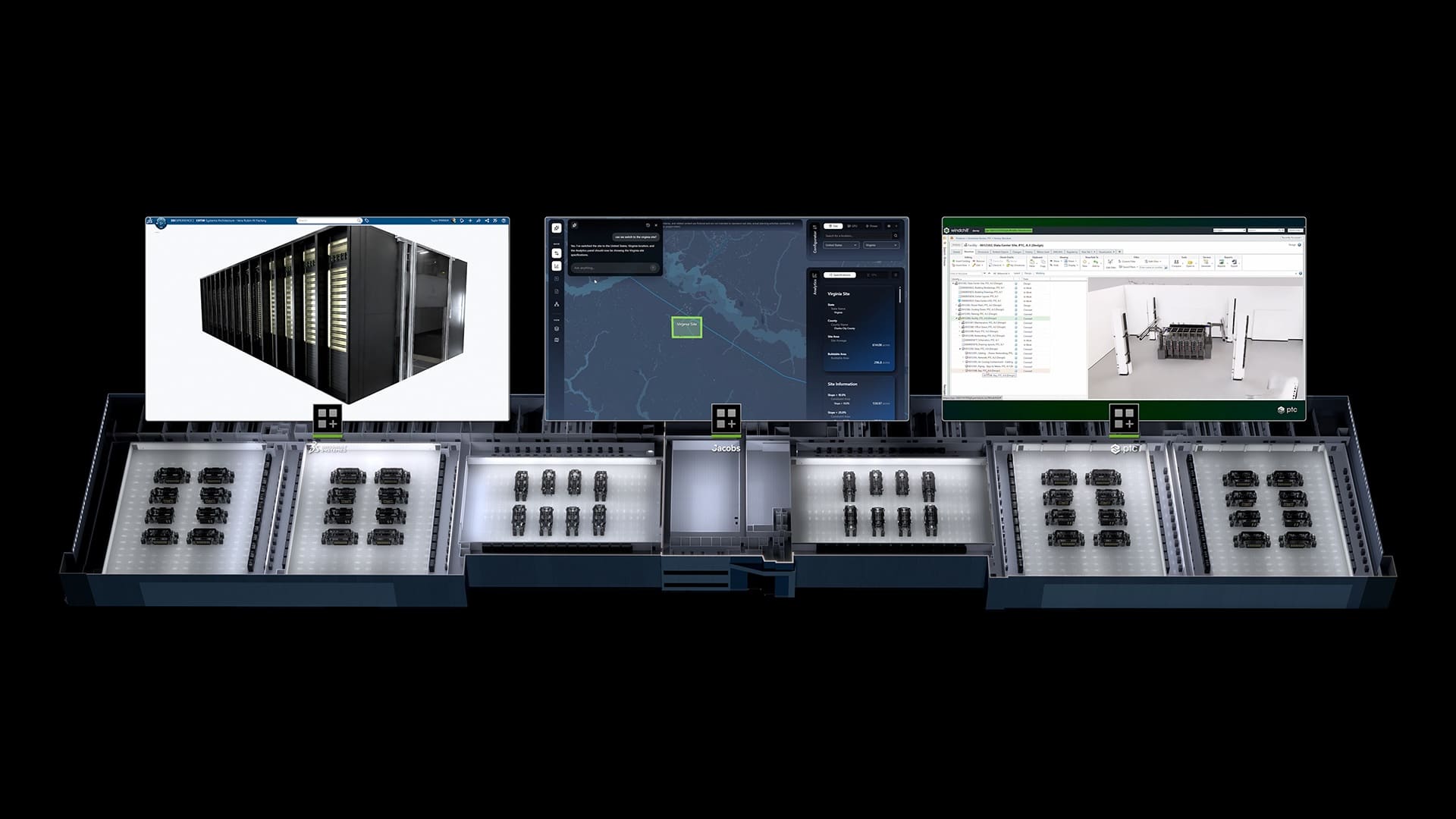
NVIDIA has introduced DSX Ready, a qualification program for infrastructure products and solutions built for AI factories. The new system starts with two categories, battery energy storage systems (BESS) and cooling distribution units (CDUs), and aims to make it easier to select components that meet the design requirements of NVIDIA DSX platforms for AI data centers — the same platform NVIDIA has been pushing to squeeze more tokens out of every megawatt.
NVIDIA DSX Ready in 20 seconds
- DSX Ready qualifies infrastructure products for AI factories.
- The program starts with BESS systems and liquid cooling distribution units.
- Hitachi Energy, LG Energy Solution, and Tesla provide qualified BESS solutions.
- LG Electronics, LiquidStack, and Vertiv have qualified CDU solutions.
- NVIDIA plans to add new infrastructure and software categories to the program.
The new program addresses an issue that’s gaining weight as facilities built for AI workloads keep growing: electrical and thermal infrastructure needs to be designed alongside the computing architecture, a shift also visible in the industry’s move toward new 800V DC power architectures for data centers. NVIDIA notes that constraints on power, cooling, water, space, and grid connection can determine which solutions can be deployed at a given facility.
DSX Ready is meant to create a link between NVIDIA’s reference designs and the specific products that operators and builders of these facilities can use. To do that, it sets specific requirements for each category along with a review or qualification process.
The company presents the program as a way to simplify component evaluation and reduce risk during integration. Qualification applies to a specific offering that meets the established requirements and doesn’t replace the engineering work needed to adapt that product to the conditions of each facility.
Batteries and cooling are the first categories
The DSX Ready launch covers two types of equipment. The first is battery energy storage systems, known as BESS. The second is cooling distribution units, or CDUs, used to distribute cooling in facilities that rely on liquid cooling.
In the BESS category, NVIDIA lists qualified solutions from Hitachi Energy, LG Energy Solution, and Tesla. For these systems, manufacturers must run the tests required by the program and submit the corresponding data for NVIDIA to review and approve within a defined qualification scope.
The company makes an important distinction here: passing these tests doesn’t replace the site-level engineering needed, nor does it mean the system will by itself guarantee the stability of a specific facility.
The second category covers CDUs. In this case, NVIDIA uses a self-qualification process based on a specific set of tests to determine whether a given solution meets the applicable functional requirements.
The first qualified CDU solutions come from LG Electronics, LiquidStack, and Vertiv. Including these products links the requirements set out in the reference design to specific cooling equipment that builders can evaluate for their projects.
The distinction between product qualification and facility engineering matters. A CDU can meet NVIDIA’s established functional criteria and the operator still has to check how it fits into their facility, hydraulic setup, IT architecture, and operational needs. The program doesn’t eliminate those design decisions.
NVIDIA wants to connect design with component selection
DSX Ready is part of NVIDIA DSX, a platform the company positions to coordinate the design and operation of an AI factory by considering compute, networking, power, cooling, facilities, and software together — the same platform behind NVIDIA’s DSX MaxLPS effort to pack more GPUs into the same power budget.
The approach reflects how these elements relate to each other. A change meant to improve one part of the infrastructure can shift the constraint elsewhere. For example, adding compute capacity can raise power and cooling needs, while site characteristics can limit the available power or the cooling system that can be installed.
NVIDIA argues that this combined view also calls for a structured way to evaluate products from different vendors. DSX Ready aims to cover exactly that space through specific requirements and a clear identification of the solutions that have passed the corresponding process.
For manufacturers, the program provides a way to demonstrate that a product meets the requirements for its category. For AI factory builders, it offers an additional reference point when sourcing and evaluating components.
Qualification also doesn’t mean every included product is interchangeable. Site conditions, facility configuration, and operational needs still determine which solution can be used for each project.
The program is also designed to grow. NVIDIA says it will gradually add new infrastructure and software categories, though the announcement doesn’t specify which categories are next or when they’ll be available.
The launch comes as AI computing architectures require ever-tighter integration between IT systems and the infrastructure that keeps them running. Power and cooling are part of that equation and can determine how much capacity can be installed in a given space.
DSX Ready aims to translate that relationship into a more structured vendor-selection process. Rather than simply publishing a reference design, NVIDIA is adding a way to link specific requirements to actual products that have gone through its qualification process.
The company is inviting interested manufacturers to begin the evaluation process for their products or solutions. For now, the program covers BESS and CDUs, with the six companies mentioned as providers of the first qualified solutions.
FAQ
What is NVIDIA DSX Ready?
It’s an NVIDIA qualification program for products and solutions that meet certain requirements from its reference designs for AI factories.
Which products does it include initially?
The program starts with battery energy storage systems (BESS) and cooling distribution units (CDUs).
Which manufacturers have qualified products?
In BESS, they include Hitachi Energy, LG Energy Solution, and Tesla. In CDUs, they include LG Electronics, LiquidStack, and Vertiv.
Does a qualified solution guarantee it will work at any AI data center?
No. NVIDIA notes that qualification doesn’t replace site-level engineering or imply that the facility will be stable. Each operator still has to evaluate how the product fits their configuration and needs.
via: blogs.nvidia
