
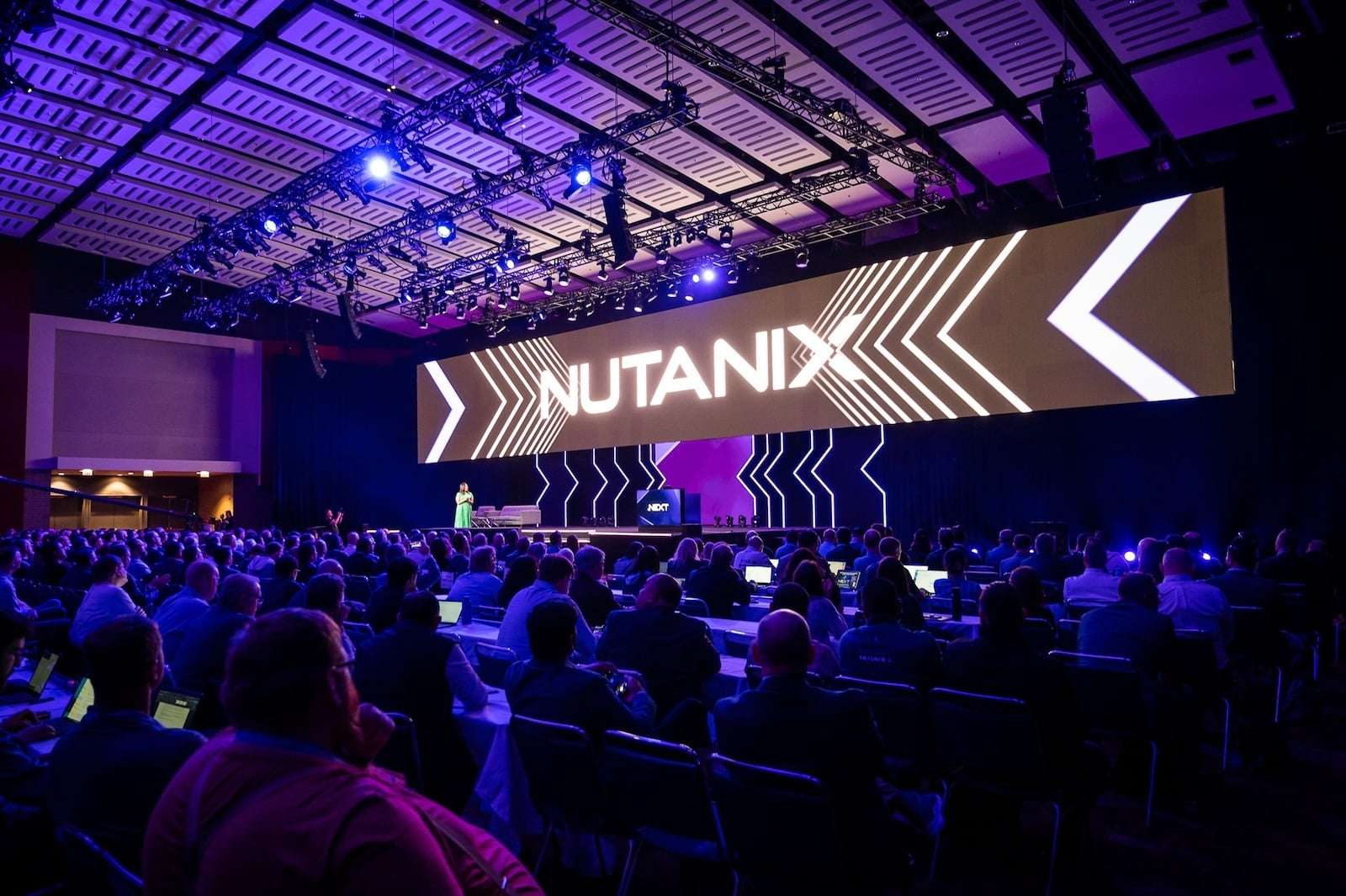
Nutanix has acquired Ryax Technologies, a French company specializing in orchestration and compute resource management for artificial intelligence workloads. The deal, announced on September 22, 2026, will let Nutanix bring Ryax’s capabilities to bear on making better use of GPUs and automatically assigning AI workloads to the most suitable infrastructure, with integration planned for future versions of Nutanix Kubernetes Platform (NKP) and Nutanix Enterprise AI (NAI).
Nutanix’s acquisition of Ryax in 30 seconds
- Nutanix acquires Ryax Technologies, a French company focused on AI compute orchestration.
- Ryax’s technology will be integrated into future versions of NKP and Nutanix Enterprise AI.
- The goal is to improve GPU and CPU utilization and automate where AI workloads run.
- Ryax brings intelligent scheduling, telemetry, and dynamic resource allocation.
- Ryax’s team will join Nutanix in France, and the announced financial impact of the deal is not material.
The deal comes as enterprises spread their artificial intelligence workloads across their own data centers, major cloud providers, and specialized infrastructure vendors. Nutanix argues that this fragmentation makes it harder to make full use of available capacity and to control the cost of inference workloads, especially as agentic AI systems become more common.
For Nutanix, buying Ryax adds a management layer focused specifically on the resources these workloads need. The company has not disclosed the value of the acquisition and says its financial impact is not material.
Ryax wants to decide where and how each AI workload runs
The technology Nutanix is gaining with Ryax is built around two capabilities. The first is intelligent resource optimization, aimed at making more efficient use of GPUs, CPUs, and other compute resources. The second is AI-aware intelligent scheduling, which seeks to automatically place workloads on the hardware best suited to them based on performance and cost.
That approach has a practical consequence for organizations running heterogeneous infrastructure. The same AI platform may need to run on on-premises servers in some cases, on a public cloud in others, or on specialized infrastructure when there’s a specific need for GPUs.
Ryax had already built its platform around hybrid, distributed environments. Its technology lets workflows run across on-premises infrastructure, edge, and cloud, with serverless orchestration and resource automation capabilities. The company has also worked with high-performance computing (HPC) scenarios and machine learning workloads.
Nutanix plans to put those capabilities to work inside its own products so teams don’t have to manually decide how much hardware to assign to each job and where it should run.
The technical blog Nutanix published alongside the announcement spells out some of the mechanisms it intends to add. These include right-sizing, which uses historical workload data to adjust GPU allocations; it also covers automatic recovery from out-of-memory errors and the use of fractional GPU partitions to share a single accelerator across different container workloads.
These features are still part of the planned integration. Nutanix isn’t presenting them as capabilities already available inside NKP or NAI as an immediate result of the acquisition.
From AI testing to production
The problem Nutanix is trying to solve goes beyond finding a free GPU. Organizations can develop an AI project on a given piece of infrastructure and then struggle to bring it into production because of differences in storage, hardware, networking, Kubernetes, data, and software tooling.
The company describes Ryax as technology capable of automating part of that infrastructure and connecting those pieces together. The goal is to reduce the manual work needed to turn a proof of concept into a workload that runs reliably on an ongoing basis.
Even before the deal, Ryax’s platform was already oriented toward data and machine learning workflows. Its website describes an architecture built to distribute processes across on-premises, edge, and cloud systems, while its list of use cases includes machine learning, HPC, and energy management.
The acquisition lets Nutanix bring that approach to its own platforms. According to the company, Ryax will be integrated into future versions of Nutanix Kubernetes Platform and Nutanix Enterprise AI.
GPUs are also becoming a scheduling problem
The growth of generative AI and AI agents is putting more pressure on accelerators. But having more GPUs installed doesn’t necessarily mean all of them are being used efficiently.
One workload may reserve more memory or capacity than it needs, while another waits for resources available on a different server. In a hybrid environment, the available infrastructure can also carry different costs and characteristics.
Ryax’s technology aims to address exactly that situation through dynamic allocation. Rather than treating every server as an isolated unit, the system can analyze workload characteristics and decide how to distribute them across available resources.
The GPU fractioning Nutanix mentions also lets certain accelerators be shared across several container workloads. The company presents this as a way to increase the number of jobs that can use the same piece of physical infrastructure.
Scheduling can also factor in cost. The idea Nutanix has announced is that workloads can be automatically placed on hardware that meets their requirements without necessarily using the most expensive option available.
That’s especially relevant in architectures where on-premises servers, public clouds, and specialized providers coexist. Nutanix talks about a hybrid operating model capable of abstracting away part of that complexity and offering a common layer for running and managing workloads.
The French company, for its part, already positioned Ryax as a hybrid orchestrator for AI applications, running on public cloud, private infrastructure, or the edge. Its website also states that the platform can apply criteria such as cost, privacy, or energy consumption when deciding how to run processes, though those claims come from the vendor itself.
An integration that’s still to come
One point worth separating from the announcement is availability. Nutanix has confirmed the acquisition and the addition of the Ryax team, but the announced integrations with NKP and NAI are planned for future releases.
Nutanix’s own communication warns that certain described features, capabilities, and integrations are still in development and that their future availability is subject to change. So the acquisition doesn’t mean all of Ryax’s capabilities are already built into Nutanix’s products.
The Ryax team will remain in France within Nutanix. Its CEO, Andry Razafinjatovo, said the company’s technology was designed to run workloads on hybrid infrastructure, while Rajiv Ramaswami, Nutanix’s CEO, placed the acquisition within the company’s strategy to simplify enterprise AI management.
The deal fits an evolution in AI infrastructure where the problem is no longer just having accelerators available. It also matters which workload uses each resource, for how long, and on which infrastructure it makes the most sense to run it.
Frequently Asked Questions
What did Nutanix acquire?
Nutanix acquired Ryax Technologies, a French company dedicated to orchestration and compute resource management for AI workloads.
What will Nutanix use Ryax’s technology for?
The company plans to use it to improve GPU and CPU utilization and automate the assignment of AI workloads based on the characteristics of available resources.
When will Ryax arrive on Nutanix Kubernetes Platform?
Nutanix has announced it will integrate Ryax’s technology into future versions of Nutanix Kubernetes Platform and Nutanix Enterprise AI. The features described are still in development.
How much did Nutanix pay for Ryax?
Nutanix has not disclosed the price of the acquisition. The company says the financial impact of the deal is not material.
Related reading: Nutanix was recently named a Leader in Gartner’s 2026 server virtualization Magic Quadrant, a ranking that shows how central resource management has become to its enterprise AI strategy.
