
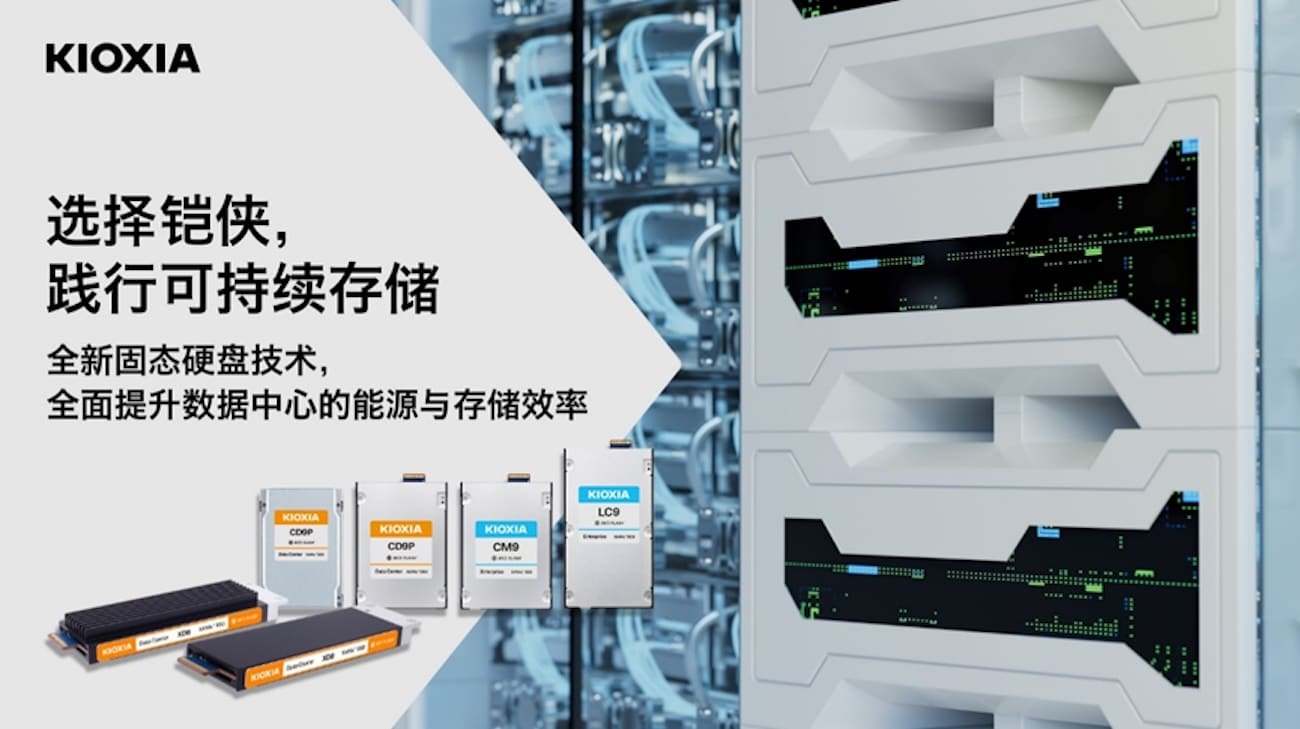
Kioxia wants to avoid letting the sharp rise in NAND memory prices end up hurting its own customers. Hiroo Ota, chief executive of the Japanese manufacturer since April, has told his sales teams not to push for substantial new price increases in negotiations with data center operators. The decision doesn’t amount to a general price freeze, but it comes after Kioxia’s average NAND selling price rose roughly 70% quarter-on-quarter in the period ended in June.
Kioxia and NAND Pricing: The Key Facts in 20 Seconds
- Kioxia believes NAND prices have already risen enough.
- Its average selling price rose roughly 70% quarter-on-quarter between April and June.
- The guidance to moderate further hikes applies specifically to data center customers.
- Apple accounts for 20.4% of Kioxia’s annual revenue, but no company-specific deal has been announced.
Ota’s stance is especially notable because it comes in the middle of a broader memory price surge. The executive believes that repeating such steep increases could end up curbing customer investment and hurting the market itself. His argument is simple: even the large companies running massive computing infrastructure have a spending limit.
Kioxia Isn’t Announcing a Price Cut
It’s worth separating what Kioxia has actually communicated from the possible consequences for other buyers. Ota has explained that he told sales teams not to seek substantial increases when negotiating with data center operators. He hasn’t announced a price reduction, nor a commitment to hold prices unchanged across all products and customers.
The immediate intent would be to hold prices at their current elevated levels rather than trying to repeat the steep hikes of recent quarters. According to comments reported by The Business Times, Kioxia’s average NAND price grew 70% in the quarter ended in June compared with the previous three months. In the prior quarter, it had already more than doubled.
Ota hasn’t ruled out future increases, either. His message is more about slowing the pace, since he believes pushing the escalation too far could affect demand. The executive himself explained that squeezing prices too hard could end up damaging the market and its growth.
The situation is largely tied to strong storage demand coming from data centers. AI workloads require huge amounts of storage capacity, and cloud infrastructure providers have been ramping up their needs for enterprise solid-state drives (SSDs) and NAND memory.
TrendForce already estimated in June that NAND Flash contract prices could rise between 70% and 75% quarter-on-quarter during the second quarter of 2026. At the same time, supply remains constrained by manufacturers’ caution about expanding capacity after the industry’s steep downturn a few years ago.
Apple Has a Lot at Stake With Kioxia
Although Ota’s comments refer specifically to data centers, Kioxia’s pricing trajectory carries direct significance for Apple. The Japanese manufacturer’s financial disclosures make it possible to put numbers to that relationship.
During the fiscal year ended March 31, 2026, sales to the Apple group reached ¥476 billion and accounted for 20.4% of Kioxia’s consolidated revenue. A year earlier, that figure had been 17.6%. Apple was also the only customer identified in that fiscal year contributing more than 10% of revenue.
That doesn’t mean Apple will automatically receive the same terms as data center operators. Kioxia hasn’t announced a price freeze for the American company, nor did Ota mention one when explaining the new sales guidance. Presenting that possibility as a confirmed agreement would go beyond what’s actually known.
There is, however, a potential consequence: if Kioxia adopts a less aggressive pricing policy more broadly, one of its top customers would have considerable exposure to that shift. Apple’s importance to Kioxia’s books also means the commercial terms between the two companies matter to both sides.
For Apple, any moderation would also come after several quarters of mounting pressure on memory costs.
Presenting results for the third quarter of its fiscal year 2026, which ended June 27, Apple reported revenue of $109.4 billion, up 16% year-over-year. During the subsequent analyst call, Tim Cook explained that the company had paid more for memory in the March quarter than in the December quarter, and considerably more during the June quarter.
Apple expected that trend to continue into September. Cook said the company anticipated even higher memory costs during the current quarter, though part of the effect could be offset through previously purchased inventory and lower costs for other components.
The problem doesn’t necessarily end there. Apple also indicated that market memory prices could keep rising after September, with a growing effect on its business.
A Moderation That Doesn’t End the Pressure on Memory
Ota’s words introduce a different signal into a market that has been dominated by sharp increases in recent months. Still, it’s too early to read his comments as the end of the NAND up-cycle.
Kioxia continues to operate in a market where demand outstrips supply in certain areas and where AI-linked data centers are absorbing growing amounts of storage. The company itself intends to increase the weight of long-term agreements with large cloud infrastructure customers.
So holding current prices steady would already mean doing so from levels considerably higher than at the start of the year. What’s changing is that Kioxia appears less willing to squeeze every negotiation with another round of large increases if that ends up reducing its customers’ capacity to invest.
For Apple, the news is only potentially favorable. Its 20.4% share of Kioxia’s annual revenue shows that any shift in commercial terms between the two companies can matter, but there is currently no announcement guaranteeing stable prices for upcoming iPhones, Macs, iPads, or other devices.
The distinction matters especially after Apple publicly acknowledged its rising costs. Kioxia’s comments may be an early sign of moderation from one of its key suppliers, but they don’t yet remove the pressure Apple expects to face during the September quarter, nor do they confirm how prices will evolve afterward.
Frequently Asked Questions
Has Kioxia frozen NAND memory prices?
Not across the board. Hiroo Ota has asked his sales teams not to push for substantial increases when negotiating with data center customers, but he hasn’t announced a universal freeze or a price cut.
How much have Kioxia’s NAND prices risen?
The average selling price rose roughly 70% quarter-on-quarter during the period ended in June 2026. In the previous quarter, the increase had exceeded 100%.
Will Apple benefit from Kioxia’s decision?
A broader moderation in prices could work in Apple’s favor, but it isn’t confirmed. Kioxia hasn’t announced specific terms for Apple, and its CEO’s comments referred specifically to data center customers.
How important is Apple to Kioxia?
Apple accounted for 20.4% of Kioxia’s consolidated revenue in the fiscal year ended March 31, 2026, with sales of ¥476 billion.
