
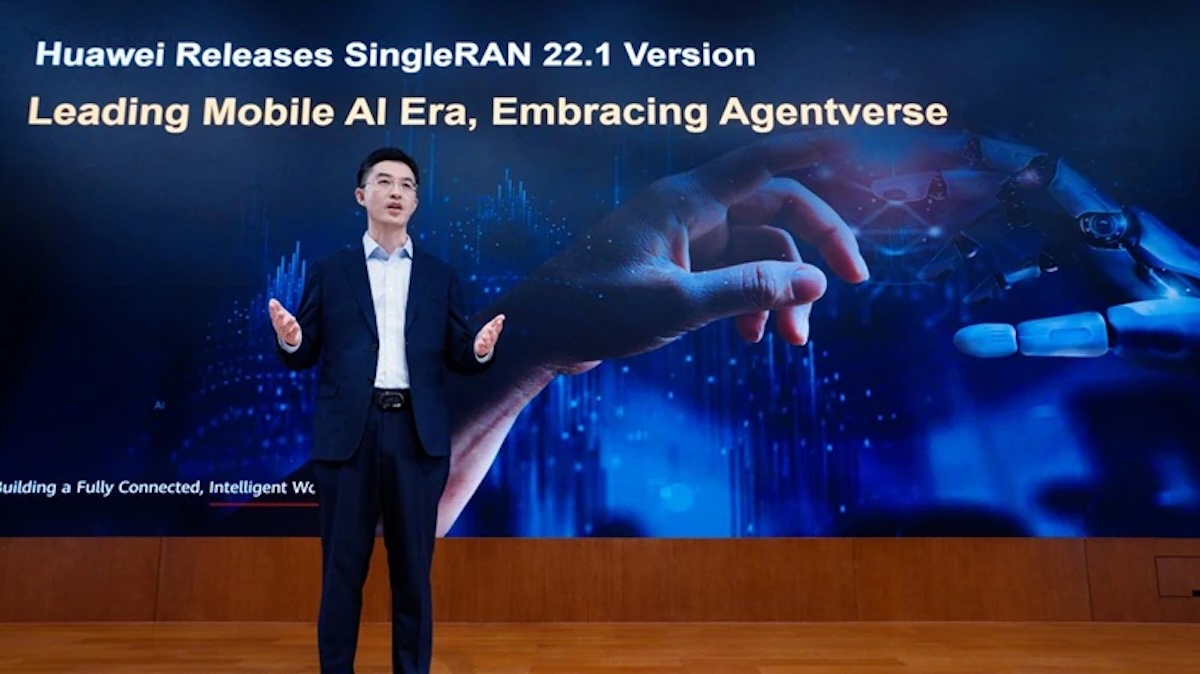
Huawei has presented, at HUAWEI CONNECT 2026 in Shanghai, four operations and maintenance (O&M) solutions for networks, government, energy and transportation, built on its MindOps platform and based on AI agents. The company announced it on October 30, 2026, in a session dedicated to how agentic AI is changing the way critical systems are maintained, and used the occasion to kick off a report on O&M agents.
Huawei’s O&M solutions in 20 seconds
- Huawei launches four operations and maintenance solutions built on its MindOps platform.
- Smart NOS 5.0 would resolve 80% of deterministic faults on its own, according to the company.
- There are versions for government, energy and smart highways.
- The improvement figures are Huawei’s own, and no customers are named.
According to Huawei’s press release, all the solutions share the same approach: digital twins and a domain-specialized model to cover the before, during and after of an incident, with collaboration between technicians and agents. The release includes no statements from executives and names no customers, and every improvement figure it cites comes from the company itself, with no detail on how it was measured.
Smart NOS 5.0 for network operations centers
Smart NOS 5.0 is the piece aimed at network operations centers. It includes agents to identify risks and manage faults, others to extract knowledge and resolve incidents while factoring in the affected service, and a financial fault-diagnosis operations room for collaborative queries. Huawei says it autonomously resolves 80% of deterministic faults, cuts incidents caused by hidden risks in half, and improves efficiency in pinpointing faults that span several domains by 30%.
It’s the same idea other vendors are bringing to systems operations: agents that don’t just alert, but act. That also raises questions about governance and permissions, something Cloud News covered when reporting on how IBM gives AI agents their own identity and credentials.
Government, energy and transportation
Exclusive Government Service 3.0 is designed for e-government clouds. It adds resource-query and emergency-response agents, plus a unified digital resource management platform that speeds up approvals and flags duplicate projects. Huawei cites a 17% increase in resource utilization.
Power Specific Service 3.0, for the electricity sector, integrates fault-diagnosis agents and one called FME Mate into MindOps, and according to the company it cuts the time to pinpoint a fault from an hour to 15 minutes. Transportation Specific Service 3.0 focuses on smart highways, with cross-domain fault analysis and integrated O&M services, and Huawei credits it with a 40% improvement in operating efficiency.
The announcement also includes the launch of the O&M Agent Research Report (2026). The release does not clarify who will take part in producing it or when it will be published.
Frequently Asked Questions
What did Huawei present at HUAWEI CONNECT 2026 on O&M?
Four operations and maintenance solutions based on AI agents and its MindOps platform: Smart NOS 5.0 and versions specific to government, energy and transportation.
What is Huawei MindOps?
Huawei’s operations and maintenance platform underlying these solutions, which combines digital twins, a specialized model and AI agents.
What improvements does Smart NOS 5.0 promise?
According to Huawei, it autonomously resolves 80% of deterministic faults, cuts incidents from hidden risks by 50%, and improves cross-domain fault isolation efficiency by 30%.
Are there customers backing these figures?
The release names no customers and does not explain how the improvements were measured; the figures come from Huawei itself.
Sources:
