
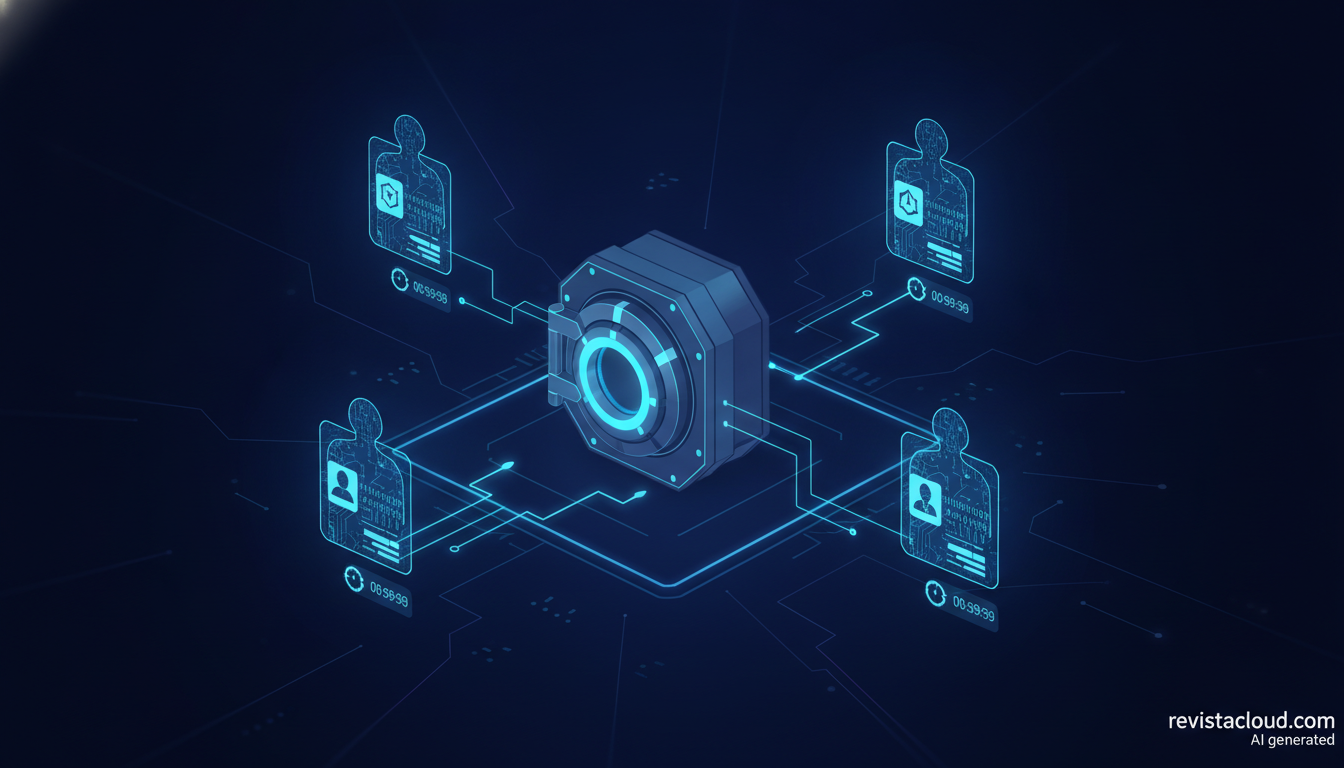
IBM has unveiled at its TechXchange 2026 conference in Atlanta a set of tools designed to give every AI agent at a company its own identity, an owner, short-lived credentials, and a record of what it does. The centerpiece is HashiCorp Vault, which now issues temporary credentials for agents, alongside Agent Identity, the new agent identity registry, now generally available.
IBM’s AI agent identity push in 30 seconds
- Agent Identity records each agent’s owner, status, and permissions, and is already available.
- Vault 2.2 gives agents their own accounts, automatically renews their credentials, and adds post-quantum encryption.
- watsonx Orchestrate discovers agents built on Bedrock, Foundry, and Gemini, isolates them, and lets admins shut them down with a kill switch, in preview.
- Gartner predicts more than 150,000 agents per large enterprise by 2028, and only 13% believe they are governing them well.
IBM’s announcement starts from a concrete problem: companies are deploying agents that access systems, data, and APIs with credentials that often nobody reviews. IBM cites Gartner, which estimated in April that by 2028 an average Fortune 500 company will be running more than 150,000 AI agents, and that only 13% of organizations believe they are governing them properly. Dinesh Nirmal, senior vice president of IBM Software, sums it up this way: “The winners in enterprise AI are changing how their business works, not simply adding more AI to it.”
Vault and Agent Identity: who each agent is and what it can touch
HashiCorp Vault already manages secrets and machine credentials at companies such as BBVA, Adobe, and the London Stock Exchange, according to IBM. It now extends that model to agents: it issues short-lived credentials that limit each agent to what it needs and that expire or can be revoked. Agent Identity acts as the system of record for each agent, tracking its owner, its lifecycle, and the authority it has been granted, and it shares that context with Vault to enforce least privilege and revoke access in real time.
Vault 2.2 gives agents their own protected accounts, automatically renews their credentials, and adds post-quantum encryption, while Secure Hub, in public preview, offers a centralized view across multiple Vault environments. For those who prefer an open-source option, there is also OpenBao, a Vault-compatible alternative. NVIDIA integrates Agent Identity and Vault with its secure runtime environment OpenShell; John Fanelli, vice president of Enterprise Software at NVIDIA, argues that “enterprises need enforceable control over how agents operate and what they can access.”
Discovering, containing, and evaluating agents with watsonx Orchestrate
watsonx Orchestrate adds three capabilities. Discover locates agents built on Amazon Bedrock, Microsoft Foundry, and Google Gemini, as well as models and MCP servers; Contain runs them in isolated environments and adds a kill switch to stop any agent; and Evaluate tests them before deployment and monitors them in production, tracking costs by model and token consumption. Only Evaluate is generally available; Discover and Contain are in technical preview.
The package is rounded out by IBM Concert, which unifies observability, incident management, and security and prioritizes vulnerabilities by their real-world exploitability; by Terraform policy, already available; and by the Terraform developer portal and remote MCP server, in public preview. On the infrastructure-as-code front, it’s worth recalling the alternative Cloud News already examined in OpenTofu 1.12 confronts Terraform: what’s changing and which to choose for IaC.
- Available now: Vault 2.2, Agent Identity, watsonx Orchestrate Evaluate, IBM Concert, and Terraform policy.
- Public preview: Secure Hub, Terraform Developer Portal, the Terraform remote MCP server, and IBM Z Atlas.
- Technical preview: IBM Integration Intelligence Hub and watsonx Orchestrate’s Discover and Contain capabilities.
Frequently asked questions
What is IBM Agent Identity?
An identity registry for AI agents that tracks each agent’s owner, status, and permissions and coordinates with HashiCorp Vault. It is already generally available.
What’s new in Vault 2.2?
Agents get their own protected accounts, automatic credential renewal, and post-quantum encryption.
Does watsonx Orchestrate detect agents from other providers?
Yes. The Discover feature, in technical preview, locates agents built on Amazon Bedrock, Microsoft Foundry, and Google Gemini.
How many AI agents will companies have?
Gartner estimates that by 2028 an average Fortune 500 company will be running more than 150,000 AI agents.
Sources:
