
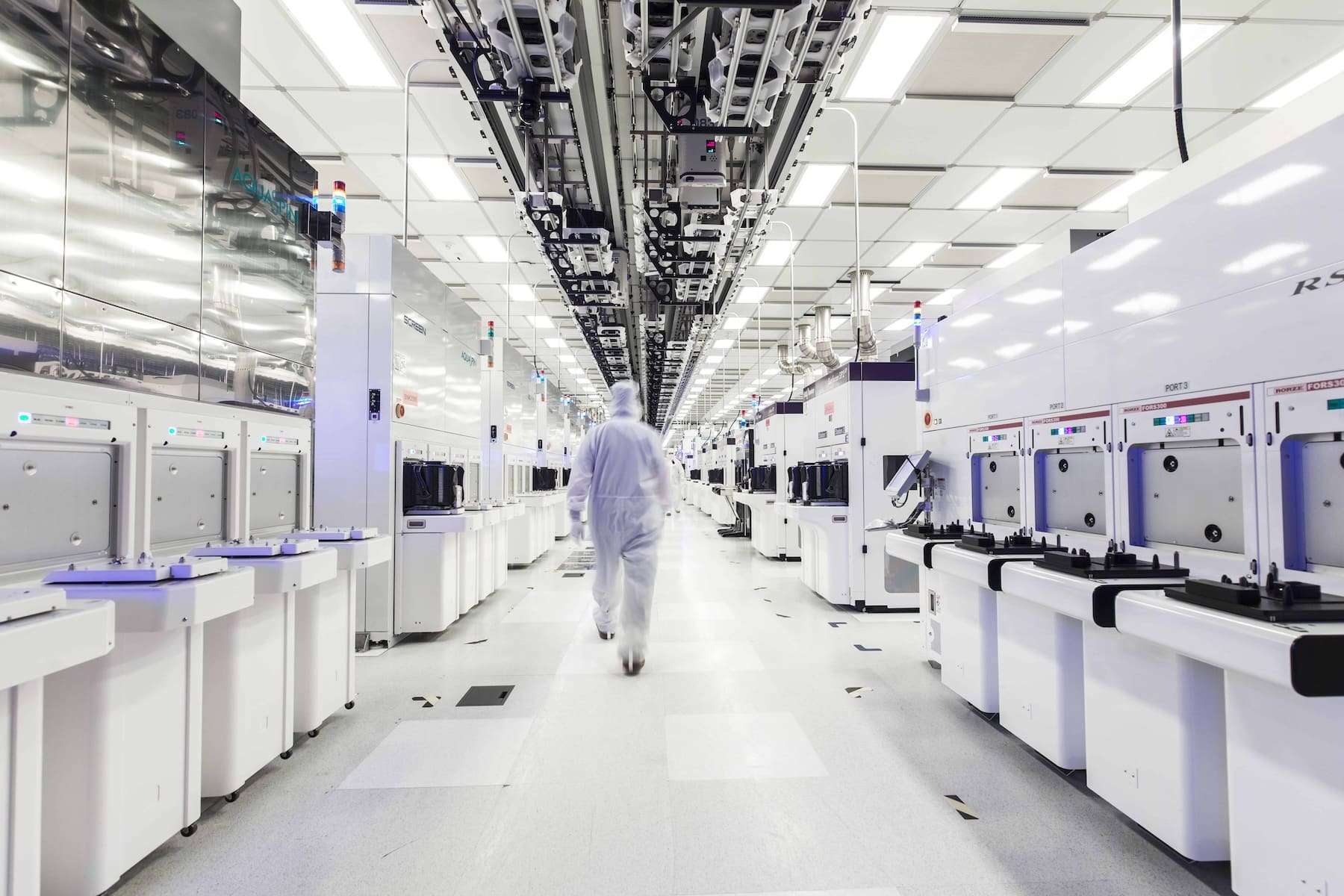
GlobalFoundries (GF) has been selected to manage and operate two new semiconductor fabs in Malta, New York, as part of a US-Japan investment initiative worth up to $21 billion. The project calls for an initial investment of about $10 billion to build a 300-millimeter wafer fab, expected to come online in 2029, and a possible second facility with a similar additional investment.
Key facts about GlobalFoundries’ New York expansion in 20 seconds
- Japan will provide the investment for an initiative worth up to $21 billion.
- The first fab will receive about $10 billion and is expected to start operating in 2029.
- Each facility could add around 900,000 300mm wafers of annual capacity.
- The project is expected to create around 27,000 construction and ecosystem jobs, plus more than 1,000 skilled manufacturing positions.
- The United States will also redirect $955 million in CHIPS Act funding toward other manufacturing and packaging technologies.
The announcement strengthens GlobalFoundries’ position as a contract semiconductor manufacturer in the United States and expands industrial cooperation between Washington and Tokyo, as the company pursues a broader international expansion that also includes new capacity in Singapore. The company will be responsible for the technology and operations of the new facilities, while Japanese financing will help accelerate the expansion of production capacity at its Malta campus.
The initiative is part of the trade and investment agreement between the two countries promoted by the Trump administration. Its goal is to expand chip manufacturing on US soil and strengthen supply for sectors such as automotive, industrial, communications, and connected infrastructure. Although the plan calls for two fabs, the second is still presented as a planned additional investment, not as a facility whose construction and timeline are fully confirmed.
Two fabs with capacity to produce 1.8 million wafers a year
The first phase involves a new 300-millimeter wafer fab at GlobalFoundries’ Malta complex. The company expects to break ground before the end of 2026 and expects the plant to come online in 2029. According to the figures released, this facility will be able to contribute approximately 900,000 wafers a year once it reaches full operating capacity.
The second fab, contingent on an additional investment of about $10 billion, would add a similar annual capacity. If both reach the projected volumes, the expansion could add close to 1.8 million wafers a year to the company’s US manufacturing capacity. That figure represents the combined target of both facilities, not immediate production or capacity that is already available.
300-millimeter wafers are silicon discs on which numerous chips are built before being cut and packaged. Their larger surface area compared with smaller formats allows more circuits to be produced per wafer, although the final number depends on the size and design of each chip, the manufacturing process, and the yield achieved during production.
The release does not detail which specific technology processes will be installed at each fab or what proportion of capacity will be reserved for each customer. It therefore cannot be assumed that the new facilities will produce exclusively leading-edge chips. GlobalFoundries works with differentiated technologies aimed at applications such as connectivity, radio frequency, automotive, and analog and mixed-signal circuits, but the exact allocation of products to the new plants has not been published.
The project is expected to generate around 27,000 jobs related to construction and the industrial ecosystem, plus more than 1,000 skilled manufacturing positions. The first figure covers the expected employment impact during construction and associated activities, so it does not equate to 27,000 permanent jobs inside the fabs.
More investment in silicon photonics, SiGe, and advanced packaging
The expansion is not limited to the two new fabs. GlobalFoundries has also agreed with the US Department of Commerce to amend the award it received under the CHIPS and Science Act in order to redirect $955 million and accelerate investments in silicon photonics, silicon-germanium (SiGe), and advanced packaging at its Malta and Burlington, Vermont, facilities.
These technologies address needs different from conventional circuit manufacturing. Silicon photonics uses integrated optical components to transmit information and can be useful for high-speed connections between equipment and data centers. Silicon-germanium is used in certain high-performance radio-frequency and communications circuits. Advanced packaging, meanwhile, makes it possible to integrate chips and components in ways that can improve a system’s performance without relying solely on shrinking transistor size.
The investment is driven by demand for artificial intelligence (AI) infrastructure, communications networks, and data centers, which increasingly require more capacity to move and process information. However, the announcement does not provide additional production figures for these technologies or specific completion dates for each project.
The agreement includes another measure: the US Department of Commerce will receive an equity stake of approximately 4% in GlobalFoundries. The company presents this move as a way for the public sector to also share in its growth. The published information does not specify the full financial terms of that stake or all the associated rights in the release.
Renesas, Apple, and GM see new options for domestic supply
The expansion has the backing of customers and companies linked to the semiconductor supply chain. Renesas, the Japanese chipmaker for automotive, industrial, and other markets, said it plans to use GlobalFoundries’ new capacity in New York as an extension of its own production network. The company linked this collaboration to the need to maintain a stable supply for electrification, connectivity, artificial intelligence, and data center applications.
Tokyo Electron, a supplier of semiconductor manufacturing equipment, highlighted its long-standing relationship with GlobalFoundries and its willingness to contribute to the expansion of US production. Its involvement illustrates that a fab’s growth also depends on suppliers of machinery, materials, maintenance, and specialized services.
Apple noted that it works with GlobalFoundries to manufacture chips for its products in the United States. The company has placed this relationship within its US investment commitment, announced at $600 billion. The announcement of the new fabs, however, does not identify which specific Apple components would be produced there, nor does it state that all of that capacity will go toward its devices.
Cirrus Logic also believes the expansion can provide domestic capacity for future mixed-signal products. General Motors, for its part, linked the project to the processing needs of software-defined vehicles, driver-assistance systems, and the addition of artificial intelligence features. These statements express customers’ interest in having a more diversified supply, but they are not equivalent to public contracts assigning specific production volumes to each company.
The initiative adds to New York State’s Green CHIPS program, which supports the development of the semiconductor industry in the region, which already includes Micron’s New York memory megafactory. The availability of existing infrastructure and site preparation could help speed up construction, although the final timeline will depend on project execution and the work needed to equip and start up the fab.
Frequently asked questions
How much will Japan invest in GlobalFoundries’ new fabs?
The initiative calls for up to $21 billion. The first fab is expected to receive an investment of around $10 billion, and a second could receive a similar amount.
When will the new Malta fab start production?
GlobalFoundries expects the first facility to come online in 2029. The company expects to break ground before the end of 2026.
How many chips will GlobalFoundries be able to manufacture with this expansion?
The company cites an approximate capacity of 900,000 300-millimeter wafers a year per fab once they are fully operational. It has not published an equivalent figure for finished chips, since that depends on each product’s design and yield.
What additional technologies will GlobalFoundries develop in the United States?
The company has agreed to redirect $955 million from its CHIPS award to expand investment in silicon photonics, silicon-germanium, and advanced packaging at Malta and Burlington.
