
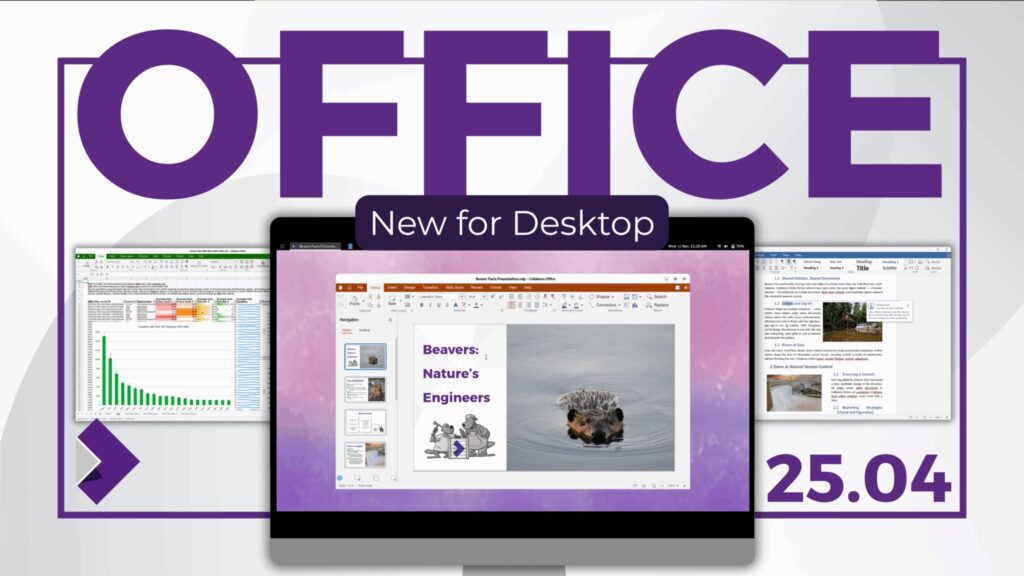
The pilot in which Denmark’s Ministry of Digitalization tested Collabora, an open-source office suite, as an alternative to Microsoft Office stopped in 2026 without ever being evaluated. Danish outlets Version2 and Computerworld Danmark reported it, citing a ministry spokesperson who confirmed there are no plans to resume it in that department. In a statement published on October 28, Collabora says the project was put on hold because of the government reorganisation, that the issues reported were fixed and that work continues with other Danish public authorities.
Denmark’s Collabora pilot in 30 seconds
- Denmark’s Ministry of Digitalization tested Collabora from June 2025 with about 40 employees.
- In December 2025 Danish media reported early issues; Collabora says they were resolved.
- The pilot stopped after the elections and the ministry reorganisation, with no formal evaluation.
- The ministry has no plans to resume it; Collabora describes it as on hold and says work continues with other authorities.
- There is no official conclusion on whether the software was suitable.
The case carries symbolic weight. In June 2025, the then Minister of Digitalization, Caroline Stage (Moderaterne), told the newspaper Politiken that half the ministry’s staff would move to open-source tools over the summer and that, if things went as planned, the whole department would follow in the autumn. She framed it as a first step toward reducing dependence on Big Tech from the United States, against a backdrop of tensions with Washington over Greenland. Cloud News reported at the time that Denmark was beginning its transition to free software at the Ministry of Digitalization.
From Announced LibreOffice to Collabora in Practice
What was announced and what was actually tested weren’t quite the same thing. The reports from June 2025 talked about moving from Office 365 to LibreOffice and replacing Windows with Linux, with the option to roll back if the migration proved too complex. The pilot that eventually launched used Collabora Office integrated into F2, the case management platform from Danish company cBrain that is used across Danish government ministries. Version2 puts the start date at June 19, 2025 and mentions 38 participants; Collabora says about forty employees tested it in their daily work.
According to Collabora, the project had two phases. The first, already completed, integrated Collabora Office into F2 so users could switch between Collabora and Microsoft Office on the same documents, in Microsoft-compatible formats. The second was user testing. In December 2025, Ingeniøren and Version2 published internal emails and notes with employee complaints, and Computer Sweden, picking up Computerworld Danmark’s reporting, mentioned formatting problems, blank pages and track-changes issues. Collabora says those early issues were investigated and resolved at its own expense. The ministry said at the time it would press on with open source.
Elections, a Ministry Merger, and No Evaluation
The political shift came later. Denmark held elections in March 2026, and on June 3 the Ministry of Digitalization merged with the Ministry of Higher Education and Research under Minister Christina Egelund, also of Moderaterne. According to Computerworld Danmark, the pilot was dropped once the elections were called. A ministry spokesperson confirmed there are no plans to resume it and that it was not evaluated as planned, so there is no official comparison between Collabora and Microsoft Office.
That absence is what draws the most criticism. Mikkel Flyverbom, a professor at Copenhagen Business School, told the Danish press he regretted that the ministry hadn’t shared its lessons learned with other public bodies weighing similar steps. Version2 adds in a separate report that the funds set aside to reduce dependence on Big Tech have sat unused at the ministry.
Collabora’s Account: On Hold, Not Closed
Collabora published a statement on October 28 in response to the media coverage. According to the company, when the Ministry of Digitalization ceased to exist as a standalone ministry in June 2026, the pilot lost its organisational setting and was put on hold before the planned evaluation was completed. It therefore asks that the interruption not be confused with a completed technical evaluation and says that, to its knowledge, no formal conclusion was reached on the suitability of Collabora Office.
The company adds that the experience is being carried forward with other Danish public authorities, again with cBrain and F2, and rejects interpretations that attribute the interruption to a lack of interoperability with Microsoft Office. None of the sources reviewed include an official technical assessment by the ministry that either contradicts or confirms that account.
What the Danish Case Teaches
Compatibility between the open ODF format and Microsoft’s Office Open XML (OOXML) is a well-known challenge in any office migration, and LibreOffice once accused Microsoft of using a format that was artificially complex. In the Danish case, however, no evaluation links the interruption of the pilot to that issue: what is on record is a change of government and a ministerial reorganisation that left the project unevaluated.
Other European projects are moving forward with more continuity. The German state of Schleswig-Holstein has spent years on a planned migration and has replaced Microsoft across much of its administration, while the Netherlands is testing its own Linux-based work environment in eight municipalities. The Danish case shows how a quick political announcement and a pilot tied to one ministerial structure can end up without published conclusions when that structure changes. The lesson for other governments is less about whether open source works and more about how a migration like this gets planned, measured, and shared.
Frequently Asked Questions
Has Denmark dropped Microsoft Office?
No. Denmark’s Ministry of Digitalization tested Collabora from June 2025, but the pilot stopped in 2026 without an evaluation. The ministry has no plans to resume it, and Collabora continues working with other Danish authorities.
Why did the Collabora pilot stop?
According to the Danish press, the project stalled when elections were called, and Collabora attributes it to the government reorganisation that abolished the ministry as a standalone department. There was no formal evaluation.
What happened to the technical issues?
In December 2025 Danish media reported complaints about formatting, blank pages and track changes. Collabora says those early issues were investigated and resolved.
Are other European countries dropping Microsoft?
Yes. Schleswig-Holstein, in Germany, has migrated much of its administration, and the Netherlands is testing DAWO, a Linux-based environment.
Update, November 9, 2026: this article has been updated to include Collabora’s statement of October 28 and to correct wording that attributed the interruption of the pilot to technical reasons, which no official evaluation supports.
Sources:
- Collabora: Denmark Continues its Work on Digital Sovereignty with Collabora Office (October 28, 2026)
- Version2: Minister took “first step” toward Microsoft independence — now the project has been quietly scrapped
- Computerworld Danmark: The Ministry of Digitalization has quietly dropped its large-scale trial of an open-source alternative to Microsoft
- Computer Sweden: Denmark shuts down attempt to replace Microsoft Office with open-source software
- Ingeniøren: coverage of the Ministry of Digitalization
- Altinget: The Ministry of Digitalization is being merged with the Ministry of Higher Education and Research
- The Record: Denmark’s digital ministry and Microsoft (June 2025)
