
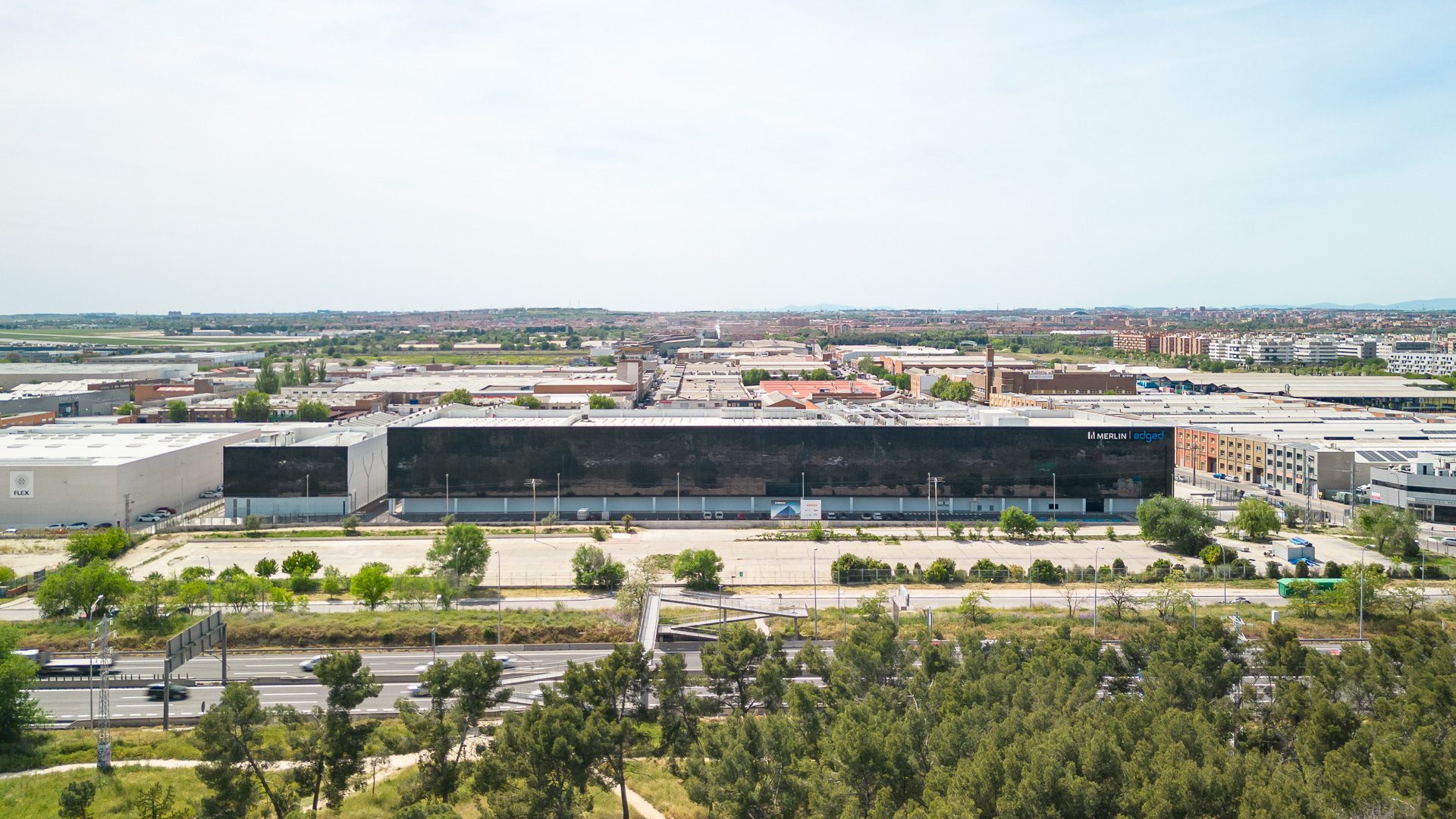
Alibaba has held preliminary talks with Spanish energy company Solaria to explore the power supply for a possible data center in Spain, with Puertollano (Ciudad Real) among the locations on the table. The report, published by Bloomberg on October 2, 2026, places the Chinese company within a trend that is gaining strength in the technology sector: Spain is increasingly attracting international digital infrastructure projects, from major U.S. cloud computing platforms to Asian companies looking to expand their artificial intelligence (AI) capacity.
The key points on international tech interest in Spain in 30 seconds
- Alibaba is studying a possible power supply arrangement with Solaria for a data center in Spain. Puertollano is among the locations under consideration, but there is no confirmation of a final investment.
- Amazon Web Services (AWS) has raised its planned investment in Spain to €33.7 billion, with a significant share earmarked for Aragón.
- Microsoft is also expanding its presence in the Spanish data center market, part of a broader expansion that has turned Aragón into one of the main investment hubs.
- The availability of renewable energy, international connectivity and the capacity to develop large-scale facilities are drawing tech companies to the country.
- This growth also raises challenges around access to electricity, water consumption, administrative permits and the impact of this infrastructure on the areas where it is built.
The possible Alibaba project is still at a preliminary stage. The talks with Solaria do not amount to a signed contract, nor do they confirm that the Chinese company has decided to build a data center in Puertollano. Still, the news adds a new international name to the list of companies exploring Spain as a destination for computing infrastructure and digital services.
The difference with other tech investments is that data centers need much more than land and an internet connection. The availability of electrical power, the speed of permitting, telecommunications networks and the ability to contract energy long-term all shape where a company chooses to build. In the race to expand AI capacity, those factors can matter as much as proximity to customers.
Spain Gains Ground in the Global Race for AI Infrastructure
Alibaba’s interest coincides with the expansion of major U.S. cloud platforms in Spain. Amazon Web Services, Amazon’s cloud computing division, announced in May 2026 that it would raise its planned investment in the country to €33.7 billion. Aragón accounts for a significant share of that rollout, where AWS already operates a cloud region with data centers in the provinces of Zaragoza and Huesca.
The company also plans to build facilities linked to the supply chain for these centers. According to estimates published by Invest in Spain, once the new facilities are fully operational they could generate around 1,800 jobs in the region, counting direct, indirect and induced employment. This is a forecast tied to the company’s plans, not a figure for jobs already created.
Microsoft is also among the major tech companies expanding their digital infrastructure in Spain. The expansion of these companies is turning Aragón into one of the main data center development hubs in southern Europe, although Madrid and other regions are also competing to attract facilities and operators.
Reuters reported on October 6, 2026 that Aragón had attracted data center projects with planned investments exceeding €60 billion over the next decade. That figure reflects expected investment, not funds already disbursed, and depends on the announced projects moving forward as planned.
The scale of these operations explains why Alibaba’s possible arrival in Puertollano deserves attention. The infrastructure needed to train and run AI models, provide cloud services and process large volumes of data requires new facilities and ever-greater power capacity. Companies are looking for locations where they can expand their operations and secure a stable energy supply for years to come.
From Aragón to Puertollano: Energy and Land as Competitive Factors
Alibaba’s interest in Puertollano links tech expansion to another field where Spain has gained prominence: renewable power generation. According to Bloomberg, the talks with Solaria focus on a possible energy supply for a data center. The Solaria plant under discussion is located in Puertollano, about 240 kilometers south of Madrid.
The Spanish company is developing the La Nava II project in the town, whose first phase involves an investment of €150 million and a capacity of 40 megawatts (MW), according to local media reports. The project is expected to create around 90 direct jobs during operation. These figures correspond to Solaria’s own initiative and should not be attributed to any hypothetical Alibaba facility.
There is also no confirmation that the current talks are linked to the agreement Solaria announced in 2024 with Japanese tech company Datasection to develop an AI-focused data center. Although both reports concern this type of facility in Puertollano, there isn’t enough evidence to conclude they are the same project or that Datasection is involved in the negotiations with Alibaba.
Spain’s appeal stems from a combination of factors. The country has significant solar and wind generation capacity, international telecommunications links and land suited to large-scale facilities. It also benefits from a geographic position that allows it to serve European customers and connect with markets in other regions.
However, having renewable energy available does not mean any data center can connect to the grid immediately. The power available at each site, transmission and distribution infrastructure, and the timeframes for expanding electrical capacity are all separate constraints. Large facilities need a stable supply sized to their demand, even when they contract renewable power.
Nor is this expansion limited to U.S. and Chinese companies. The Spanish market brings together data center operators, real estate developers, energy companies and investment funds from different countries. In many cases, the company that develops or finances a facility is not the same one that uses it to provide digital services, so it’s worth distinguishing between owners, operators, customers and energy suppliers.
Investment Is Growing, but So Is the Pressure on Resources
The arrival of new data centers raises a question already seen in other European regions: how to reconcile tech investment with the capacity of power grids and local resources.
In Aragón, the speed of administrative procedures has helped attract large-scale projects. However, Reuters has also pointed to concerns over environmental oversight and public consultation timelines. Spanish authorities are also preparing new rules to strengthen oversight of the sector, with particular attention to water and electricity needs.
For interested municipalities, the potential benefits include economic activity, jobs during construction and operation, demand for support services and new infrastructure. The scale of these effects depends on the specific project, the jobs it requires and the involvement of local suppliers. An announced investment alone does not guarantee that all these benefits will materialize.
Power consumption deserves specific scrutiny. AI-focused data centers can concentrate heavy demand in a single location, especially when they house large clusters of accelerators and cooling systems. Water consumption, meanwhile, varies depending on the cooling technology, facility design and climate conditions. For that reason, figures from one project should not be automatically extrapolated to another.
In Puertollano, Alibaba’s possible arrival still depends on decisions that have not been made public. There is no confirmation of a final investment, a construction timeline or an official jobs figure tied to the Chinese company. The talks with Solaria indicate that a possible power supply arrangement is being studied, but they do not allow the project to be considered settled.
The broader trend, by contrast, is backed by larger announced investments. AWS has outlined plans worth €33.7 billion in Spain, and Aragón is home to large-scale data center projects. Alibaba’s possible interest adds an international dimension to that competition, in which companies weigh not only the cost of building but also available energy, connectivity and the stability of conditions for long-term operation.
Frequently Asked Questions
Is Alibaba going to build a data center in Puertollano?
It hasn’t been confirmed. Bloomberg reported preliminary talks between Alibaba and Solaria to explore the power supply for a possible data center, with Puertollano among the locations under consideration.
How much is Amazon Web Services planning to invest in Spain?
AWS announced in May 2026 that it would raise its planned investment in Spain to €33.7 billion. Aragón hosts a significant share of its cloud infrastructure and the related new projects.
Why are tech companies choosing Spain to build data centers?
Among the factors are the availability of renewable energy, international connectivity and the ability to develop large-scale facilities. Available power capacity and grid connection timelines also influence the choice of each site.
What impact can a data center have on a local area?
It can generate jobs, business activity for suppliers and demand for services during construction and operation. It also requires assessing its power and water consumption, infrastructure needs and the project’s environmental effects.
