
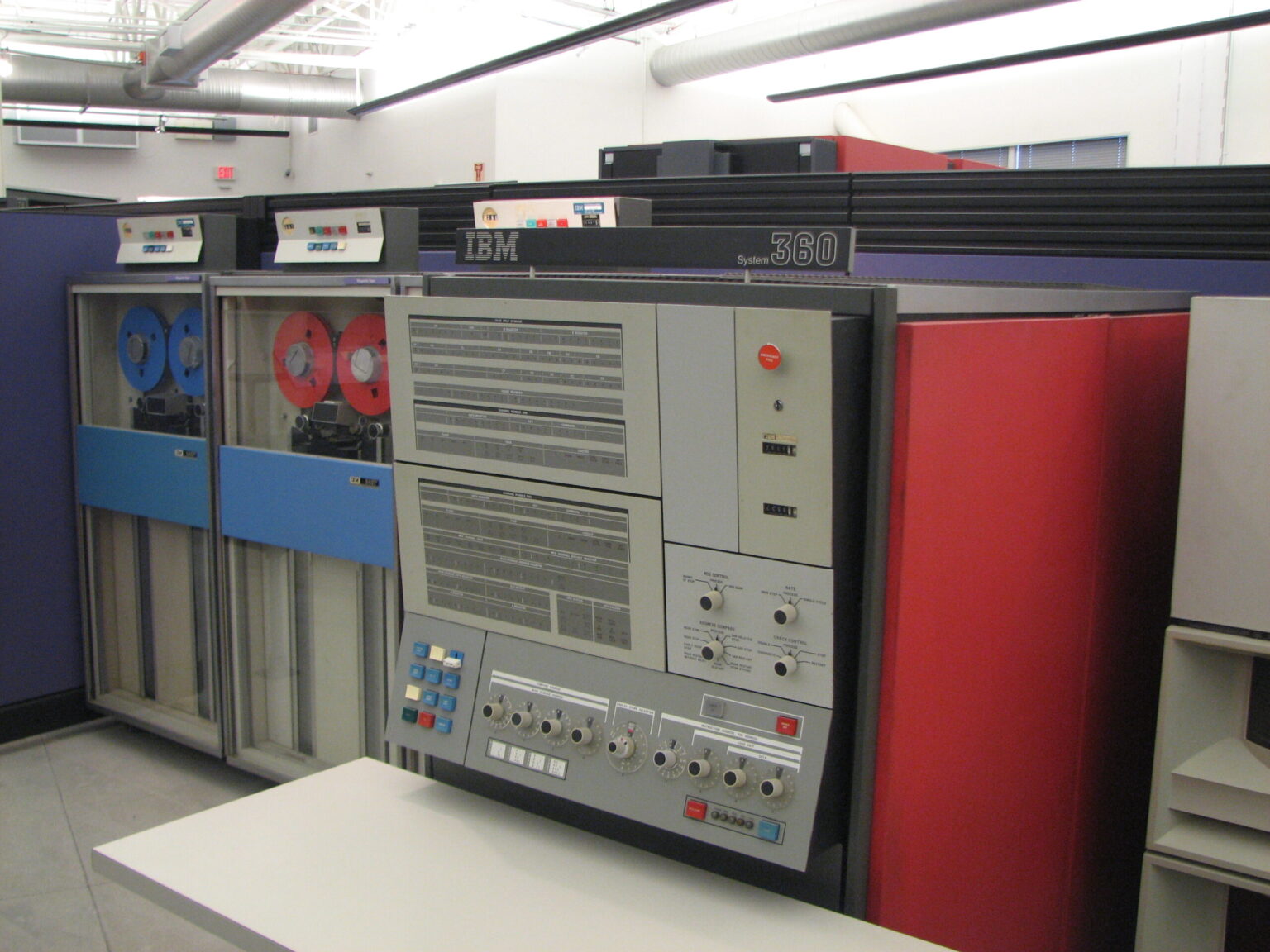
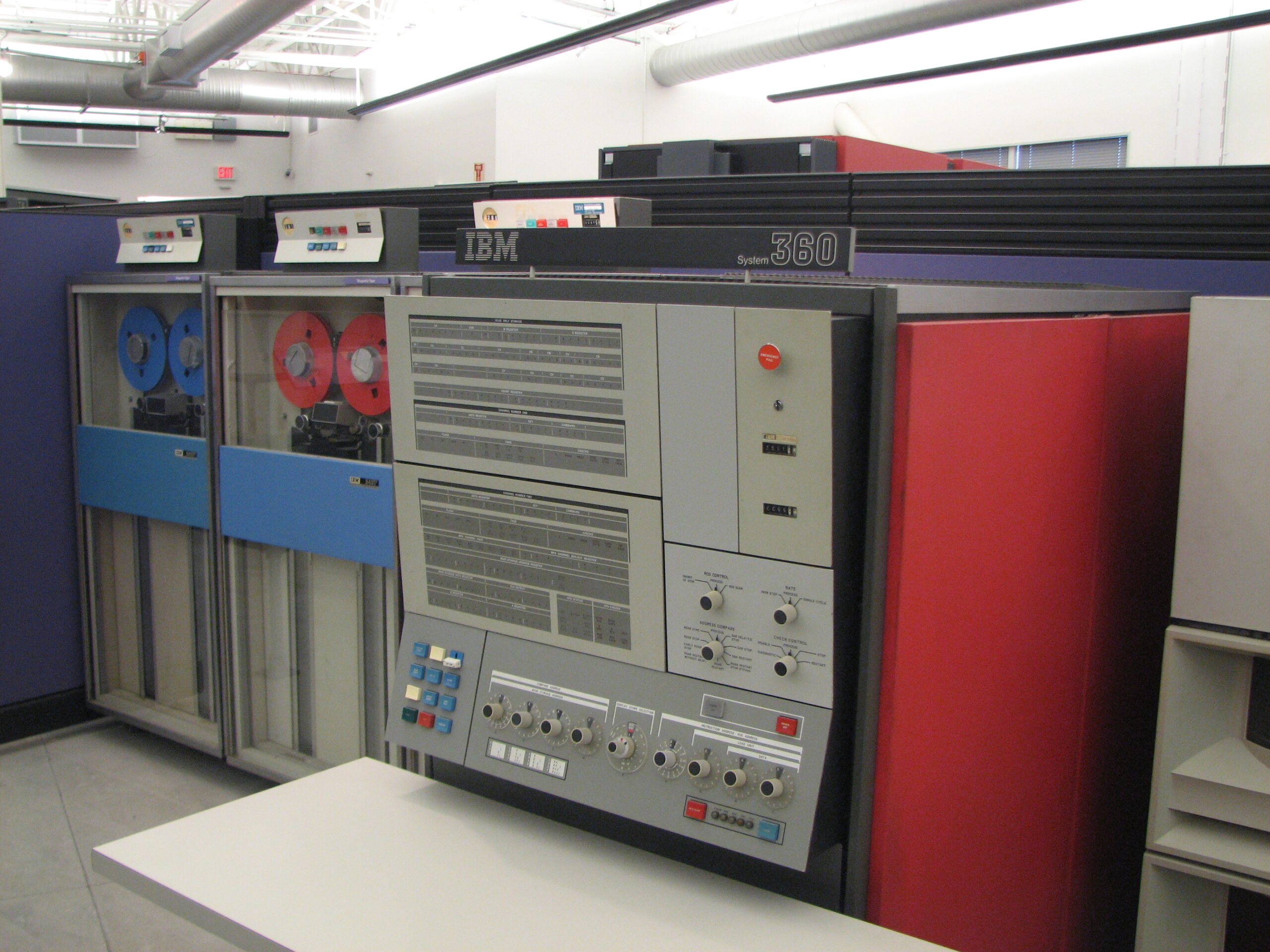
That a byte has eight bits isn’t dictated by any law of binary logic: it was an IBM decision from the early 1960s, made during the design of the System/360, and it came out of one of the toughest internal arguments of the project. On one side was Gene Amdahl, chief hardware architect, who favored a smaller byte. On the other was Fred Brooks, the project’s director, who pushed through the eight-bit byte. Amdahl lost, left IBM in 1970, and went on to build a company that sold mainframes compatible with IBM’s, built, of course, on the eight-bit byte.
Key points on why a byte has 8 bits, in 30 seconds
- Werner Buchholz coined the word byte in an IBM memo from June 1956, for groups of one to six bits.
- On the System/360, Gene Amdahl argued for a shorter byte, and Fred Brooks pushed through the eight-bit one.
- The main reason was commercial: two decimal digits fit into an eight-bit byte.
- Amdahl founded his own company in 1970, selling machines compatible with IBM’s.
- Fujitsu bought all of Amdahl Corporation in 1997.
The story helps explain something that’s taken for granted today in any data center: the sizes of the data units we work with, from memory to network packets, were set as much for business and compatibility reasons as for technical ones.
A byte that was born adjustable
The word byte appeared in a memo dated June 11, 1956, signed by Werner Buchholz within the Stretch project, the transistorized supercomputer IBM was developing at the time (the future IBM 7030). According to an account Buchholz himself gave in a letter published by BYTE magazine in February 1977, in that first use a byte could have any number of bits in parallel, from one to six, because the input and output equipment of the time handled six bits at a time. The possibility of moving to eight-bit bytes came up in August 1956 and was worked into the Stretch design shortly after. The name played on “bite,” changing the vowel so it wouldn’t be mistaken for “bit.”
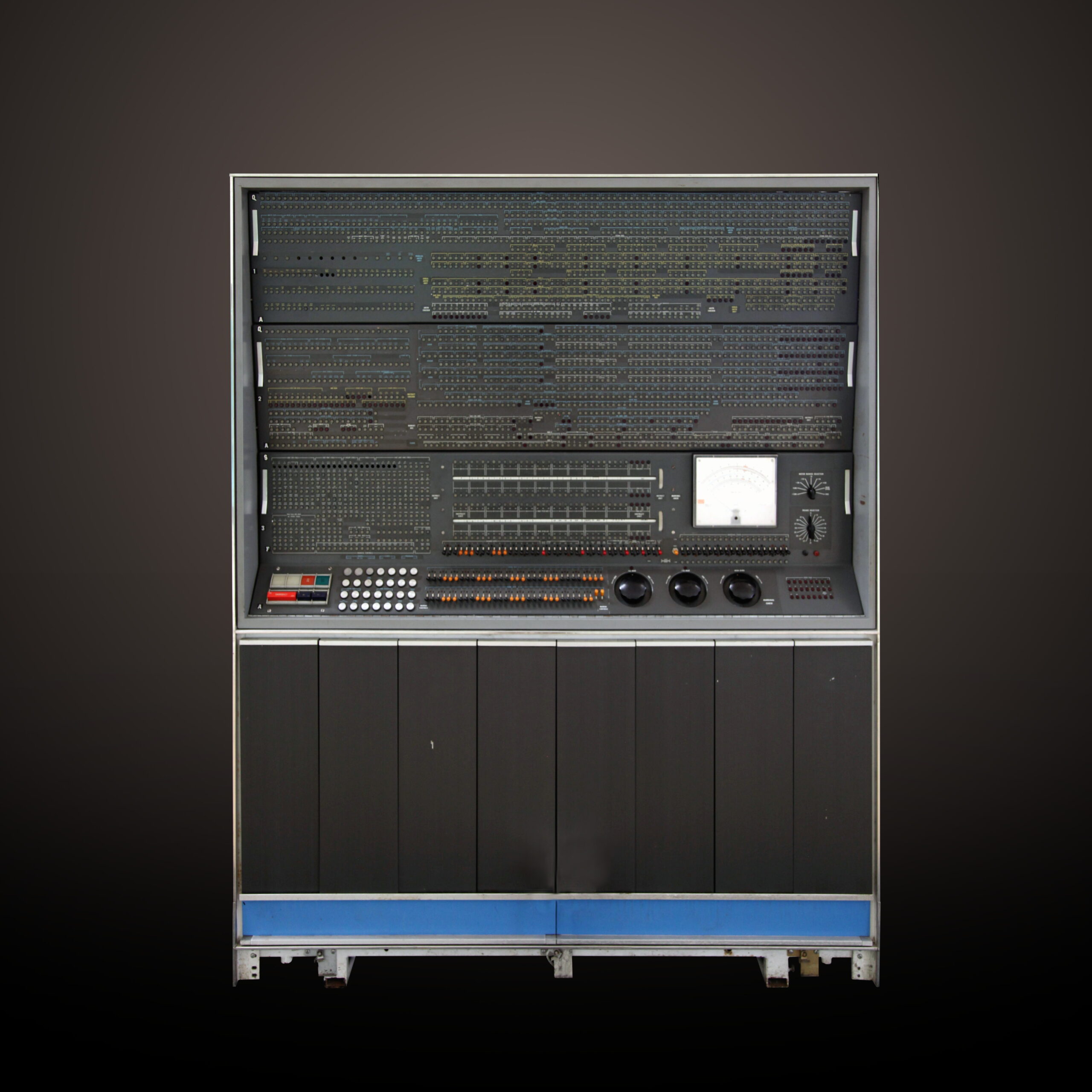
Stretch planted the idea but didn’t turn it into a standard. For years, machines coexisted with word sizes of 12, 36, or 60 bits and characters of six or seven bits. The System/360, announced by IBM on April 7, 1964, as a family of six models sharing the same architecture, was the one that fixed the size.
Six versus eight: the System/360 argument
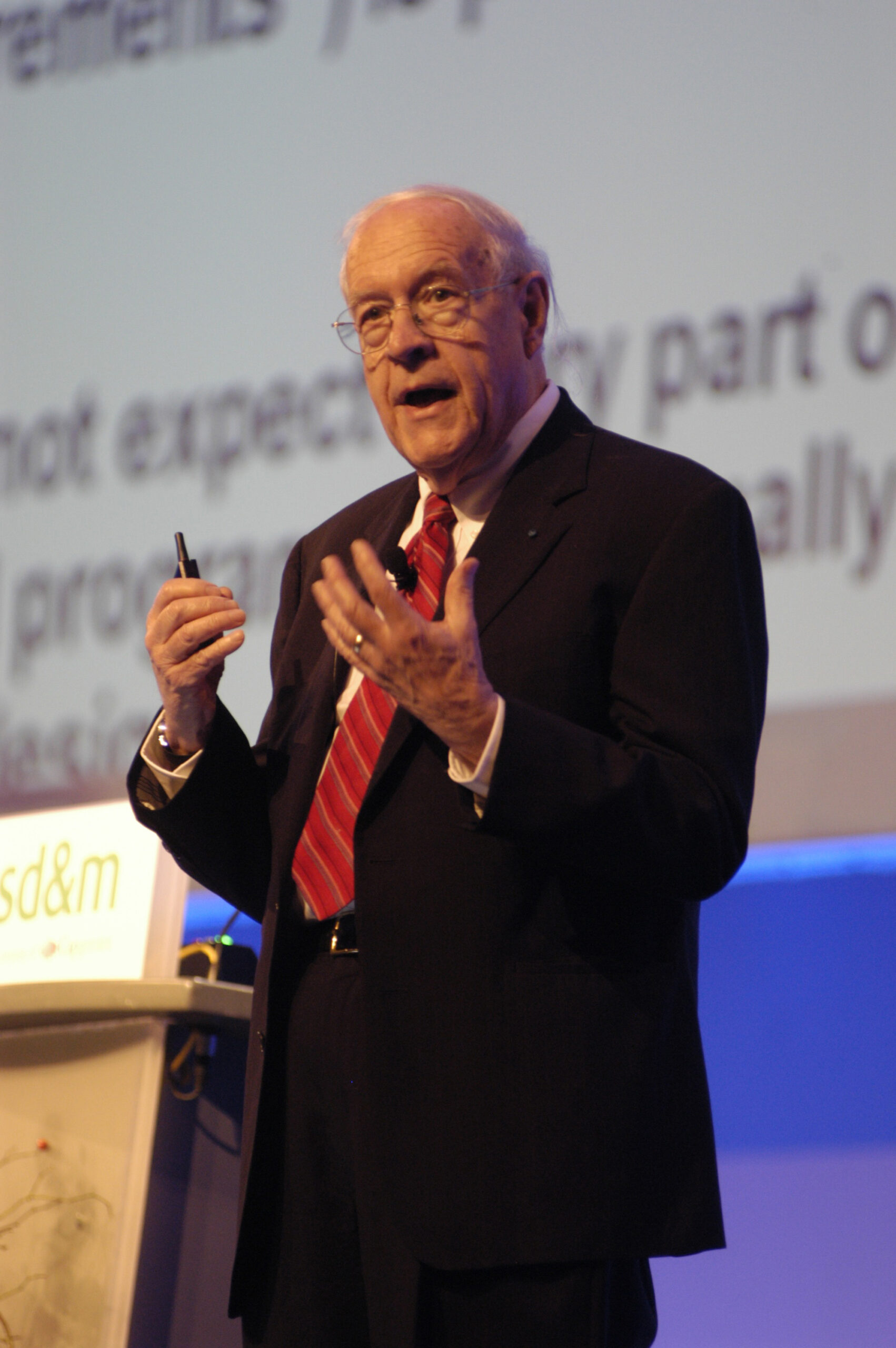
Amdahl built his proposal around a short byte and 24-bit words, which he considered sufficient and cheaper to build; accounts from those who worked with him mention six bits, and in some cases seven. The alternative, with eight-bit bytes and 32- and 64-bit formats, had Brooks’s backing. Former colleagues recall that Brooks would send Amdahl back to his office with instructions not to return until the sizes were powers of two, because otherwise they wouldn’t know how to program it.
The underlying argument was commercial. Four bits are enough for a decimal digit, so an eight-bit byte packs two digits in, something valuable for payroll, accounting, and records full of figures. Eight bits also gave 256 combinations for characters, versus 64 with six bits, with room for lowercase letters and symbols. Supporters of six bits had scientific reasons: more precision than needed made calculations longer, a real concern given the cost of machines at the time.
According to what Brooks related years later, on the day of the decision both he and Amdahl separately submitted their resignations, and an executive talked them out of it the next day. Brooks came to consider the move to the eight-bit byte his greatest contribution to computing. Amdahl did win one point: the System/360’s addresses were 24 bits, although stored in 32-bit words, a decision that over time allowed the architecture to be extended.
Scientific computing paid the price
The System/360 also adopted hexadecimal floating point, which shifts numbers four bits at a time. According to the paper by the architects themselves, it was chosen because it reduced how often shifts and overflows happened during addition, which improved performance on the larger models and lowered costs on the smaller ones. The drawback was a loss of precision.
Scientific customers noticed right away. At the SHARE user group meeting held in Toronto in August 1966, papers were presented on the quirks of the System/360’s floating point, and mathematician William Kahan, then at the University of Toronto, documented the problems of porting numerical programs from the previous generation. The most serious flaw was the lack of a guard digit in double precision: multiplying a number by 1.0 could change its last hexadecimal digit. IBM ended up adding that guard digit to the architecture in 1968 and modified every machine already installed.
The architect who sold the byte he didn’t want
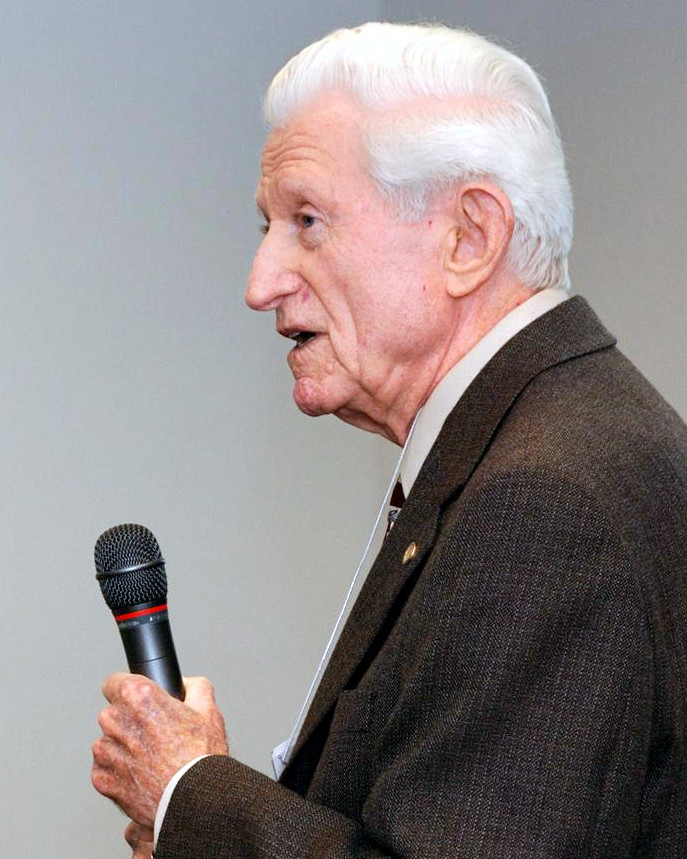
Amdahl stayed at IBM until 1970. That year he founded Amdahl Corporation, based in Sunnyvale, to build plug-compatible mainframes with IBM’s: machines that ran the same software, somewhat faster and somewhat cheaper. To get funding, he turned to Fujitsu, which took a stake in the early seventies that it kept expanding over the years.
The first 470V/6, serial number 00001, was delivered to NASA in June 1975 and competed with IBM’s System/370 Model 168. Since it ran IBM’s software, it had to copy its architecture, eight-bit byte included. The company went public in 1976 and for two decades was IBM’s main rival in compatible mainframes.
The end came with the collapse of the mainframe market in the 1990s. On July 30, 1997, Fujitsu, which already held around 42% of the shares, agreed to buy the rest at $12 a share, about $850 million in total, and Amdahl became a wholly owned subsidiary of the Japanese group.
By then the eight-bit byte was already universal. When networks began connecting different machines, engineers avoided ambiguity with another word: the IPv4 specification, RFC 791 from 1981, talks about octets, groups of eight bits, precisely because not every computer used the same byte size. Today the distinction looks like a technicality, but it’s a reminder that eight was a choice — much like the choice, decades later, that made the Intel 8088 the basis of the x86 standard behind most of today’s PCs, which we covered in The IBM PC Turns 45: The Intel 8088 That Made x86 a Standard.
Frequently asked questions
Who invented the word byte?
Werner Buchholz, an IBM engineer, in a memo for the Stretch project dated June 11, 1956.
Why does a byte have 8 bits?
Because IBM set it that way in the System/360, announced in 1964. Eight bits could hold two decimal digits and 256 different characters, and that family of computers’ influence spread the standard.
What byte size did Gene Amdahl want?
A shorter one, with 24-bit words. Most accounts point to six bits; some mention seven.
What happened to Amdahl Corporation?
It built mainframes compatible with IBM’s starting in 1975, and in 1997 it became a wholly owned subsidiary of Fujitsu, which paid about $850 million for the shares it didn’t already hold.
Sources:
- Computer History Museum: W. Buchholz’s Link System memo (1956)
- Amdahl, Blaauw, and Brooks: Architecture of the IBM System/360 (1964)
- Heidelberg Laureate Forum: a conversation with Fred Brooks
- W. Kahan: 7094-II System Support for Numerical Analysis (1966)
- D. Goldberg: What Every Computer Scientist Should Know About Floating-Point Arithmetic
- SEC: Fujitsu and Amdahl announcement (07/30/1997)
This article is also available in Spanish: “Por qué un byte tiene 8 bits: la pelea de IBM que perdió Gene Amdahl,” on revistacloud.com.
