
Hardware choices for running language models locally have changed a lot since spring. The RTX 5090 still offers massive bandwidth on a single GPU, but its price in Spain has climbed past €5,000. At the same time, systems with 128GB of unified memory have multiplied: the DGX Spark costs €4,800, the Mac Studio M5 Max reaches 128GB, and the M5 Ultra goes up to 512GB, while AMD and Lenovo are expanding the range of mini-PCs built for large models.
Local LLM hardware, the key facts in 30 seconds
- The RTX 5090 keeps its 32GB of GDDR7 and 1,792 GB/s, but units available in Spain now start at around €5,299.
- The DGX Spark offers 128GB of unified memory and CUDA for €4,800.
- The Mac Studio M5 Max reaches 128GB and 614 GB/s; the M5 Ultra goes up to 512GB and 1.2 TB/s.
- AMD already has 128GB Ryzen AI Max+ 395 systems and is preparing 192GB platforms.
- Lenovo will launch the ThinkCentre X Ultra in November, with up to 128GB, expected to start at around €3,100.
- For large-scale training, cloud B200 instances can be found from around €4.70 per hour at certain European providers.
The biggest change compared to the April guide isn’t just about processors. Memory has become the component that most affects the price of local AI. A shortage of high-performance memory has driven up the cost of both large-capacity GPUs and some unified-memory systems, upending calculations that a few months ago favored certain configurations.
Software has also moved forward. Unsloth now supports running and training models on macOS, Windows, and Linux, with NVIDIA, AMD, and other backends, while AMD has improved ROCm support for Ryzen AI Max+ and Apple continues expanding MLX for training and distribution across multiple machines.
The buying table for September 2026
Prices are reference points observed in Europe and Spain during September 2026. For graphics cards, especially NVIDIA’s, the gap between list price and street price can be enormous.
| System | Memory | Approx. bandwidth | Reference price | Focus |
|---|---|---|---|---|
| RTX 5090 | 32GB GDDR7 | 1,792 GB/s | from ~€5,299 | Maximum speed for models that fit |
| Framework Desktop Max+ 395 | 128GB | LPDDR5X-8000 | ~€3,889 | x86 capacity |
| GMKtec EVO-X3 Max+ 395 | 128GB | LPDDR5X-8000 | €3,499.99 | High-capacity mini-PC |
| DGX Spark | 128GB | 273 GB/s | €4,800 | CUDA + unified memory |
| Mac Studio M5 Max | 128GB | up to 614 GB/s | €5,859 | Inference + MLX |
| Mac Studio M5 Ultra | 256GB | 1.2 TB/s | €10,999 | Very large models |
| Lenovo ThinkCentre X Ultra | up to 128GB | LPDDR5X-8533 | from ~€3,100 (expected) | New AMD platform |
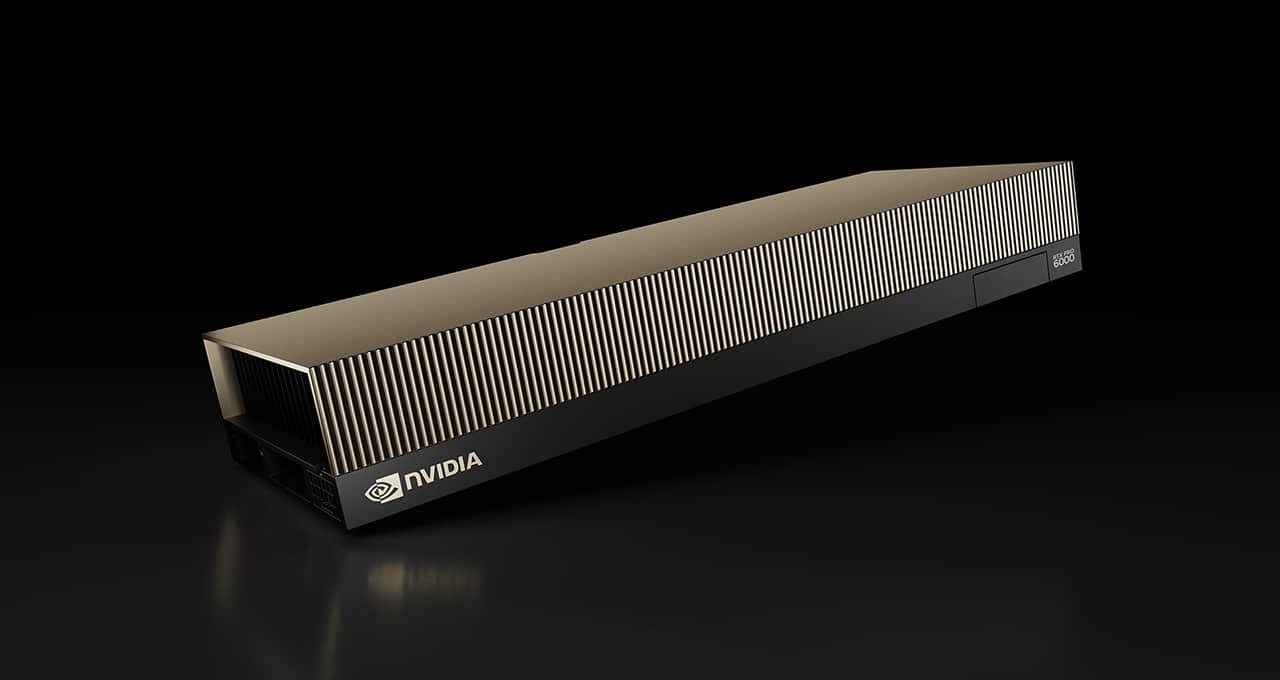
| RTX PRO 6000 Blackwell | 96GB GDDR7 ECC | 1,792 GB/s | ~€13,000 or more | Professional CUDA |
| B200 in the cloud | 180-192GB HBM | up to 8 TB/s | from ~€4.70/hr | Training and large models |
The RTX 5090 is the most extreme case. NVIDIA keeps it at 32GB of GDDR7 and 1,792 GB/s, but Spanish prices tracked by Idealo show models starting at €5,299, with plenty of variants above €5,400 and some well past €7,000.
The gap between the official price and the street price is so large that it no longer makes sense to use the card’s recommended price as a reference for calculating the cost of a workstation. On top of that you need to add the processor, motherboard, system memory, storage, power supply, and cooling.
The DGX Spark, on the other hand, is sold as a complete system. NVIDIA currently prices it at €4,800 in Europe, with 128GB of unified memory, 4TB of NVMe storage, and the GB10 Grace Blackwell superchip.
Up to 30 billion parameters: the RTX 5090 still makes sense
The first rule from the April guide still holds: if the model fits comfortably in the GPU’s memory, bandwidth matters a lot.
The RTX 5090 has 32GB and 1,792 GB/s. That lets it run mid-sized quantized models at a speed that slower unified-memory systems can’t match. NVIDIA also confirms 21,760 CUDA cores and 575W of total graphics power.
For dense models in the 20-30 billion parameter range, especially at 4-bit quantization, a 5090 is still a very fast option. The problem shows up when the model, KV cache, and context start to approach the available 32GB.
Mixture of Experts (MoE) models complicate the comparison further. A model can have tens or hundreds of billions of total parameters while only activating a fraction of them per token. That’s why a large MoE model can be more viable on a 32GB machine than a much smaller dense model.
It’s not just about whether the weights fit. You also need to leave room for context, the KV cache, the runtime, and temporary operations.
At current prices, though, the RTX 5090 presents an economic problem. Buying a card for more than €5,000 and then building a computer around it can push the total cost well above that of a complete 128GB machine.
128GB: the segment that’s changed the most
AMD’s Ryzen AI Max+ 395 systems have turned 128GB of unified memory into a far more accessible configuration.
Framework offers the Desktop with Ryzen AI Max+ 395 and 128GB of LPDDR5X-8000. The platform can reserve up to 96GB for the GPU, depending on the graphics memory configuration, and runs Windows or Linux.
The European reference price for the 128GB configuration sits at around €3,889, based on commercial documentation gathered in August, though the final cost depends on storage and configuration.
Systems like the GMKtec EVO-X3 have also appeared, with Ryzen AI Max+ 395, 128GB of LPDDR5X, and 4TB of storage for €3,499.99 at its Spanish store.
AMD has also expanded the platform. The new Ryzen AI Max+ PRO 495, based on Gorgon Halo, supports up to 192GB of LPDDR5X-8533 and uses a Radeon 8065S with 40 compute units. AMD rates its NPU at up to 55 TOPS and allows higher memory configurations than the current Ryzen AI Max+ 395.
That opens up an intermediate category that was far less common a year ago: mini-PCs capable of loading models with more than 100 billion parameters without using multiple graphics cards.
AMD has even published a guide for running models with up to a trillion parameters distributed across Ryzen AI Max+ systems, using llama.cpp and connections between machines. It’s a demonstration of capability, not a suggestion that a user would get an interactive experience with a model that size.
DGX Spark: 128GB and CUDA on the desktop
The DGX Spark occupies a different position.
Its advantage is that it offers 128GB of unified memory alongside the CUDA ecosystem. NVIDIA specifies 273 GB/s of bandwidth, 128GB of coherent memory, 1 PFLOP of FP4 performance, and 4TB of NVMe storage in the currently shipping system.
It can’t compete with the RTX 5090’s 1,792 GB/s. That’s why it shouldn’t be thought of as a “128GB RTX 5090.”
Its appeal lies elsewhere: models that don’t fit on a conventional GPU and that need to stay within the NVIDIA ecosystem.
The training side has also improved. NVIDIA maintains specific documentation for using Unsloth on DGX Spark, including CUDA, PyTorch, and fine-tuning tools.
Its current price of €4,800 makes the comparison with a Mac Studio M5 Max especially interesting.
Apple M5 Max: unified memory no longer means low speed
Apple has significantly changed the equation with the new Mac Studio.
The M5 Max can be configured with up to 128GB of unified memory. The 40-core GPU version reaches 614 GB/s of bandwidth, while the entry-level M5 Max stays at 460 GB/s.
The 128GB configuration with 512GB of SSD storage costs €5,859 according to the European price table published after launch.
That puts the M5 Max in a peculiar spot. It’s considerably more expensive than a 128GB Ryzen AI Max+ mini-PC, but it offers more than twice the bandwidth of the DGX Spark and Strix Halo.
For users working mainly with MLX, llama.cpp, and tools tailored to Apple Silicon, that difference can matter a lot. Apple is also developing the ability to distribute training across multiple machines using MLX. In its WWDC26 demos, Apple showed a 9-billion-parameter Qwen 3.5 training run that went from around 180 tokens per second on a single machine to roughly 600 tokens per second on a cluster.
That doesn’t turn a Mac cluster into a direct substitute for an NVIDIA system for every job, but it does show that the unified-memory model can scale beyond a single computer.
M5 Ultra: 256GB for €10,999, and 512GB in October
The M5 Ultra is the configuration that really changes the memory ceiling.
Apple offers up to 512GB of unified memory and 1.2 TB/s of bandwidth. The 256GB configuration currently costs €10,999 in Europe. The 512GB version arrives at the end of October.
The 256GB configuration already makes it possible to tackle models that are completely out of reach for a 32GB RTX 5090 or a 128GB system.
The 1.2 TB/s figure also matters. The M5 Ultra doesn’t match the 5090’s memory speed, but it gets much closer to it than Strix Halo or the DGX Spark, while offering eight times the memory capacity of NVIDIA’s GPU.
For large quantized models, that combination shifts the question from “does it fit?” to “how fast is it once it fits?”
Lenovo joins the 128GB race
One development that wasn’t part of the April guide is Lenovo.
The company has unveiled the ThinkCentre X Ultra, a 1.6-liter mini-PC based on the Ryzen AI Max+ PRO 495. It can hold up to 128GB of LPDDR5X-8533 and allocate up to 96GB to the integrated Radeon 8065S GPU. Lenovo is also preparing configurations that can link up to four systems together to expand memory and compute capacity.
It’s expected to launch in November 2026, with an estimated starting price of €3,100. That’s the starting price Lenovo has announced, and it doesn’t necessarily mean the 128GB configuration will cost that amount.
The platform also supports Windows and Linux and has two M.2 slots for storage. It’s another sign that 128GB of shared memory is no longer an exclusive feature of Apple or highly specialized machines.
RTX PRO 6000: 96GB of VRAM, but the price jumps sharply
For those who need CUDA and lots of memory without moving to a server, the RTX PRO 6000 Blackwell Workstation Edition remains an option.
It has 96GB of GDDR7 ECC and 1,792 GB/s, exactly the same bandwidth announced for the RTX 5090, but with three times the memory. NVIDIA positions it for professional workstations and AI workloads.
The problem is the price. NVIDIA raised the US price of this card to $16,000 in August, while prices close to €13,000 — and higher at some resellers — have been seen in Europe.
At these levels, it’s no longer a consumer GPU. It’s a workstation investment that makes sense when 96GB of capacity and CUDA are permanent requirements.
For a company that needs to serve models to multiple users continuously, the extra memory can justify the difference. For an individual developer running models occasionally, the cost changes the equation completely.
Training: the answer is different here
The biggest correction to the April guide is that local software has expanded significantly.
Unsloth now supports macOS, Windows, and Linux and claims compatibility with NVIDIA, AMD, Intel, CPU, and Vulkan, plus support for LoRA, QLoRA, SFT, RL, GRPO, and DPO.
That doesn’t mean every platform delivers the same performance or that every method works equally well on every backend. CUDA still holds an especially strong position for training and for research tooling.
But Apple Silicon should no longer be described simply as an inference-only platform. MLX supports LoRA and QLoRA, and Apple is demonstrating distributed training across machines.
AMD has also improved its position. ROCm offers specific documentation for llama.cpp, and AMD publishes tools for running models on Ryzen AI Max+ with ROCm.
For SFT on small and mid-sized models, an RTX 5090 still offers a very strong combination of performance and compatibility. For models that far exceed its memory, the constraint stops being compute power and becomes available capacity.
And for large-scale training, the cloud still holds a significant economic advantage.
B200: when to stop buying hardware
The B200 has 180-192GB of HBM3e memory depending on the platform, and bandwidth close to 8 TB/s. It’s an entirely different category from desktop machines.
As of September 2026, B200 instances can be found from around €4.70 per GPU per hour at some European providers, while other offers sit around €5.40-6. Prices vary by provider, region, deployment mode, and availability.
Much more expensive B200 configurations also exist in Europe. CoreWeave, for example, lists an eight-GPU B200 HGX instance with a presence in Spain at around €59.93 per hour, while the spot pricing option drops to roughly €30 per hour for the eight-GPU node.
The difference compared to buying a workstation worth tens of thousands of euros is simple: the cloud lets you pay only for the time you’re actually training or running inference.
A four-hour job on a B200 at €5 an hour costs around €20. The same hardware running 24 hours a day for a month tops €3,600. That’s why the most sensible strategy for many projects is to prepare data, code, and parameters locally and only use cloud GPUs when the scale of the job requires it.
The practical decision table for 2026
| Need | Hardware that fits | Approx. price |
|---|---|---|
| Models up to ~30B and top speed | RTX 5090 | from €5,299 |
| 70B on a tighter budget | Ryzen AI Max+ 395, 128GB | €3,500-3,900 |
| 70B+ with CUDA | DGX Spark, 128GB | €4,800 |
| 70B with more bandwidth | Mac Studio M5 Max, 128GB | €5,859 |
| Models over 100B | M5 Max 128GB / M5 Ultra 256GB | from €5,859 |
| 200B and larger models | M5 Ultra 256/512GB | from €10,999 |
| 70B+ professional with CUDA | RTX PRO 6000, 96GB | ~€13,000 or more |
| Large-scale training or giant models | B200 in the cloud | from ~€4.70/hr |
The main takeaway from this update is that there’s no longer a single machine that makes sense for every local LLM.
The RTX 5090 remains the high-bandwidth option when the model fits in 32GB, but its price in Spain has turned the purchase into a much tougher decision. Ryzen AI Max+ 395 systems offer a lot of memory for less money, though with considerably less bandwidth. The DGX Spark adds CUDA to that formula. The M5 Max combines 128GB with 614 GB/s, and the M5 Ultra pushes that idea up to 512GB and 1.2 TB/s.
Meanwhile, AMD and Lenovo are pushing 128-192GB into smaller, cheaper systems, and software is closing some of the gaps that existed between platforms a few months ago.
The decision should start with the model you want to run, its quantization, context size, and whether you need training or just inference. First figure out how much memory you need; then how much bandwidth; and only then compare prices.
For a model that fits in 32GB, paying for 128GB can mean spending money on capacity you won’t use. For a 120-billion-parameter model, an RTX 5090 simply falls short on memory, no matter how much faster it is.
And when the job needs 180GB, multiple GPUs, or distributed training, the question stops being which computer to buy and becomes how many hours you actually need a data-center-class machine.
For more ways to stretch the hardware you already have, see our guide on how to save VRAM when running AI models locally without upgrading your GPU.
Frequently Asked Questions
What’s the fastest GPU for running LLMs locally?
The RTX 5090 offers 1,792 GB/s of bandwidth with 32GB of GDDR7, making it especially well suited to models that fit entirely in its memory.
Which computer offers the most memory for local AI?
The Mac Studio M5 Ultra can be configured with up to 512GB of unified memory and 1.2 TB/s of bandwidth. The 256GB configuration currently costs €10,999, and the 512GB version arrives at the end of October.
How much does a DGX Spark cost in Europe?
NVIDIA currently lists the DGX Spark at €4,800, with 128GB of unified memory and 4TB of NVMe storage.
Do you still need NVIDIA to train models?
Not necessarily. As of September 2026, there are tools for training on Apple Silicon via MLX and training support on AMD platforms, plus cross-platform Unsloth. That said, CUDA still has a very broad ecosystem for training and for certain techniques and workloads.
