
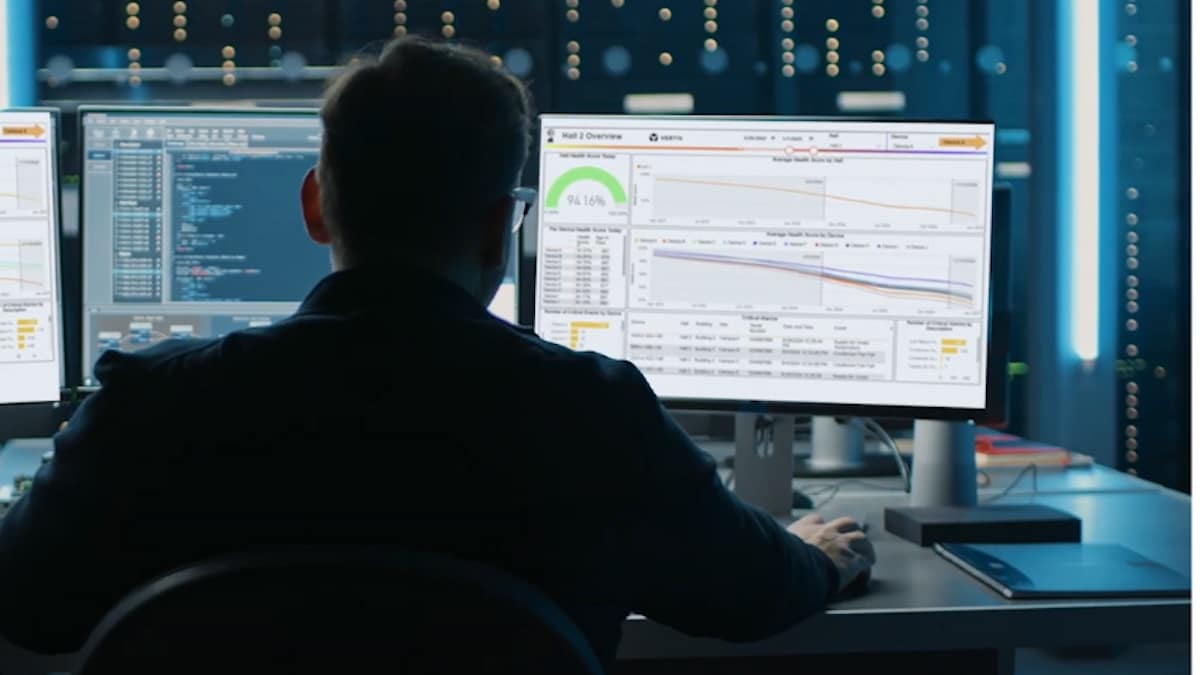
The pressure exerted by so-called “AI factories”—data centers designed for increasingly dense AI workloads—is forcing operators to rethink one of the less glamorous but most critical tasks in their daily operations: maintenance. With higher electricity consumption, more heat per square meter, and cooling and power systems operating near their limits, the traditional “calendar-based” maintenance model is starting to fall short.
In this context, Vertiv (NYSE: VRT) announced on January 27, 2026 the launch of Vertiv™ Next Predict, an AI-powered managed service aimed at shifting from reactive or schedule-based maintenance to a predictive, data-driven approach. The goal is to reduce risks before they turn into operational incidents.
From “It’s time for maintenance” to “Something’s not right”: the idea behind Next Predict
The concept is straightforward to explain but complex to implement: instead of waiting for a component failure or conducting maintenance just because “it’s due,” Next Predict seeks to monitor the real behavior of assets—power, cooling, and IT infrastructure—and detect early deviations.
According to the company, the service combines AI-based anomaly detection with a predictive algorithm that estimates potential operational impact, assigns a risk level, and helps to prioritize responses. From there, a root cause analysis phase isolates contributing factors and finally, prescriptive actions are defined and executed with qualified Vertiv Services personnel.
The proposition is not just “more monitoring,” but rather closing the loop: detect → assess impact → diagnose → act.
Uptime as currency: what Vertiv promises operators
Ryan Jarvis, Vice President of Vertiv’s global service division, summarized the approach with a clear message: the goal is to help data centers “unlock” availability, replacing routine calendar-based maintenance with a proactive, data-driven strategy, featuring continuous condition monitoring and risk mitigation before issues affect operations.
Practically, the value (if it delivers) is evident: fewer “blind” interventions, more informed decisions, and an increased ability to anticipate typical degradations in critical environments (batteries, power distribution systems, liquid cooling, thermal management, etc.).
What is covered today and why it matters: power, cooling… and batteries
Vertiv positions Next Predict within its AI infrastructure portfolio and emphasizes that it already supports a wide and expanding range of power and cooling platforms, including BESS (Battery Energy Storage Solutions) and liquid cooling components. These are two areas gaining prominence in high-density deployments.
Additionally, the company stresses a recurring idea in the sector: designing systems that scale and integrate with future technologies within a “grid-to-chip” architecture (from the electrical grid to the chip), as part of a more unified operational vision.
What’s less often said: data, integration, and “noise” in alerts
The promise of prediction always comes with a challenge: data quality and operational context. A model can detect unusual patterns, but if the environment changes—new loads, reconfigurations, updates, component replacements—the risk of false positives—or “alert fatigue”—increases.
There are also practical considerations operators tend to scrutinize closely:
- Integration with existing systems (BMS/DCIM, equipment telemetry, inventory, tickets).
- Cybersecurity at the OT/IT interface: more connectivity could mean a larger attack surface.
- Provider dependency: value increases if diagnosis and execution are well coordinated, but this can also concentrate control with a single partner.
- Realistic SLAs: “Predicting” is useful if the organization can act quickly when alerted.
Vertiv supports its positioning with its network of technicians and extensive experience in critical infrastructure, emphasizing its global presence and service history.
Market response: a company in the spotlight of the AI wave
The announcement comes at a time when critical infrastructure providers are competing to differentiate themselves amid the AI data center boom. In the most recent available session, Vertiv’s (VRT) shares hovered around $190.15, with an intraday range approximately between $183.03 and $194.79, and a volume of about 4,432,998 shares.
Beyond the specific price, the broader message is clear: predictive maintenance is no longer an “extra,” but a core piece for supporting higher densities without bearing the cost of unpredictability.
Frequently Asked Questions
What’s the difference between predictive and preventive maintenance in a data center?
Preventive maintenance is scheduled (every X months) or based on estimated use; predictive aims to anticipate failures by analyzing real behavior and detecting deviations before impact occurs.
Is Next Predict software or a managed service?
Vertiv presents it as a managed service: combining analytics with intervention and action execution by its service organization.
What kind of infrastructure does it cover: just cooling or also power?
It’s a comprehensive approach: power, cooling, and IT, with current and expandable support for Vertiv platforms, including BESS and liquid cooling components.
What should an operator ask before contracting an AI predictive maintenance service?
Integration with existing tools, exact coverage by equipment family, accuracy metrics (false positives/negatives), response and execution times, and cybersecurity and remote access measures.