
The US Department of Commerce authorized about two dozen Chinese companies to buy or handle NVIDIA’s H200 accelerators, and at least two of them, New Matrix and Maginfra, had registered offices that were empty and owners or partners with ties to entities on the US Entity List. That’s according to a New York Times investigation published on November 7, 2026, which has added pressure on US AI chip export policy right as NVIDIA goes through the crisis opened by the case involving its CEO, Jensen Huang.
NVIDIA H200 licenses in China in 20 seconds
- Commerce approved roughly two dozen Chinese companies to handle H200 chips.
- New Matrix and Maginfra had empty offices at their registered addresses.
- Analysts link them to Wise Road and Inspur, both sanctioned by the US.
- No license has been revoked so far.
The licenses stem from Donald Trump’s December 2025 decision to allow H200 sales to China in exchange for the US government taking a 25% cut of the revenue. In January, Commerce changed its policy for these applications, moving from a presumption of denial to case-by-case review. The approved list includes well-known names such as Baidu, BYD, and Tesla Shanghai, but the investigation focuses on the ones that aren’t.
Two assemblers with nobody inside
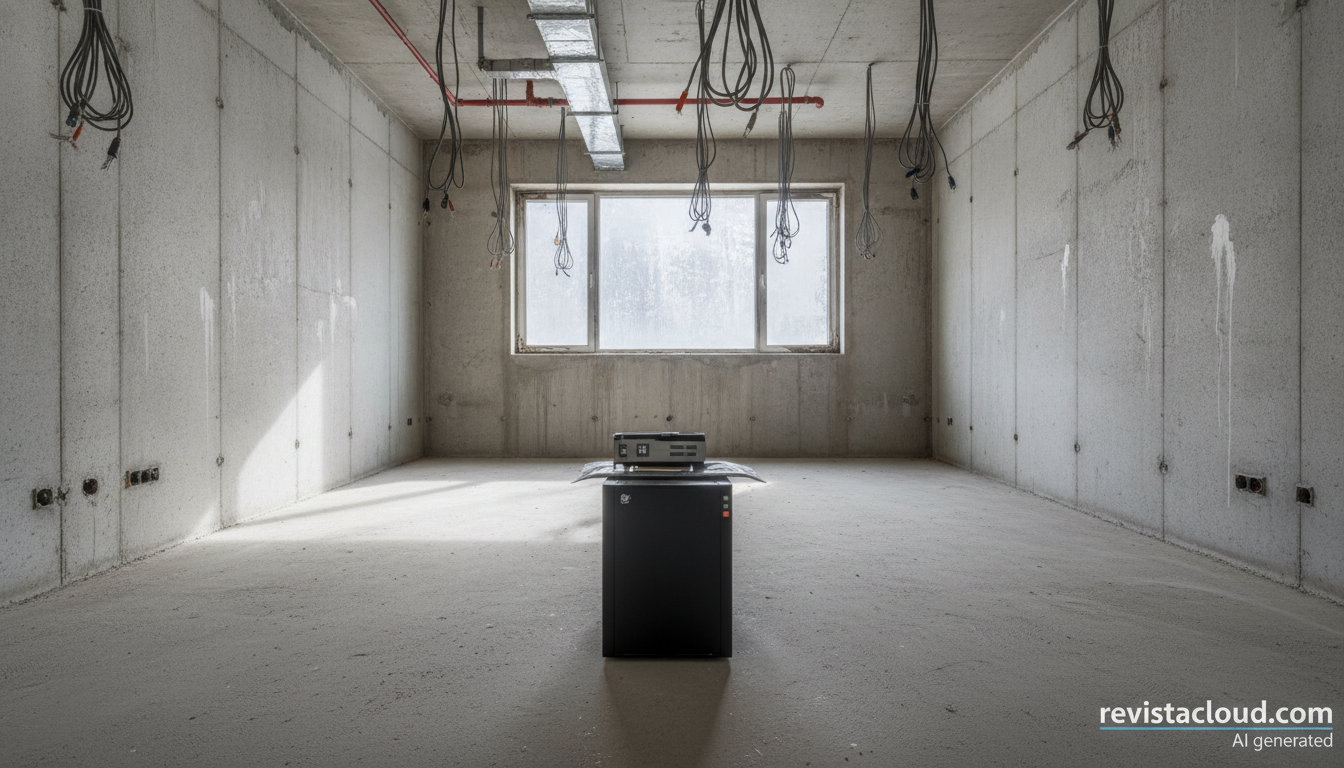
The most striking case is New Matrix, a Beijing company founded 17 months ago and authorized to integrate H200 chips into AI servers. According to the newspaper, the address on its registration records, in an industrial park in the northwest of the city, corresponds to an empty space with cables hanging from the ceiling. The company doesn’t appear in the building’s directory, and the park’s management had no record of it.
Chinese corporate registries link its main owners to Wise Road, a venture capital fund that Washington added to its Entity List in 2024 for helping Beijing acquire sensitive semiconductor companies. Its founder, Li Bin, also chairs Tsinghua Unigroup, a state-backed technology conglomerate. Two analysts consulted by the Times believe New Matrix could be a front for firms tied to Wise Road, though that’s an assessment, not an official finding. The company did not respond to requests for comment.
Maginfra, another newly created company licensed to assemble H200 servers for third parties, had an office that was just as deserted when reporters visited it in September. The analysts cited consider it an offshoot of Inspur, the major Chinese server maker the US sanctioned in 2023 for supplying equipment to the People’s Liberation Army. According to the newspaper, the two share staff and patents.
There’s a relevant detail: neither New Matrix nor Maginfra are listed as end users. Their license lets them assemble servers with H200 chips for unidentified clients, so who ultimately uses that equipment remains unknown. It’s also unclear whether they ever received any chips before the reporters’ visit.
Links to defense suppliers
The investigation points to two other licensees. Zhejiang Yindun Cloud Technology operates partly out of data centers run by Range Intelligent Computing Technology Group, a computing provider that has served military contractors, including a satellite program. Shanghai Jiatang has, through its owners, ties to companies that work for the Chinese military. The Times doesn’t claim that any H200 chip has reached a defense customer.
A spokesperson for the Bureau of Industry and Security (BIS), the Commerce agency that grants the licenses, said each application is carefully reviewed for potential national security risks. Liza Tobin, former China director at the White House National Security Council, was less convinced: she told the newspaper she has “a lot of questions” about whether Commerce or NVIDIA are doing the due diligence needed to ensure license conditions are being met.
In business terms, the immediate impact for NVIDIA is small: H200 shipments to China accounted for less than 1% of its data center revenue in the quarter that closed in July. But the potential volume isn’t trivial. According to Reuters on November 5, around 600,000 H200 units are reportedly being held in Hong Kong awaiting authorization to enter mainland China.
Congress was already watching
H200 licenses had been under suspicion in Washington for months. In May, Democratic Senator Chris Coons sent a letter to Commerce Secretary Howard Lutnick seeking explanations, after Lutnick had told a Senate subcommittee that no H200 had been exported to China, while Huang had said in March that NVIDIA already had authorization from both Washington and Beijing.
Coons, who will chair the Senate Foreign Relations Committee following the Democratic victory in the November 3 elections, has pledged to investigate the relationship between the Trump administration, NVIDIA, and China. In the House of Representatives, the Republican chairs of the committees on China, Foreign Affairs, and Intelligence have asked Huang for a closed-door briefing this month.
That request has mostly to do with Huang’s relationship with Alice Huang, an executive at Megaspeed whom, according to the New York Times, US intelligence services consider a Chinese intelligence asset. NVIDIA has defended the relationship as a routine business contact, and Beijing denies the allegations. At cloudnews.tech, we’ve covered how the case has put a spotlight on GPU rental to China from outside the country.
So far, Commerce hasn’t announced the revocation of any of the flagged licenses. BIS can withdraw them if it finds false statements in the application or end-use violations, so the agency’s response will be the first real test of whether the revenue-sharing license system can actually be policed.
Frequently Asked Questions
Which Chinese companies received H200 licenses?
About two dozen, including Baidu, BYD, and Tesla Shanghai. The New York Times investigation singles out New Matrix, Maginfra, Zhejiang Yindun Cloud Technology, and Shanghai Jiatang over their ties or for having empty offices.
Why can NVIDIA sell H200 chips to China?
Trump authorized it in December 2025 in exchange for the US government receiving 25% of the revenue. Commerce has reviewed each license case by case since January.
Have any licenses been revoked?
No revocation has been announced by the Department of Commerce.
How does this relate to the Jensen Huang case?
These are separate investigations, but they overlap in timing and in substance: how NVIDIA’s advanced chips reach China. Congress has asked Huang for a briefing on his relationship with a Megaspeed executive.
Sources:
- The New York Times, November 7, 2026 investigation into H200 licenses
- eTeknix
- ShiftDelete
- Senator Chris Coons, letter to Howard Lutnick
- NPR
- CNBC
- Axios
This article is also available in Spanish: «EE. UU. autorizó H200 de NVIDIA para empresas chinas con oficinas vacías», on revistacloud.com.
