
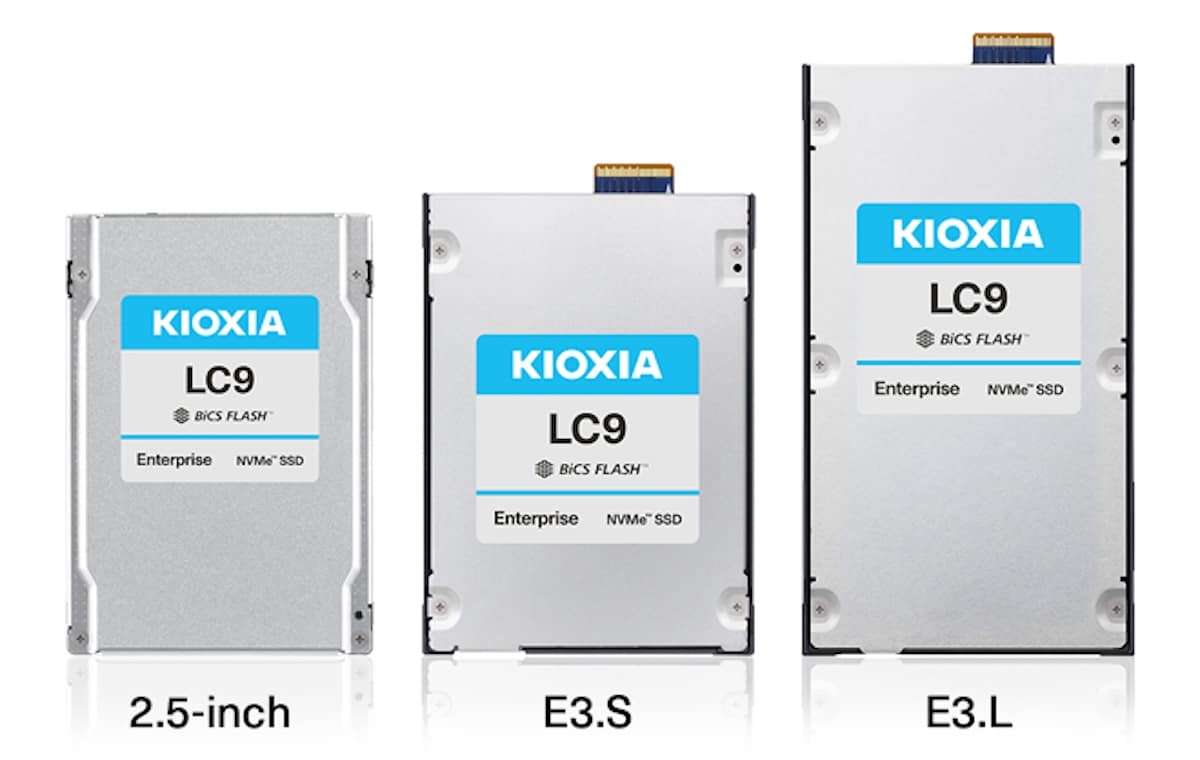
Toshiba has sold a new portion of its stake in Kioxia Holdings and has reduced its influence in the Japanese manufacturer of NAND memory from 16.10% to 15.10%. This move coincides with a sharp stock correction: Kioxia shares closed on July 23 at 61,880 yen, nearly 45% below the peak reached just a month earlier.
The key points of Kioxia share sales in 20 seconds
- Toshiba reduced its stake in Kioxia to 15.10% through four sales.
- Bain Capital has also accelerated its exit after Kioxia’s IPO.
- The stock lost about 45% from its June 22 peak.
- The NAND business is improving thanks to data centers and enterprise SSDs.
- The sales put pressure on the stock market but do not change Kioxia’s industrial activity.
Toshiba carried out the transactions between June 22 and July 15, according to the large holdings report filed with the Kanto Local Financial Office. The company did not publicly disclose the total amount obtained, but the move continues a gradual reduction that had already decreased its stake from 18.52% early this year.
The Japanese manufacturer still holds a significant position in Kioxia, though increasingly distant from the control it exercised when memory was part of Toshiba Group. The sale also follows Bain Capital’s accelerated divestment of its own shares, as the consortium that acquired Toshiba Memory in 2018 moves to reduce its stake.
The coincidence of these movements has increased the number of shares available on the market. This selling pressure helps explain part of the stock decline, although it cannot be attributed solely to Toshiba and Bain. Kioxia had previously experienced a rapid rise, fueled by a recovery in the NAND market and expectations surrounding AI infrastructure.
Toshiba continues monetizing its former memory division
Kioxia originated from Toshiba’s memory business, a company that invented NAND flash memory in the 1980s. Toshiba’s financial problems led the group to sell the division in 2018 to a consortium led by Bain Capital for around two trillion yen.
The company later adopted the name Kioxia and began trading on the Tokyo Stock Exchange’s main market on December 18, 2024. The initial public offering set a price of 1,455 yen per share and valued the company at approximately 784 billion yen. The debut came after several failed attempts and under less favorable conditions than previous estimates.
Toshiba maintained a significant shareholding after the IPO but has been gradually reducing it through market sales. Its stake decreased from 18.52% in early 2026 to 17.62% in March, then to 16.10% in May, and stood at 15.10% as of July 15.
The latest regulatory filing notes that Toshiba retains shares with the aim of increasing their value, including the potential development of business synergies. This wording does not preclude future sales and leaves open the possibility of further divestment.
Toshiba was acquired and delisted in 2023 by a Japanese consortium led by Japan Industrial Partners. Since then, it has been restructuring its portfolio and has targeted re-entry into the stock market during the 2028 fiscal year. Monetizing Kioxia provides resources to improve its financial position and fund other areas of the group.
Results for the fiscal year ending March 2026 highlight the importance of this stake. Toshiba reported a record net profit, mainly supported by gains from the sale and revaluation of Kioxia shares. Operational businesses also improved, but accounting and financial effects related to the former subsidiary were key to the significant jump in annual results.
Bain’s withdrawal adds more shares to the market
Bain Capital has also advanced its exit strategy. The fund led the consortium that bought Toshiba Memory and maintained control during its transformation into Kioxia and subsequent IPO.
After the offering, Bain-related entities began selling holdings. In July 2026, several Japanese media reported that the fund had completed the sale of its direct stake after quickly reducing it over the previous months.
Exiting a financial shareholder after an IPO is not unusual. Private equity funds often acquire companies, reorganize them, and recover their investments through an industrial sale or a public offering.
The issue for the stock price arises when several major shareholders sell within a short period. Although the company’s operational outlook remains positive, the increase in available shares can temporarily surpass demand and put downward pressure on the price.
Kioxia hit an all-time high of 112,700 yen on June 22, 2026, after starting the year at much lower levels. On July 23, it closed at 61,880 yen, roughly 45% below that peak. The decline was particularly sharp on July 17, when the price closed at 52,110 yen.
This correction should be viewed alongside the prior surge. The stock had multiplied several times from the IPO price and benefited from lofty expectations about memory prices, AI storage demand, and the supply of SSDs for data centers.
Therefore, Toshiba and Bain’s sales acted on a stock already experiencing an extraordinary revaluation. The decline reflects both the increased supply of shares and a reassessment of the expectations built during the first half of the year.
NAND business recovery driven by data centers
Market volatility does not necessarily mean that the NAND memory market is in a weak phase. Sector data shows a significant recovery in early 2026.
According to TrendForce, the top five NAND manufacturers increased their combined revenues by 83.7% quarter-over-quarter. Demand for enterprise SSDs for AI servers and supply constraints for hard drives contributed to higher prices and product mix improvements.
Samsung maintained its market leadership with a 31.6% share, followed by SK hynix (which includes Solidigm) with 17.6%. Kioxia reached quarterly revenues of $5.96 billion and a share of 13.9%, nearly tied with Micron and SanDisk.
Kioxia’s position is especially relevant because the company shares NAND production facilities in Japan with SanDisk. The two have had an ongoing alliance to manufacture NAND memory in Yokkaichi and Kitakami, even though they market their products separately.
Kioxia ended the fiscal year in March 2026 with a net profit of 554.5 billion yen and assets totaling 1.399 quadrillion yen. The memory market rebound helped strengthen its balance sheet after years of inventory cycles and falling prices.
The company also reported an annual operating profit of 870.4 billion yen, up 92.7% from the previous year. For the April-June quarter, it issued optimistic forecasts supported by rising prices and demand related to AI.
These figures partly explain the strong stock rally prior to the June peak. Investors were not only considering the traditional NAND cycle recovery but also the potential for high-capacity SSDs to become an increasingly important component in AI data centers.
Artificial intelligence also requires flash storage
Most AI-related attention focuses on GPUs, high-bandwidth memory, and networking connecting accelerators. However, training and running models also require storing datasets, checkpoints, weights, logs, and interim results.
AI servers need to transfer this information quickly between storage and compute nodes. This favors high-capacity enterprise SSDs, especially when organizations seek to reduce physical footprint, power consumption, and access times compared to systems relying solely on hard drives.
Kioxia competes in this market against Samsung, SK hynix, Micron, and SanDisk. The company has industrial capacity and relevant technological experience but faces rivals with larger scale or stronger positions in other components like DRAM and HBM memory.
The reduction of Toshiba and Bain’s stakes could increase Kioxia’s shareholder independence. The company is gradually leaving the structure formed after Toshiba Memory’s sale, becoming more reliant on the market and a diversified investor base.
However, this transition creates volatility. As former shareholders continue selling, share price movements may be influenced by the amount of stock flooding the market, even when operational results are positive.
Kioxia’s upcoming quarterly financial report, scheduled for July 31, will shed light on whether the price improvements and demand for data center SSDs maintain the market’s expected pace.
Frequently Asked Questions
What percentage of Kioxia does Toshiba hold?
As of July 15, 2026, Toshiba held 15.10% of Kioxia. This was down from 16.10% reported in the previous declaration.
Why has Toshiba sold Kioxia shares?
The company is reorganizing its portfolio and gradually monetizing an investment that is no longer part of its core businesses. It has not confirmed whether it intends to sell the entire stake.
Why has Kioxia’s stock price fallen so much?
The decline coincided with sales by major shareholders like Toshiba and Bain Capital, increasing the supply of shares. It also followed an exceptional rally based on expectations for NAND memory, enterprise SSDs, and AI-related demand.
What is Kioxia’s position in the NAND market?
In the first quarter of 2026, it achieved a revenue share of 13.9%, nearly tied with Micron and SanDisk, according to TrendForce. Samsung remains the market leader.
