
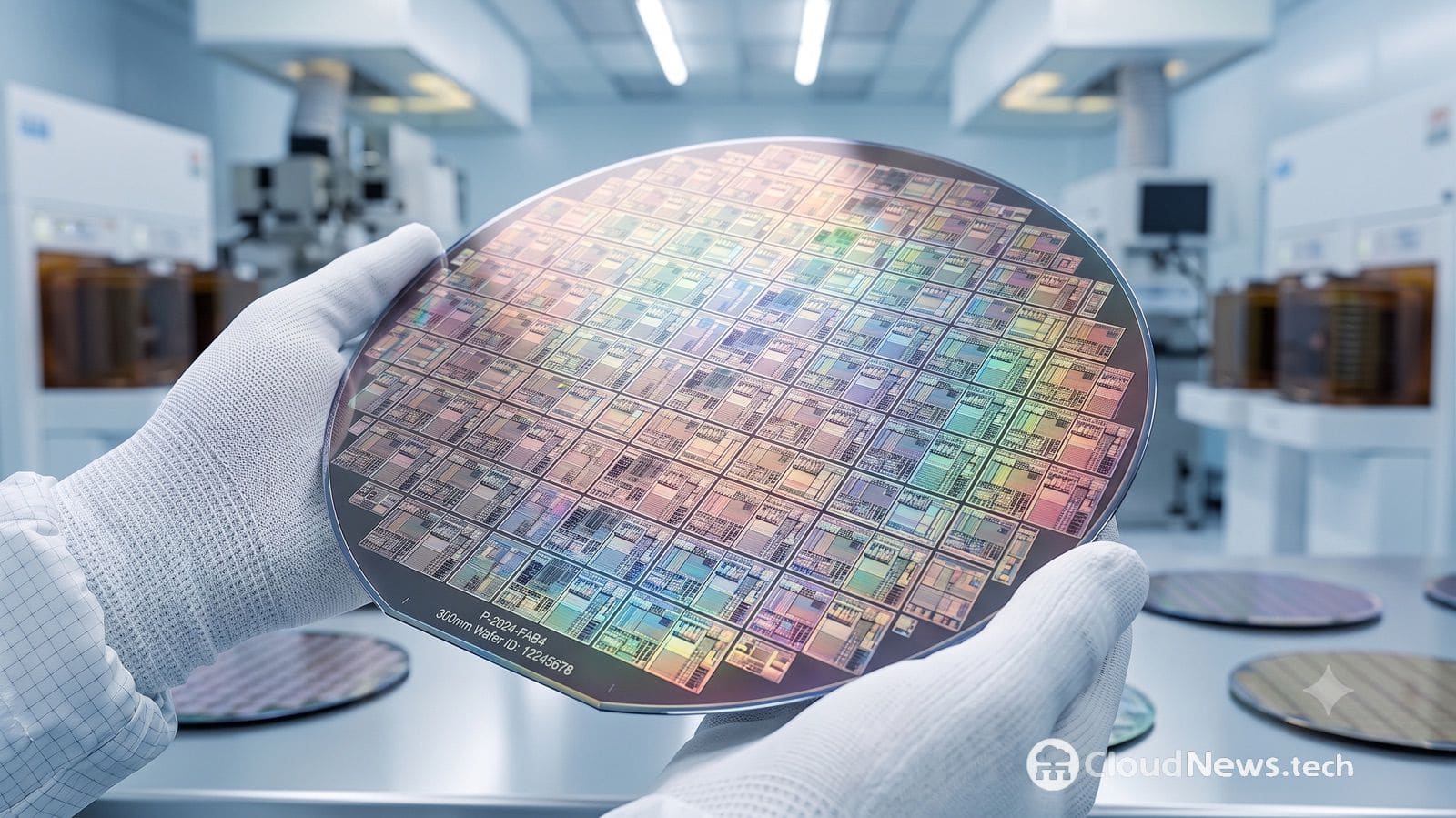
Semiconductor manufacturers are facing new supply chain pressures: Asian suppliers have begun increasing prices for high-purity chemicals such as hydrofluoric acid and isopropanol. The rise coincides with the expansion of chip factories for artificial intelligence, the growth of advanced packaging, and challenges in securing gases and raw materials in a market affected by the Middle East conflict.
The key points about chip chemicals in 20 seconds
- Taiwanese suppliers have raised prices for hydrofluoric acid and isopropanol.
- Both materials are used for etching, cleaning, and conditioning wafers and equipment.
- The demand for AI chips increases the need for electronic-grade products.
Industry sources in Taiwan point to Formosa Plastics and chemical supplier Sheng Yi as companies that have adjusted their rates. Formosa has reportedly already implemented increases, while Sheng Yi informed its clients that it will continue assessing the situation before deciding on further hikes.
No percentages, application dates for all contracts, or distinctions between industrial and electronic grades have been published. This makes it difficult to determine how much the cost will rise for a specific factory. In semiconductors, acquiring the same chemical used in other industries is not enough: processes require extreme purity levels and pre-qualified suppliers.
Why hydrofluoric acid is essential for chip manufacturing
Hydrofluoric acid, also known by its chemical formula HF, is used in cleaning, surface treatment, and wet etching operations. One of its most well-known functions is removing silicon dioxide layers before proceeding with other manufacturing steps.
Isopropanol, often abbreviated as IPA, is used for cleaning wafers, photolithography masks, tools, and surfaces. Its rapid evaporation helps remove moisture and residues without leaving contaminants that could affect microscopic structures.
Industries do not necessarily use these products once per wafer. The fabrication of an integrated circuit requires repeating numerous deposition, lithography, etching, and cleaning steps. Contamination that goes unnoticed in other industrial processes can cause defects, reduce yield, or damage parts of the wafer.
| Material | Use in semiconductor manufacturing | Current reported pressure | Risks for factories |
|---|---|---|---|
| Hydrofluoric acid | Oxide removal, etching, cleaning of surfaces | Price increases attributed to Taiwanese suppliers | Lack of qualified material or higher costs per wafer |
| Isopropanol | Cleaning and drying wafers, masks, and equipment | Price hikes and potential additional revisions | Contamination if lower-purity products are used |
| Helium | Refrigeration, leak detection, precision processes | International shortages and temporary export suspensions from China | Delays, rationing, or need to source new supplies |
| Ultrapure gases and chemicals | Controlled atmospheres, deposition, cleaning | Increased demand due to capacity expansion | Bottlenecks with few suppliers |
Purity requirements limit the ability to quickly replace a supplier. Before introducing a new product into a line, a factory must verify its composition, stability, logistics, and impact on performance. An apparently minor change can require weeks or months of testing and adjustment.
ExxonMobil announced in 2025 an investment of $100 million to produce high-purity isopropanol in Louisiana starting in 2027. The company justified the project by the demand from new U.S. factories and the reliance on supplies from Taiwan and Japan. It also noted that transporting these products over long distances may increase the risk of compromising their purity.
| Supplier or Group | Related Area | Described Situation |
|---|---|---|
| Formosa Plastics | Hydrofluoric acid and isopropanol via subsidiaries | Has begun raising prices |
| Formosa Daikin | Production linked to hydrofluoric acid | Benefiting from stronger demand |
| Formosa Plastics Tokuyama | Chemicals including high-purity isopropanol | Exposed to growing semiconductor consumption |
| Sheng Yi | Solvents and electronic chemicals | Monitoring the market after initial adjustments |
| ExxonMobil | High-purity isopropanol in the U.S. | Investing $100 million with production expected in 2027 |
Formosa is also considering expanding electrochemical production capacity in the second half of 2026 and adding new facilities in 2027, industry sources indicate. These projects may ease pressures, but chemical expansions require permits, specialized equipment, safety controls, and approval from chip manufacturers before they can supply critical lines.
AI demand reaches less visible suppliers
Market attention typically focuses on Nvidia, AMD, TSMC, Samsung, SK Hynix, or ASML. However, increasing AI accelerator production also requires more wafers, gases, solvents, acids, photoresists, and encapsulation materials.
Demand extends beyond calculation chips. AI systems combine processors with high-bandwidth memory and encapsulations that integrate multiple components. As manufacturing and packaging capacity expand, the total volume of materials consumed at each stage increases.
TSMC, the leading manufacturer of advanced accelerators, reported a year-over-year revenue growth of 36% in Q2 2026, driven by 3 and 2 nanometer processes and its CoWoS packaging platform. Analysts also anticipated reaching a new quarterly profit high, though this was still a forecast before earnings were announced.
The link between AI and rising chemical prices is not automatic. Price depends on energy costs, raw materials, maintenance outages, transportation, inventories, and available capacity. AI acts as an additional demand factor within an already tight market.
| Factor | Effect on semiconductor materials |
|---|---|
| More factories and wafers processed | Increases total chemical and gas consumption |
| Expansion of advanced packaging | Adds cleaning, bonding, and treatment processes |
| Higher chip complexity | Elevates purity and control requirements |
| Few qualified suppliers | Reduces alternatives during disruptions |
| Energy and logistics costs | Pressures production and transport prices |
| Conflicts and trade controls | Complicate routes and international availability |
Isopropanol exemplifies the issue. It is common in laboratories, hospitals, and homes, but the grade used in semiconductors is a different market. A factory cannot compensate for shortages by buying standard alcohol, as impurities could contaminate wafers.
Hydrofluoric acid adds another safety requirement. It is an extremely hazardous compound that needs specialized facilities, storage, transportation, and procedures. Scaling up capacity cannot be as quick as producing a simple electronic component.
Helium worsens an already tight supply chain
China’s temporary export suspension of helium is not directly related to increases in hydrofluoric acid or isopropanol prices. They are different markets. The significance lies in illustrating how multiple essential materials for chip manufacturing are experiencing simultaneous stress.
On July 10, 2026, China announced a temporary ban on helium exports. While China does not dominate helium exports—producing around 15% of its consumption—this move reduces flexibility in an already strained market.
The shortage worsened after disruptions related to the Middle East conflict. Qatar supplies about a third of global helium, so issues in its production or transport impact chip manufacturers, hospitals, and other industries. Tech sector leaders in March had already reported delays and difficulties finding alternative sources.
| Supply pressure | Affected material | Potential consequence |
|---|---|---|
| Increased AI chip production | HF, IPA, and other ultrapure chemicals | More demand and price revisions |
| Factory expansions worldwide | Specialized electronic materials | Competition for contracts and capacity |
| Middle East conflict | Helium and related regional materials | Delays and logistical cost increases |
| China export suspension | Helium | Reduced international availability |
| Extended qualification processes | All critical materials | Slow supplier diversification |
| Regional concentration | Chemicals and gases | Greater impact from localized disruptions |
Factories usually maintain inventories and long-term contracts to mitigate these disruptions. They also recover and reuse some gases or products within their facilities. However, not all materials can be stored indefinitely or replaced without prior validation of the new supply.
A moderate increase in chemical prices does not necessarily translate immediately into higher GPU costs. The final cost of a GPU depends on design, lithography, wafer performance, HBM memory, and encapsulation. Chemicals are just one part of this overall structure.
The most serious risk arises when a qualified material is missing. A factory valued in billions cannot maintain certain processes if it lacks necessary gases or liquids—even if these are much cheaper than machines. The disruption can have a much greater economic impact than the value of the missing product.
This is why manufacturers and governments are trying to locate supplies near new factories. The US, Japan, South Korea, Taiwan, and the European Union need not only chip plants but also a network of chemicals, gases, wafers, masks, and capable companies to support their equipment.
The announced price hikes in Taiwan are an early indicator of this pressure. They do not yet predict widespread shortages nor specific cost increases for processors. However, they show that the AI boom is reaching less visible layers of the supply chain, where ramping up production and switching suppliers are slow and not immediate decisions.
Frequently Asked Questions
What is hydrofluoric acid used for in chip manufacturing?
It is used in etching, cleaning, and oxide removal on wafers. The industry uses high-purity versions to prevent contamination and defects.
Why can’t conventional isopropanol be used?
Semiconductors require products with much lower impurity levels. Non-qualified alcohol could leave particles or residues that affect chip structures.
Will rising prices of these chemicals make AI GPUs more expensive?
Not necessarily directly. Their economic impact is less than that of advanced manufacturing, memory, or encapsulation, but shortages can disrupt production and have a larger effect.
What is the relationship between helium and hydrofluoric acid?
They are not in the same production chain. Both are materials needed at different stages, and simultaneous disruptions increase overall vulnerability.
via: UDN
