
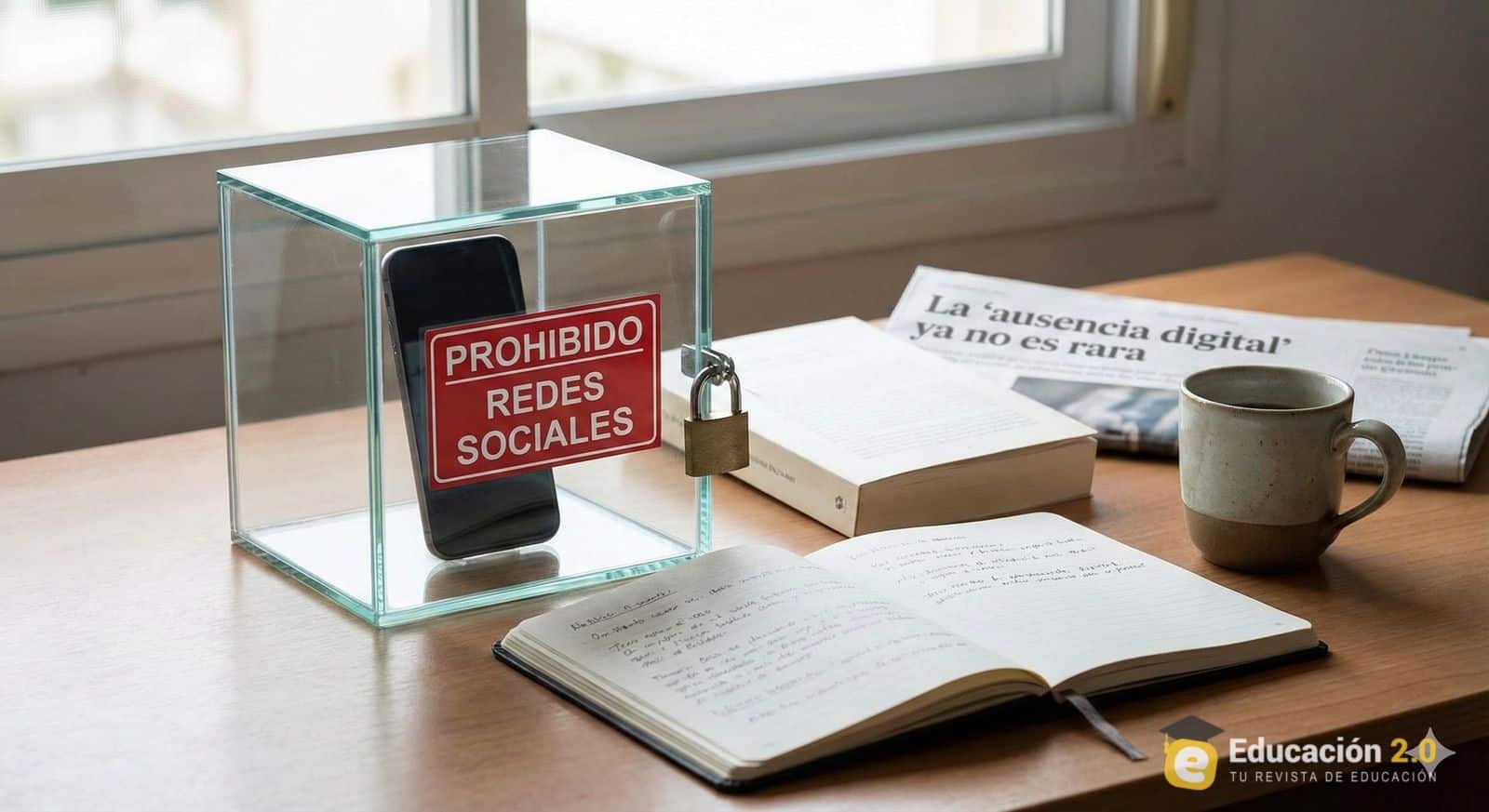
For years, not having social media was an obvious rarity: disinterest, lack of time, or a “low digital” profile. By 2026, that view shifts. In technological and professional environments, absence — or minimal presence — begins to be seen as an informed choice: less exposure, fewer attack surfaces, and greater control over one’s digital identity.
The cultural turn isn’t accidental. As platforms evolve into infrastructure for communication, marketing, and entertainment, they also become data collection engines and recommendation systems competing for a limited resource: attention. In this context, silence on social media ceases to be suspicious and increasingly becomes a strategic move.
Digital identity is no longer a profile: it’s a footprint
In popular imagination, “being on social media” equals “having a profile.” In reality, digital identity is much broader: a trail of signals (interests, locations, habits, contacts, routines, consumption) fed by what is posted… and also by browsing, shopping, or commenting in third-party spaces.
That’s why, those who step back from the showcase are not always “disconnected.” Often, they are reducing the amount of public information available for searches, tracking, or correlations. To a tech-savvy reader, the idea is straightforward: less exposed data means less profiling potential, lower risk of social engineering, and less material available for unintentional OSINT.
This isn’t paranoia; it’s digital hygiene. Just as servers are hardened by disabling unnecessary services, some people tighten their online presence by removing channels that don’t add real value.
The attention economy as a technical (and human) problem
Social networks don’t just distribute content: they optimize its delivery. Algorithmic feeds, notifications, and short-form video formats follow a product logic: maximize time spent. Technically, it’s a recommendation system aimed at a goal (retention), with metrics that reward compulsive engagement.
The collateral damage is well known to anyone who’s had to “put out fires” in productivity: attention fragmentation, false multitasking, impulsive consumption of stimuli. For some, the solution isn’t moral but functional. Reducing input helps recover cognitive performance, focus, and rest.
In other words: some users treat social networks as what they are — resource-consuming “services.” And choose to optimize accordingly.
Personal security: fewer surfaces, less social engineering
From cybersecurity’s perspective, social media platforms are repositories of context: birthdays, pets, schools, travel, relationships, routines, events, interests. That context is gold for impersonation campaigns, spear phishing, and messaging scams.
In professional settings, exposure of informal organizational charts (who works where, with whom, which tools are used, what projects are announced) adds vulnerability vectors. Even unintentionally, employees sharing screenshots, locations, or “achievements” may be leaking sensitive information.
That’s why a part of “not having social media” is actually “not posting”: keeping channels private, limiting public access, and separating personal life from professional identity. It’s not disappearance; it’s segmentation.
The hidden cost: reputation, social verification, and opportunities
This trade-off also exists—and is especially noticeable in tech. Many communities, opportunities, and events circulate via social media: launches, events, job openings, technical threads, debates, security alerts, product trends. Those who aren’t present miss a channel.
Additionally, social verification through profiles has become normalized: in hiring, collaborations, or even dating environments, absence is often seen as a lack of transparency. While a flawed heuristic, it’s a common perception.
Thus, the emerging pattern isn’t “zero social media” but minimal and controlled presence: a static profile with no sensitive info, used occasionally (to follow sources, be reachable, receive signals), and not turning life into content. It’s like a “maintenance mode” for identity.
Technical alternatives: less platform, more protocol
Another aspect of the trend stems from more advanced users changing habits: instead of relying on feeds, they revert to more predictable and less manipulable models.
- Newsletters and curated lists: user chooses the source, not an algorithm.
- RSS and readers: a classic returning when control is desired.
- Forums and technical communities: less showoff, more signal.
- Private messaging and groups: conversations with context and relative privacy.
- Repositories and work platforms: personal branding shifts to contributions, not stories.
In tech media, this transition is often seen as a return to “utilitarian internet”: fewer showpieces, more tools.
Psychological symptom or rational choice?
Contemporary psychology tends toward a simple view: the relevant indicator isn’t “having or not having social media,” but how its usage impacts well-being, self-control, and relationships. For some, disconnecting reduces anxiety linked to constant comparison, overstimulation, and display pressure. For others, it makes no difference.
From a technological angle, the parallel conclusion is: the problem isn’t the network itself, but the incentive model of the platform and the user’s lack of control over their experience. Those who opt out often aren’t rejecting technology; they’re rejecting a product design they perceive as hostile.
The new normal: selective presence, minimal data
What was once seen as eccentricity is now aligning with digital maturity: not being everywhere, not sharing everything, not turning every moment into data nodes. For a tech publication, the real headline is another: partial disconnection is starting to resemble a security and performance practice.
Not having social media isn’t “not playing.” It’s playing by your own rules.
Frequently Asked Questions
Is it advisable to delete all social media for privacy reasons?
It depends on your use case. For many profiles, reducing public exposure, disabling geolocation, limiting permissions, and avoiding posting routines or identifiable data is enough. “Zero” isn’t always necessary; “minimum viable” often works.
What security risks does a low social media presence reduce?
It reduces material for social engineering (routines, contacts, personal context), minimizes accidental OSINT, and limits impersonation based on public info. It doesn’t eliminate risk but decreases the attack surface.
How can one stay informed about tech without relying on algorithmic feeds?
Through thematic newsletters, RSS feeds, aggregators, repositories, specialized forums, and direct channels from projects (technical blogs, status pages, mailing lists).
Does having social media help professionally in the tech industry?
It can aid in visibility, networking, and opportunities, but it’s not mandatory. A solid portfolio (projects, contributions, real cases) and a minimal professional presence are often enough without constant exposure.
Source: Educación sin Redes Sociales