
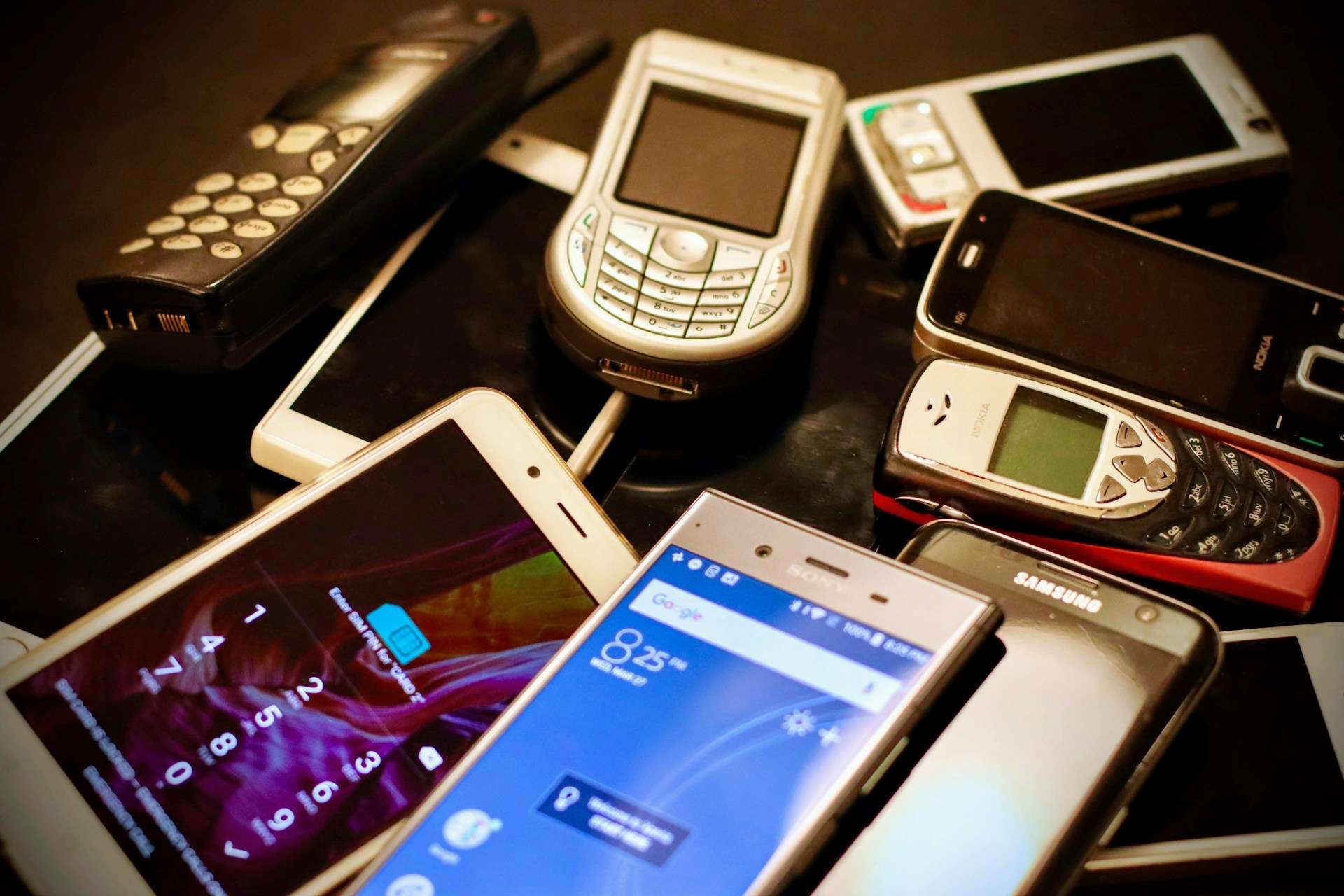
The global smartphone market experienced a significant decline during the second quarter of 2026. Counterpoint Research estimates an 11% year-over-year drop, reaching the lowest second-quarter level since 2013, while IDC forecasts a 6.7% decrease, totaling 277.5 million units. The figures differ, but both firms agree on the root cause: the shortage and rising costs of DRAM and NAND memories.
The key reasons for the smartphone decline in 20 seconds
- Counterpoint estimates an 11% decline; IDC puts it at 6.7%.
- DRAM and NAND memories have become more expensive due to demand from AI data centers.
- Samsung leads with a 24% share, while Apple reaches 20%.
- Manufacturers more dependent on budget segments are experiencing the largest drops.
The data are preliminary and primarily measure shipments to distributors and operators, known as sell-in, not necessarily devices already purchased by consumers. The 4.3-point difference between Counterpoint and IDC may be due to variations in methodologies, geographic coverage, channel estimates, and timing of data collection. The overall takeaway remains: the market contracted quickly between April and June.
Two different measures confirm the same deterioration
Counterpoint describes the quarter as the worst second quarter in 13 years and forecasts that 2026 will end with nearly a 14% decline. IDC also expects the worst performance in the sector’s history, with an annual decline of 13.9% and 1.09 billion units distributed globally.
| Research Firm | Q2 2026 Estimate |
|---|---|
| Counterpoint Research | 11% YoY decline |
| IDC | 6.7% decline, down to 277.5 million units |
| Main consensus | Memory is the biggest market brake |
| Most affected segment | Entry-level and mid-range phones |
| Most resilient segment | Premium devices |
The downturn started to become evident in the first quarter, when IDC recorded a 2.9% decline after ten consecutive quarters of growth. The worsening between April and June indicates that component shortages ceased being solely a production problem: manufacturers began passing costs onto prices, reducing launches, and adjusting phone configurations.
This situation breaks the recovery trend that began in mid-2023. Phones remain essential, but many users may prolong their upgrade cycles as new models become more expensive, and improvements no longer justify the expenditure.
In price-sensitive markets, consumers might choose to keep their current device another year, buy an older model, or opt for refurbished devices. For manufacturers, this means losing volume in the segments with the highest sales.
AI is competing for the same memory resources
The issue isn’t primarily with mobile processors but with the availability and cost of memory. Smartphones need DRAM to operate the system and apps, plus NAND Flash for storing photos, videos, and software.
Memory manufacturers are allocating more capacity to server products, high-bandwidth memories, and enterprise storage units. AI data centers consume increasing amounts of these components and accept higher prices typically seen in consumer electronics.
TrendForce estimated that the average price of mobile LPDDR4X memory increased between 70% and 75% in the second quarter compared to the first. For LPDDR5X, used in newer, more powerful devices, the increase ranged from 78% to 83%.
| Type of Mobile Memory | Estimated Quarterly Increase |
|---|---|
| LPDDR4X | 70% to 75% |
| LPDDR5X | 78% to 83% |
NAND storage is also affected. TrendForce forecasted a 70% to 75% increase in contractual NAND Flash prices during the quarter, partly because suppliers are allocating more production to enterprise SSDs.
This price hike impacts all phones but not equally. In a €1,000 device, there’s more room to absorb a few dollars’ increase in component costs. In a €100 or €150 model, the same increase can significantly cut into profit margins.
Manufacturers have several options—none easy—including raising the final price, reducing memory and storage, extending the lifecycle of older models, or leaving low-margin models behind.
TrendForce already reports changes in configurations. 12 GB RAM is becoming standard in high-end models, while 16 GB is decreasing in use. In mid-range phones, 8 GB is gaining popularity again, and budget models tend to have around 4 GB.
The paradox is that phones need more memory for local AI functions just as those components become more expensive due to demand from data centers. Some brands may shift more functions to the cloud to avoid increasing device specs, but this raises dependence on connectivity and remote processing.
Samsung and Apple are weathering the storm better than mid-range brands
Samsung reclaimed the top spot worldwide with a 24% share, according to Counterpoint. The company experienced the strongest year-over-year performance among the top five manufacturers, supported by product availability, promotions, and the rollout of the Galaxy S26 series.
Apple held second place with a record 20% share for a second quarter. Its shipments grew by 3%, and it was the only major manufacturer to avoid price hikes during this period, according to the research firm. Demand for the iPhone 17 helped partly offset weakness in China.
| Manufacturer | Worldwide Market Share Q2 2026 |
|---|---|
| Samsung | 24% |
| Apple | 20% |
| Xiaomi | 12% |
| OPPO | 11% |
| vivo | 8% |
Xiaomi, OPPO, and vivo experienced double-digit declines. All three depend more heavily on budget and mid-range devices, where rising memory costs are harder to pass on to consumers.
Xiaomi maintained third place with 12%, after streamlining its catalog and offering better financing options to distributors. OPPO, which includes OnePlus and realme in Counterpoint’s ranking, reached 11%, while vivo accounted for 8%.
Outside the top five, Google increased its shipments by 16% thanks to the Pixel 10 and 10a, while Huawei grew 6%, supported by its China-focused lineup. Although volumes are still below those of market leaders, they show room for growth when brands offer differentiated products or have a strong domestic market.
This quarter further illustrates a divide between two markets. The high-end is characterized by Apple and Samsung, with scale, supply contracts, financing, and less price-sensitive customers. At the lower end, manufacturers must choose to increase prices, cut features, or sell at minimal margins.
IDC predicts the average global smartphone price will reach $550 in 2026, about $100 more than last year. While shipments are expected to decline by 13.9%, total market value could still grow by 3.8%. In other words, fewer devices will be sold, but at higher prices.
The research firms also expect iOS to hit a record 22% market share annually, while the Android market would see a more substantial decline. This isn’t a rejection of Google’s system but reflects higher exposure of Android-based devices to sub-$200 phones.
The sub-$100 segment, which surpassed 170 million units in 2025, faces the greatest threat. Some models may become unprofitable even as memory supply normalizes.
Counterpoint does not anticipate a solid recovery until supply conditions improve. Shortages may persist into 2027, leading brands to prioritize value over volume, reduce lower-cost offerings, and promote older devices.
Frequently Asked Questions
How much did the global smartphone market decline in Q2 2026?
Counterpoint estimates an 11% YoY decline, while IDC forecasts a 6.7% drop to 277.5 million units. Both figures are preliminary.
Why is there a shortage of mobile memories?
Suppliers are allocating more capacity to servers, AI, and enterprise storage markets, which have higher demand and better margins.
Which brands led the quarter?
Samsung took first place with 24%, followed by Apple at 20%. Xiaomi, OPPO, and vivo rounded out the top five.
Will smartphone prices continue to rise?
Consultants expect pressure to continue through 2026 and part of 2027. Price increases will vary by brand, segment, and region, but lower-cost devices are most vulnerable.
via: CounterPoint
