
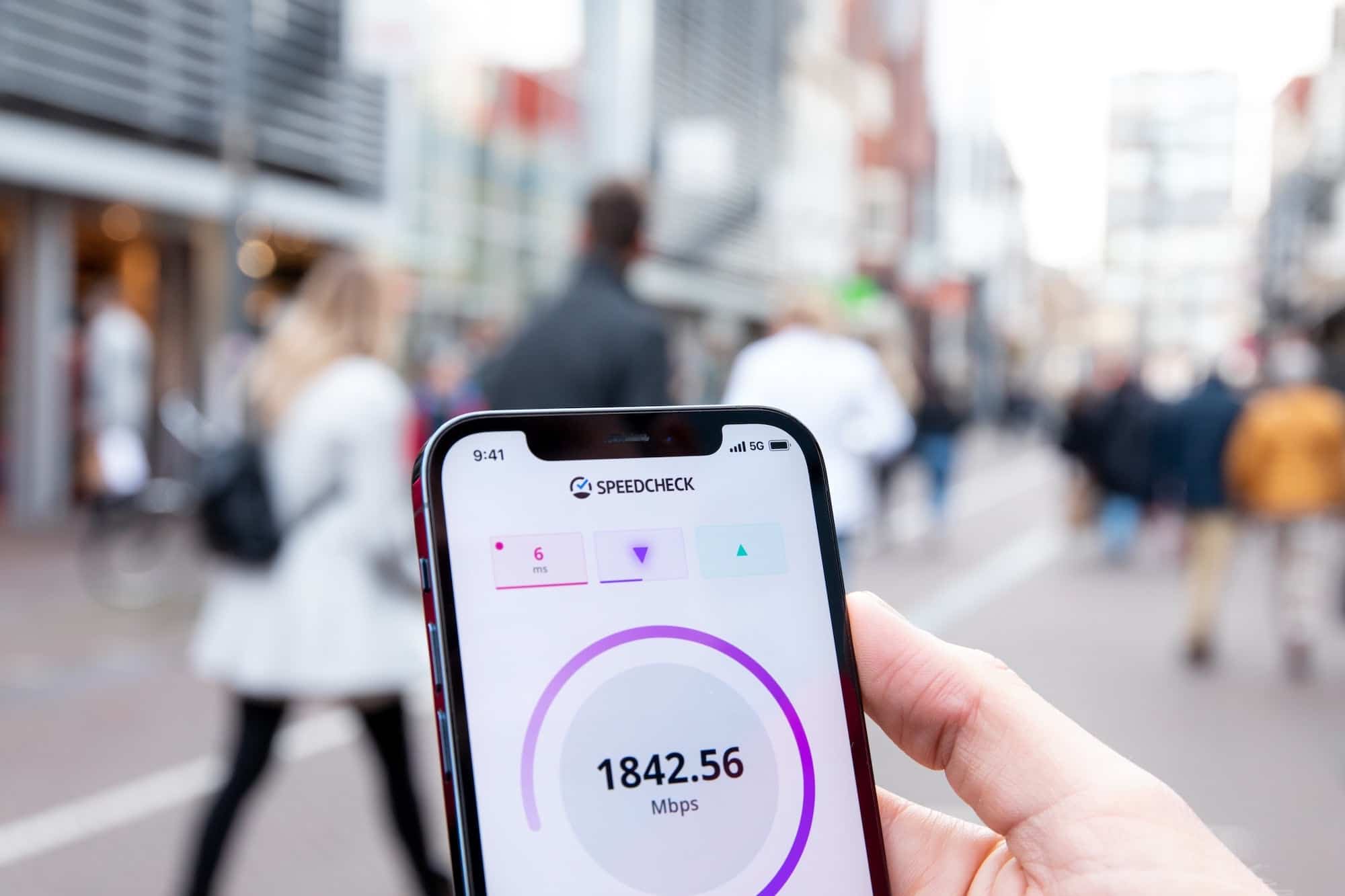
The Government has opened the new Universal Service of Telecommunications Regulation for public consultation, a reform aiming to raise the guaranteed minimum connection from 10 Mbps to 100 Mbps, expand social protection for vulnerable households, and change the service provision model that has been in the hands of Telefónica for over two decades. If the proposal is approved as presented, the new regime will come into force on January 1, 2027, making Spain, according to the Ministry for Digital Transformation and Public Function, the first country in Europe to include this speed within the universal service.
The reform is significant because universal service is no longer seen as a symbolic safety net but as a tool to ensure basic connectivity where the market does not provide it reasonably. The Ministry argues that this improvement is feasible thanks to the deployment of fiber optics, 5G networks, and satellite technology, adding that the new framework aims to reinforce user choice by requiring all operators to offer this service within their coverage areas, instead of relying on a single designated provider.
Until now, universal service in Spain has played a rather residual role. The current minimum speed is set at 10 Mbps, well below what is considered normal for domestic internet access today. The goal of the new regulation is to bridge this gap and establish a minimum coverage level much closer to current digital consumption realities, especially as working, studying, accessing public services, or using audiovisual platforms now demand much higher bandwidth than just a few years ago.
All telecom operators with sufficient coverage will be required to offer it
One of the most notable changes is that the traditional model of a single national operator responsible for universal service effectively disappears. The Ministry explains that, given the level of network development in Spain, the obligation will now fall on all operators that already provide 100 Mbps or more in a given area. This means users will be able to choose among multiple providers if they live where such coverage exists. Elsewhere, the Ministry may directly designate or hold bidding processes to appoint one or more operators to serve those areas where the market alone does not reach. Various specialized sources also suggest that, in such cases, the costs would be shared among operators with revenue exceeding €100 million.
The proposal also broadens the range of beneficiaries. Not only individual consumers will be able to demand universal service, but also microenterprises, small and medium-sized enterprises, and nonprofit organizations, according to details published by specialized media. This reinforces the idea that minimum connectivity is no longer just a domestic issue but also a condition for economic and social activity across many parts of the country.
In practice, this brings universal service closer to a more competitive logic. Until now, many users might not even have been aware of this option or saw it as a last-resort solution with very limited benefits. With the new approach, the government aims for the legal guarantee of access to become a more useful, visible, and technologically aligned citizen right, no longer a residual exception.
More social protection and greater accessibility
The other main aspect of the reform focuses on pricing. The Ministry has confirmed that all operators will be required to offer at least a 25% discount on their tariffs to low-income users. Additionally, the scope of potential beneficiaries will be expanded to include people receiving the Minimum Living Income, a group totaling around 800,000 households. The political message is clear: it’s not enough to ensure the connection exists; it must also be affordable for those facing the greatest financial challenges.
Accessibility is also emphasized. The regulation proposes that all operators provide an adequate range of devices adapted for people with disabilities and mandates that operators and emergency platforms 112 must have Real-Time Text (RTT) functionality by June 2027. RTT is a tool that allows real-time text messaging during calls, especially useful for individuals with hearing or speech difficulties.
This approach reinforces a broader European digital regulation trend: access to telecommunications should be measured not only by coverage but also by effective usability for groups with special needs. Therefore, the new regulation aims for both faster speeds and a more inclusive service, closer to what is considered a basic citizen right today.
Satellite, 5G, and fiber: broader guarantees, but not identical for everyone
While the official announcement highlights the increase to 100 Mbps, the detailed draft confirms that this guarantee can be supported through various technologies. The clearest precedent is Conéctate35, tied to UNICO Rural Demand and awarded to Hispasat, offering satellite internet across Spain at a maximum price of €35 per month. This service, according to public references, will continue until December 2027. The new regulation intends to ensure continuity of universal coverage but within a broader and more permanent framework.
Details from specialized sources indicate that these 100 Mbps guarantees could be accompanied by a gross increase of 5 Mbps and an average maximum latency of 690 milliseconds. While these figures are far from typical fiber experiences, they are compatible with satellite technologies like geostationary satellites. This means that the universal service will not necessarily guarantee a uniform user experience: the minimum speed will be assured, but the actual quality of response may vary depending on the technology available in each zone.
Nonetheless, the regulatory shift is significant. Spain moves from a model of very limited access to establishing a minimum connectivity right of 100 Mbps. For urban users, this may not seem revolutionary—many commercial offers already comfortably exceed this figure. But in rural, remote, or vulnerable households, the difference will be substantial. Small businesses and social organizations that have previously operated with insufficient or prohibitively expensive connectivity will also benefit.
Frequently Asked Questions
Is the new 100 Mbps universal service already approved?
Not yet. The Ministry has initiated the public consultation of the draft Royal Decree, so it is a regulatory proposal in process, not an enacted measure.
When would the new regulation take effect?
The official projection is that the new regime would start on January 1, 2027.
Will all operators be required to offer these 100 Mbps?
Yes, but within their coverage areas and only if they already provide at least 100 Mbps in those zones. Where that is not the case, the Ministry may designate or hold bidding processes to assign operators to deliver universal service.
Will there be discounts for low-income households?
Yes. The draft mandates that all operators apply a minimum 25% discount for low-income users, and includes recipients of the Minimum Living Income among potential beneficiaries.
source: bandaancha.eu
