
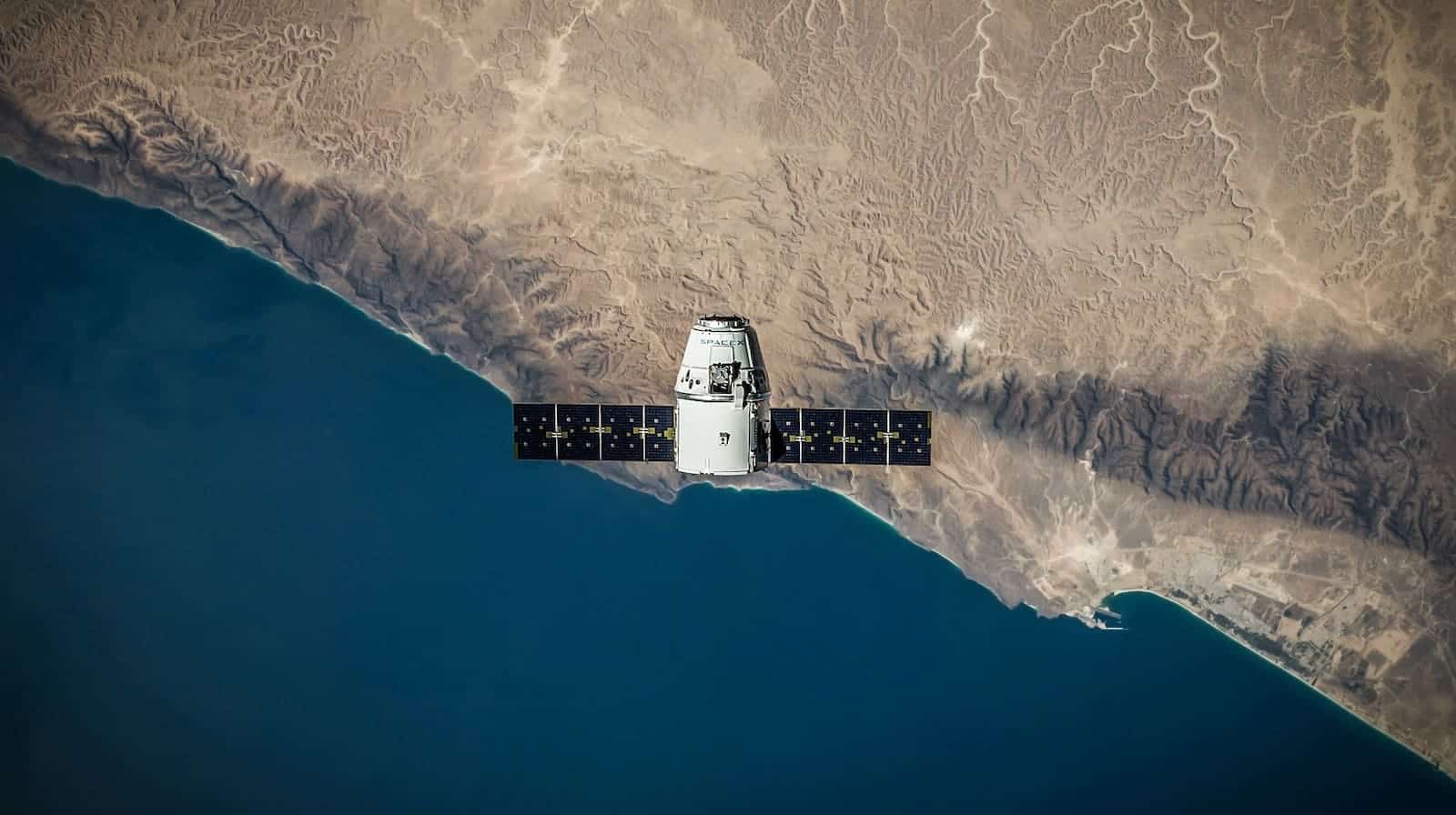
SpaceX has received a new regulatory push to expand Starlink: the United States Federal Communications Commission (FCC) has authorized the company to operate up to 15,000 second-generation (Gen2) satellites, a move that reinforces the constellation’s dominance in global connectivity and, at the same time, reopen the debate on orbital traffic sustainability and the power accumulated by large private internet infrastructures.
This decision is not equivalent to a blank check without conditions. In practice, the FCC has greenlit the deployment of an additional 7,500 satellites—from those already authorized previously—and has postponed the approval of the rest of the Gen2 application, which aimed for a much larger deployment. In other words: the regulator allows progress, but keeps the most ambitious phase of the plan on hold.
What Changes with 15,000 Satellites?
For the average user, the promise is simple: more capacity, less congestion, and a more robust network. For the industry, a more strategic interpretation: Starlink seeks to increase density and coverage to improve performance during peak hours, expand its presence in regions with poor terrestrial connectivity, and compete not just with telecoms but with future hybrid satellite-mobile services.
The authorization also aligns with a clear trend: low Earth orbit constellations are no longer seen solely as “internet via satellite” for remote areas but as an additional layer of connectivity that can integrate with mobile networks. Regulatory coverage itself points toward this approach, contemplating the use of Starlink for direct connectivity with phones (direct-to-cell) outside the U.S. and as a complementary capacity within the country.
Timelines Matter: Launching Is Not Enough; Milestones Must Be Met
Beyond the headline, the FCC has set temporary obligations that act as a litmus test: SpaceX must deploy 50% of those 7,500 authorized satellites before December 1, 2028, and complete the deployment by December 1, 2031. Additionally, the regulator has set deadlines for the first-generation Starlink, which should be fully deployed by the end of November 2027.
In other words: expansion will proceed at an industrial pace, but the regulatory clock is also ticking. This is relevant because, in the satellite market, the “right to operate” is almost as valuable as the technology: those who get authorization and deploy first consolidate spectrum, clients, and commercial agreements.
The Other Side: More Satellites, More Orbital Friction
The massive growth of constellations brings a concern that is no longer solely the domain of astronomers or space agencies: systemic risk. With thousands of satellites in orbit, any failure could become an issue for space safety—not just due to collisions but also fragmentation and space debris generation.
In this context, it is especially relevant that SpaceX has announced plans to reconfigure parts of its constellation and lower operational altitudes—e.g., from around 550 km to approximately 480 km during 2026, according to reports—a change often interpreted as an attempt to optimize performance and, in passing, reduce natural reentry times should a satellite become uncontrollable.
The same report also references a recent incident: a satellite experienced an anomaly in December and disintegrated, producing debris at about 418 km altitude. This type of incident, even if minor relative to the constellation size, weighs heavily in public debate: when scale reaches thousands, error tolerance becomes minimal.
Connectivity, Power, and Geopolitics: When Satellites “Touch” the Mobile Network
Starlink’s moves are not happening in a vacuum. As interest in direct-connectivity to mobile devices grows, spectrum and terrestrial agreements become key pieces. For example: EchoStar agreed to sell spectrum licenses to SpaceX in a deal valued around $17 billion, which also includes a commercial agreement to give Boost Mobile users access to Starlink’s direct-to-cell network. Such operations reinforce a discouraging idea for many telecoms: satellites are shifting from backup solutions to genuine competitors with real integration into the mobile market.
Here, a more critical interpretation emerges: if a company controls the constellation, ground stations, spectrum agreements, and a “direct” connectivity layer to the user, its influence—both technical and commercial—rises sharply. The question shifts from “Will there be internet in rural areas?” to “Who decides the rules and economics of global connectivity?”
From Approval to Actual Impact: What to Watch For
To understand what this permit will mean in practice, four indicators will be closely monitored by the industry:
- Service quality during peak demand: Whether the expansion reduces saturation and improves latency in high-density areas.
- maturity of direct-to-cell: Not as a demo, but as a stable service with agreements and real compatibility.
- Orbital risk management: Deorbit protocols, collision prevention, and transparency in incidents.
- Regulatory domino effect: What the U.S. approves influences other regulators, and vice versa.
The FCC has made its move: allowing growth, but with milestones and parts of the plan still on hold. SpaceX, for its part, faces the ongoing challenge of scaling without incurring costs—technical, environmental, and political—that outweigh the benefits.
Frequently Asked Questions
What does it mean that the FCC authorizes “15,000 Gen2 Starlink satellites”?
It means SpaceX has permission to operate up to that number within the approved conditions, including deployment milestones and deadlines. It does not mean all are already in orbit—just that they can be launched and operated under the authorization.
What is “direct-to-cell” connectivity, and when might it become available in Europe?
It is the capability to connect certain services directly from satellites to compatible mobile devices (usually via agreements with operators and spectrum licensing). The timeline and availability depend on regulators, local partnerships, and regional technical deployment.
Do more satellites mean better home internet, or just in rural areas?
It can improve both: coverage in rural areas, and capacity in urban zones to reduce congestion. The final result depends on user density, ground station placement, and network planning.
What risks does such a large constellation bring?
The main concern is increased orbital complexity: more need for avoidance maneuvers, greater impact if failures occur, and higher coordination demands to reduce space debris and collision risks.
via: FCC and wccftech