
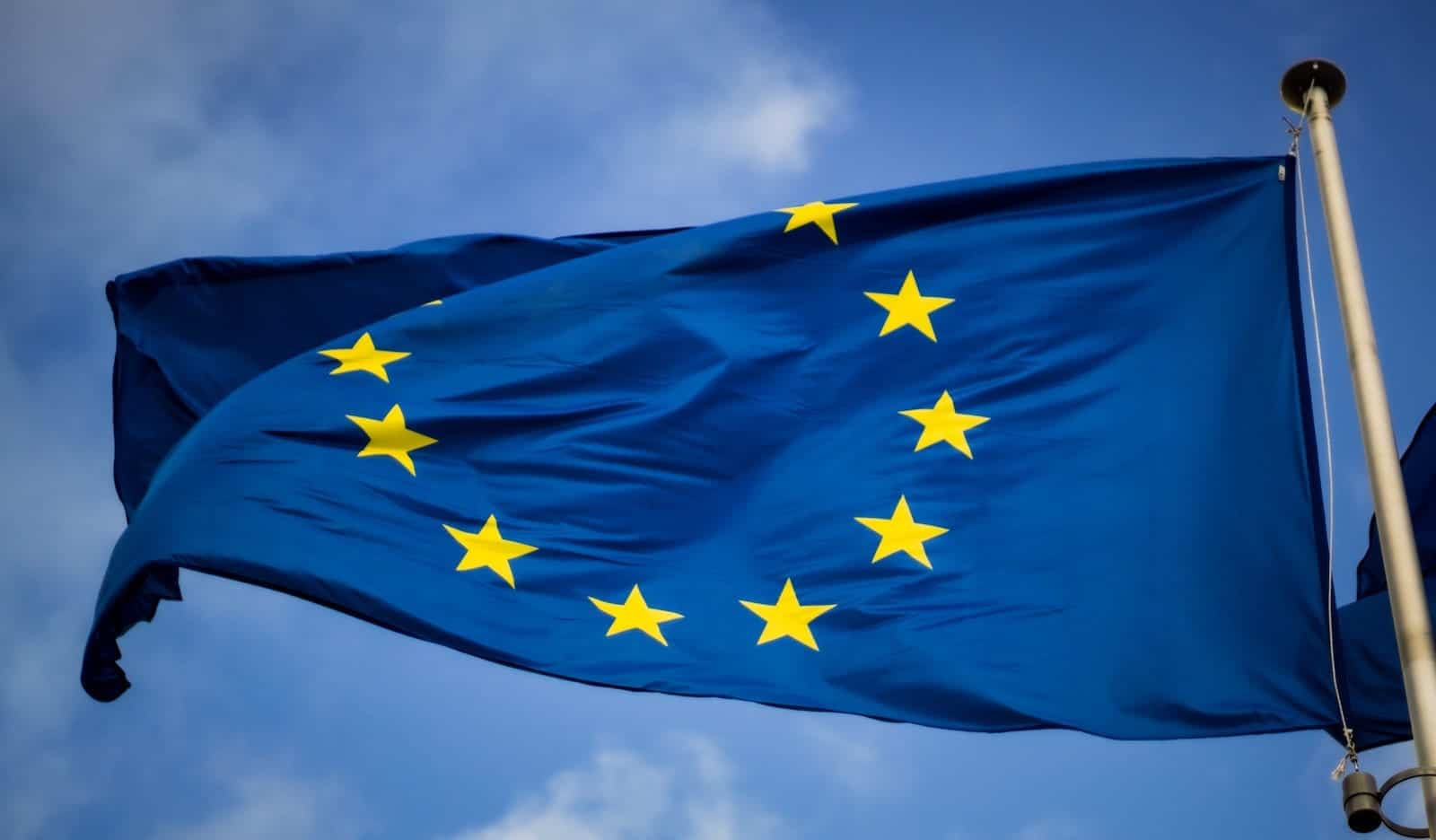
For years, EU telecom policy has had a very clear core idea: more competition, more operators, and above all, less room for large mergers that could raise prices for consumers. This approach, which served as a brake on consolidation, is beginning to change. The European Commission has increasingly started talking about scale, investment capacity, and technological autonomy in networks—just as the rollout of fiber, 5G, and the transition toward 6G face a European market that remains, in practice, a patchwork of rules and licenses from country to country.
The shift isn’t wrapped in a slogan but is driven by a legislative tool with a bold redesign aim: the Digital Networks Act (DNA). Introduced by the Commission as a framework to modernize and harmonize sector standards, and to facilitate cross-border operations that are still complex even for large groups. The logic behind this change is straightforward: without size and regulatory predictability, investing billions in advanced networks becomes more difficult. The EU fears falling behind in the next decade of connectivity, edge solutions, cloud services, and AI-enabled offerings.
From “fragmented market” to “single passport” for operations
Brussels’ diagnosis starts with an issue the sector has been repeating for some time: the European market remains fragmented, with barriers that hinder an operator from easily “scaling” across multiple Member States. The European Commission argues that this reality reduces investment capacity and competitiveness against global players. The DNA aims precisely to strengthen the single connectivity market with a more harmonized and less bureaucratic approach, including measures such as a “Single Authorization Passport” system to facilitate cross-border network and service deployment.
In practice, this “passport” doesn’t automatically mandate mergers, but it reduces friction for groups to operate more uniformly across countries—something often necessary for meaningful pan-European consolidations to be viable. If Europe wants operators with “muscle” comparable to other blocs, the first step is for regulation to stop treating each country as an isolated universe.
Spectrum, 5G/6G, and satellites: more predictability for investments
Another key point is radio spectrum, the invisible fuel of mobile connectivity. The DNA seeks to introduce changes that boost predictability for operators, including longer licensing periods and, in parallel, measures that facilitate pan-European operations in areas like satellite services (with a EU-wide spectrum authorization for satellite services). This is relevant for two reasons.
The first is economic: if an operator can plan investments over a longer horizon, the return on deploying next-generation networks becomes less uncertain. The second is strategic: satellite, advanced 5G, and 6G are no longer seen as separate “layers” but as parts of a hybrid connectivity ecosystem critical for industry, emergency response, defense, transportation, and public services.
From copper to fiber: speeding up the transition without disrupting the market
The Commission is also focusing on a transition that, while less visible, impacts digital competitiveness: moving from legacy copper networks to fiber. The DNA proposes to accelerate this shift with a more agile and predictable access regime. Simply put: the EU wants the market to stop being stuck in outdated regulatory balances designed for a time when traditional fixed networks were the center of connectivity.
This has direct implications for the digital economy: fiber is the foundation upon which edge computing, distributed cloud, telemedicine, connected industry, and AI services are built. Without fiber infrastructure, everything else remains promise or half-measures.
Technological sovereignty: resilience, dependency, and crisis preparedness
The European debate is no longer just about prices and competition. Increasingly, the focus is on resilience: robust networks, continuity of critical services, incident response capacity, and reducing dependencies. The DNA introduces the idea of a Preparedness Plan for digital infrastructures, along with measures to limit dependencies and mitigate risks like foreign interference or network crises.
This intersects two debates: on one side, technological geopolitics; on the other, the operational reality of maintaining infrastructures that are as critical as highways or power grids for a country. The EU is elevating “the network” to a strategic infrastructure category, shifting the focus accordingly.
The inevitable tension: more scale in exchange for less competition?
The European shift inevitably opens an uncomfortable debate. If consolidation is facilitated, the market could evolve toward fewer operators, but larger ones. This could translate into greater investment capacity and faster deployments. But risks also exist: less competitive pressure might lead to higher prices or less innovation if not balanced with effective regulation.
Brussels seeks to maintain this balance: modernize rules to enable investment and scale, without sacrificing consumer protection. The challenge is that, in telecoms, such balance is rarely clean. Mergers are evaluated not only on prices but also on coverage, investment, service quality, innovation, and resilience. Europe is starting to prioritize the ability to compete as a bloc over strict national microbalances.
Big tech companies at the center… but not with a blank check
A parallel contentious issue persists: should major digital platforms contribute to the cost of networks? In recent years, this “fair share” debate has appeared and disappeared from political discourse. Regarding the DNA, the Commission aims to advance without making that the central focus: the key message is that Europe’s problem isn’t solved just by “charging others” but by making large-scale investment and operation in the single market viable.
A nuance that cannot be ignored: sovereignty isn’t just “jurisdiction,” it’s also “ownership”
In public discourse, “sovereign cloud” and “digital sovereignty” are often synonymous with compliance, data location, or legal controls. But there’s a more stringent reading: sovereignty is also measured by who controls infrastructure and the entire value chain. In Spain, for example, there are national players with real capacity in connectivity and infrastructure (Telefónica, Grupo Aire, Stackscale, DinaHosting, among others). The challenge is that institutional design should not conflate “operating in Europe” with “being European” in terms of corporate control and strategic decision-making.
With the DNA, the EU seems to be saying: “we need champions.” The lingering question is: European-wide champions with European industrial roots, or “Europeanized” champions driven mainly by regulation and localized operations? The answer will determine whether this shift becomes a boost for competitiveness or a narrative change with limited results.
Frequently Asked Questions
What is the Digital Networks Act and why does it matter to European telecoms?
It’s the European Commission’s proposal to modernize and harmonize sector rules, aiming to boost investment in fiber, 5G, and 6G, while reducing barriers for cross-border operations within the single market.
Will the EU allow more mergers between operators from different countries?
The DNA doesn’t automatically approve mergers, but it introduces mechanisms (such as a possible single authorization passport) that could make pan-European operation more feasible—typically a preliminary step toward consolidation.
How might this affect users: better networks or higher prices?
The outcome depends on how it’s implemented and future mergers evaluated. Greater scale can promote investment and quality, but less competition might reduce price pressures if not counterbalanced with effective regulation.
What is the connection between this shift, digital sovereignty, and the cloud in Europe?
Networks underpin the cloud, edge computing, and AI. While Europe aims to boost resilience and reduce dependencies, real sovereignty also hinges on control over infrastructure and strategic decisions, not just data hosting locations.