
Spain has become one of Europe’s most attractive regions for new data centers. Madrid, Aragón, Catalonia, and other emerging hubs combine international connectivity, available land, renewable deployment, and a favorable geographic position to connect Europe with the Americas, Africa, and the Mediterranean. Yet, the sector’s rapid growth is entering a more challenging phase: physical limits.
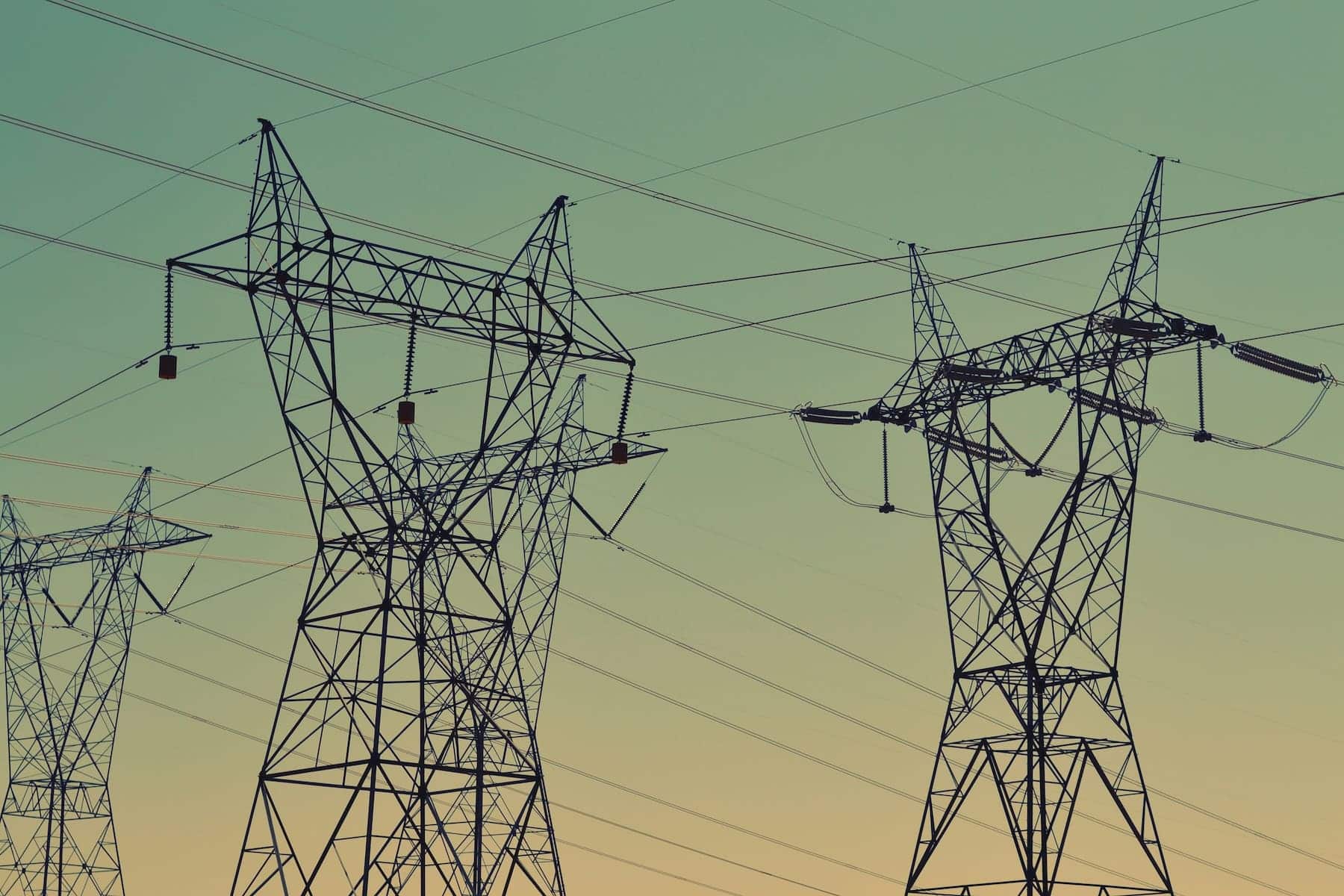
The discussion is no longer solely about water, visual impact, or noise. The real bottleneck is now energy, especially the availability of connection points to the electrical grid. Without sufficient, stable, and timely power access, a data center can have land, permits, clients, and investment committed, but it cannot operate.
This issue is not unique to Spain. Reports cited by Bloomberg and Sightline Climate indicate that a significant portion of data centers planned for 2026—estimations ranging between 30% and 50% depending on the scope of analysis—could be delayed or canceled due to lack of electrical infrastructure, bottlenecks in critical components, and increasing local opposition. In the U.S., some studies suggest that nearly half of planned projects face delays or cancellations.
Power has become the scarce resource
Data centers were already major electricity consumers before the rise of generative artificial intelligence. With AI, the scale has shifted dramatically. Training models, inference tasks, agents, cloud services, and GPU-intensive business loads are increasing power density per rack and concentrating demand in specific locations.
Barclays Research estimates that electricity demand from data centers in the U.S. could grow between 14% and 21% annually until 2030, rising from 150-175 TWh in 2023 to as much as 560 TWh—about 13% of the country’s current electricity consumption. The report warns that plans for new capacity may be hindered by chip shortages, electrical equipment bottlenecks, regional capacity restrictions, and local opposition.
In Spain, the situation can be understood more simply: producing a lot of renewable energy is not enough. The grid must also be able to transmit and deliver that electricity where it’s needed, with firm capacity and guarantees of continuity. Connection points are limited, dependent on specific substations, and require permits, reinforcements, and investments that cannot be resolved overnight.
Consequently, the government has introduced new rules to prevent speculative projects from reserving grid capacity without actual development. The decree establishes capacity reservation provisions and project timelines, based on the principle that those who do not execute should not block capacity that others could utilize. This measure highlights how electrical access has become a decisive factor for the future of data centers in Spain.
The practical result is clear: the most viable projects will no longer be judged solely by location, land, or financial backing. They will be evaluated based on real energy access, credible electrical schedules, efficient design, grid integration, and the ability to operate without increasing system pressure.
From water debates to electricity debates
During Spain’s early data center boom, much of the public debate focused on water. It made sense—as these facilities require cooling, and in a country with recurrent droughts, intensive water resource use raises concerns. But technological advances have shifted this focus: closed-circuit cooling, liquid cooling, hybrid systems, more efficient designs, and greater attention to PUE and WUE have reduced the relative importance of water issues in many projects.
This does not mean water issues are irrelevant. In water-stressed regions, they remain a significant social and environmental concern. However, the main focus has moved towards electricity. A data center can design systems to use less water, but it cannot operate without continuous power.
Barclays summarizes this with a quote attributed to Pat Lynch of CBRE: the main obstacle to data center growth is not land, infrastructure, or talent, but local energy. This aligns with emerging observations: capital exists, AI demand is high, suppliers are prepared, but sufficient network infrastructure to connect projects quickly is often lacking.
In this context, renewables are an advantage for Spain, but not a silver bullet. Solar and wind are crucial for decarbonization, but their generation is variable. Data centers need 24/7 supply, electrical quality, backup, and predictability. Bridging this gap will require storage solutions, more robust networks, demand management, long-term contracts, firm generation, and planning that treats data centers as integral parts of the energy system rather than isolated projects.
The nuclear debate, which seemed settled in many European countries, has re-emerged for exactly this reason. The U.S. is exploring agreements between hyperscalers and small modular reactor developers, while Europe proceeds more cautiously. Barclays notes that hyperscalers seek stable, dispatchable sources, and that nuclear scores well on stability, low operational emissions, and land use. However, concerns remain regarding costs, timelines, waste, and social acceptance.
Heat also enters the equation
Along with energy and water, a third less-visible factor is heat. Servers convert most of the electricity they consume into residual heat. In high-density setups—especially those linked to AI—dissipating this heat becomes increasingly complex.
In Aragón, several studies have reported anomalous increases in surface temperatures in areas with concentrated data centers. One such study, led by researchers from Cambridge University, analyzed thousands of installations via satellite observation and noted average increases of about 2°C in ground surface temperature after their commissioning, with some extreme cases exceeding that.
It’s important to clarify: this does not necessarily mean a city’s air temperature will rise by 2°C due to a data center. Rather, it refers to surface temperature measurements and local urban heat island effects. Nonetheless, the warning is significant. As campuses grow in size and density, thermal impacts must be integrated into urban, energy, and environmental planning.
The solution doesn’t lie solely in better cooling. It also involves reusing residual heat where feasible, selecting suitable locations, designing more efficient buildings, reducing losses, leveraging favorable climates, and coordinating projects with district heating networks or nearby industrial uses. In Europe, the Energy Efficiency Directive already requires the reporting of sustainability indicators in data centers—such as electricity consumption, renewable use, residual heat recovery, and data traffic—pointing toward increasingly strict regulation.
A transition toward a more mature sector
The expansion of data centers will not stop; the digital economy depends on them. Cloud computing, AI, e-commerce, banking, healthcare, public administration, gaming, social media, streaming, and enterprise communications all require physical infrastructure. Limiting their development without alternatives is not realistic.
However, it’s also unrealistic to assume all announced projects will be built. The sector is entering a phase of maturity—where investment announcements alone are no longer sufficient. Projects will need to demonstrate energy viability, local impact, efficiency, territorial integration, and regional return on investment.
Spain has a significant opportunity: leveraging its renewable resources, connectivity, submarine cable arrivals, Madrid’s emergence as a digital hub, and Aragón’s growth as a major cloud campus enclave. Yet, this opportunity requires controlled growth. Without energy planning, transparency in connection points, and clear project prioritization criteria, the boom might become a backlog of stalled promises.
Realistic job discussions are also necessary. Data centers generate skilled jobs, construction activity, maintenance, security, engineering, energy, and telecoms work. But not all generate the same local impact once construction ends. Therefore, regions should evaluate not only MWs or announced investments but also the supplier chain, training programs, associated technological activity, and the capacity to attract related companies.
The so-called “crisis” in data centers is not a collapse—it’s a correction. The market is discovering that AI scaling requires more than just money and GPUs. It also depends on transformers, substations, permits, water, cooling, social acceptance, and firm energy. These resources are far less elastic than investment announcements.
The next stage will differentiate between speculative and actionable projects. The former will block capacity, generate headlines, and face delays; the latter will have convincing answers to the core questions: where will the energy come from, when will it be available, and at what cost.
Frequently Asked Questions
Why are some data center projects being delayed?
Due to limited available electrical capacity, connection point delays, bottlenecks in critical equipment like transformers, rising costs, and local opposition in certain regions.
What are electrical connection points?
They are physical and administrative points that allow a facility to connect to the transmission or distribution network. Their capacity is limited and already may be committed by other projects.
Is water the main issue with data centers?
Water remains important, but in many projects, the focus has shifted toward energy. Without sufficient, stable power, a data center cannot operate even if land and permits are in place.
Can Spain continue attracting data centers?
Yes, but it will require energy planning, network reinforcement, clear capacity reservation criteria, technological efficiency, and projects that add real value to the territory.
