
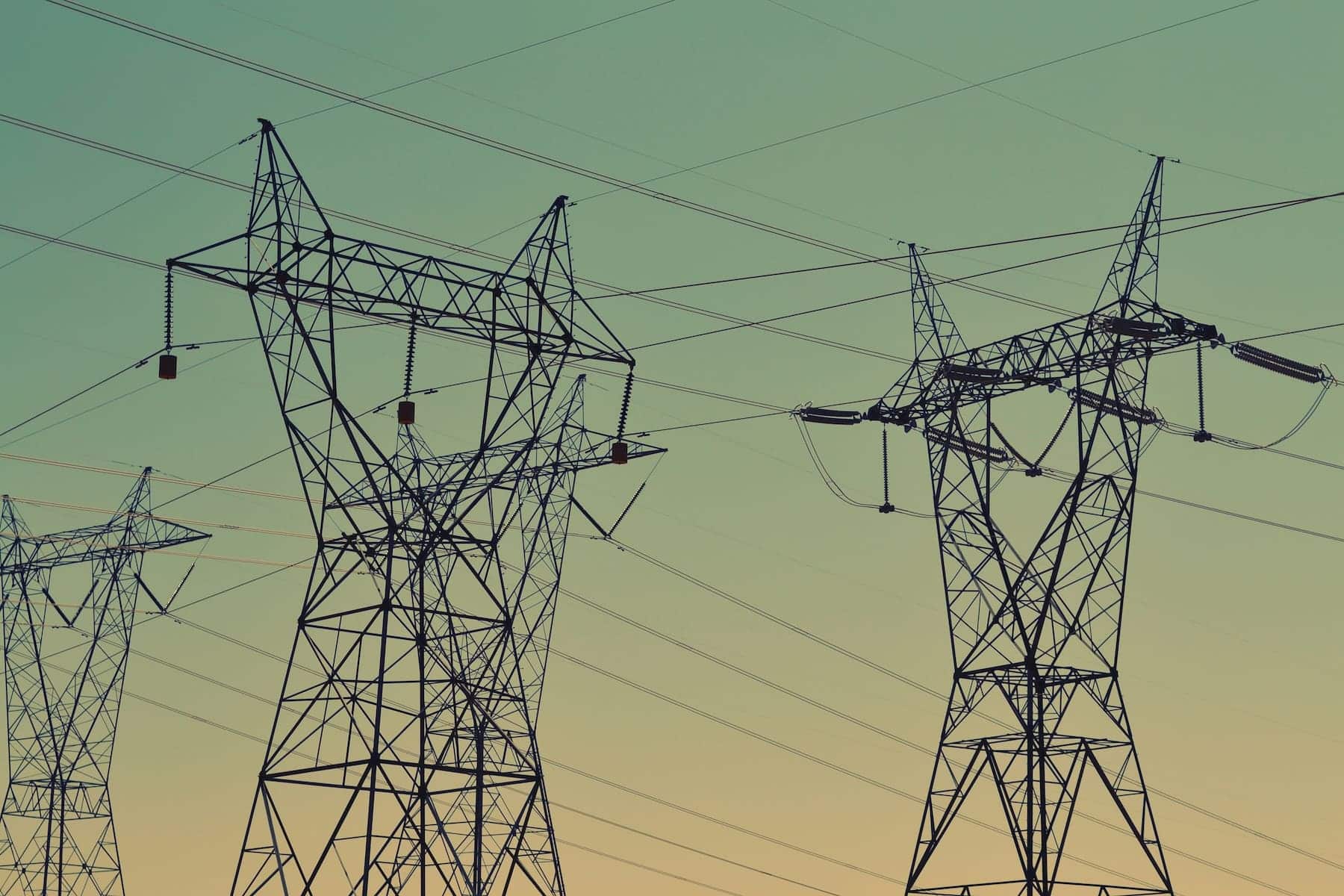
The 76% jump in electricity prices in the largest regional market in the U.S. is neither a local anecdote nor a rarity of the North American energy system. It’s a warning. In the PJM network, serving 13 states and Washington D.C., the average wholesale cost rose from $77.78/MWh in the first quarter of 2025 to $136.53/MWh in the same period of 2026. The independent regulator Monitoring Analytics largely attributes this tension to data center demand, especially in areas like Northern Virginia, which hosts one of the world’s largest digital infrastructure hubs.
Europe does not have the same market design as PJM, nor the same degree of geographic concentration at a single node. But the underlying risk is similar: that massive electricity demand, accelerated by artificial intelligence, drives investments in grid, generation, and equipment that eventually distribute costs among all consumers if not properly regulated. The question is no longer whether we need data centers. We do. The question is who pays for the electrical infrastructure they require and under what conditions.
The PJM case: when data centers become a shared bill for everyone
Monitoring Analytics’ report is significant because it goes beyond saying data centers consume a lot of electricity. It highlights that their growth has altered capacity supply and demand conditions in the market. According to the regulator, the impacts on customers have been substantial and irreversible, and will increase if associated issues with data center load are not addressed in time. TechCrunch also summarized a direct quote from the report: without the rising demand from data centers, capacity markets would not have experienced the same tensions or high prices.
| Indicator in PJM | Data |
|---|---|
| Average wholesale price Q1 2025 | $77.78/MWh |
| Average wholesale price Q1 2026 | $136.53/MWh |
| Year-over-year increase | 75.5% / 76% |
| PJM coverage | 13 states and Washington D.C. |
| Main factor noted by regulator | Data center load growth |
| Described risk | High costs transferred to all consumers |
The emerging solution in the U.S. is straightforward in concept but challenging to implement: large consumers should pay their fair share for grid access. If a tech company requests hundreds of megawatts for training models or serving inference, that cost shouldn’t be hidden within a general auction that ends up inflating bills for households, small businesses, or industries not involved in that activity. Tom’s Hardware summarizes this perspective by explaining that regulators support data centers negotiating directly with power producers for capacity, rather than mixing that demand into the general capacity market.
This debate follows years during which energy was treated as just another cloud infrastructure input. Discussions centered on regions, availability zones, GPUs, latency, connectivity, and data sovereignty, but rarely on who funds substations, high-voltage lines, transmission upgrades, or the firm capacity needed for a campus to operate. AI has shifted that paradigm. A data center is no longer just a building full of servers; it’s an industrial load comparable to a large factory.
Europe is not immune: it’s just taking a different path
The International Energy Agency estimates that global data center electricity consumption will roughly double—from 485 TWh in 2025 to 950 TWh in 2030. The segment specifically related to AI data centers will grow even faster, with demand tripling over that period. The IEA also warns that AI rack energy density increased elevenfold between 2020 and 2025 and could multiply four times more by 2027.
| Scale | Current / Recent Situation | Forecast |
|---|---|---|
| Global data centers | 485 TWh in 2025 | 950 TWh in 2030 |
| European data centers | 96 TWh in 2024 | 168 TWh by 2030 and 236 TWh by 2035 |
| Ireland | 22% of measured electricity in 2024 | Already a case of structural pressure |
| Spain | 439 MW IT installed in 2025 | Up to 2,537 MW in 2030, according to SpainDC |
In Europe, Ember projects that data center electricity demand will rise from 96 TWh in 2024 to 168 TWh in 2030 and 236 TWh in 2035—an increase of nearly 150% in just over a decade. This is not an abstract number: 168 TWh is close to the total annual electricity consumption of medium-sized countries.
The European Commission already acknowledges the issue. Its page on data center energy performance states that these infrastructures are essential for cloud, storage, AI, and digital services but also notes that their rapid energy demand presents challenges. Their environmental impact depends on water use for cooling and the decarbonization of the electricity they consume. Therefore, the Energy Efficiency Directive has introduced monitoring and reporting obligations for large data centers.
Ireland exemplifies what can happen when data center concentration exceeds the country’s electrical planning capacity. The Irish statistical office estimates these facilities consumed 6,969 GWh in 2024, 10% more than in 2023, already representing 22% of the country’s measured electricity—up from 5% in 2015.
Spain is still far from that level of concentration, but projected growth demands action before the problem escalates. SpainDC estimates that the sector could mobilize €66.9 billion by 2030, with IT power capacity rising from 439 MW in 2025 to 2,537 MW in 2030. Madrid remains the primary hub, with projections reaching 612 MW by 2030.
A quick calculation illustrates the scale of the challenge: one gigawatt of continuous load equals approximately 8.76 TWh per year before losses, PUE, or usage variations. If a country permits several gigawatts of new data centers without requiring additional generation, flexibility, or clear reinforcement investments, the pressure will eventually manifest in the grid, tariffs, or electricity prices.
Building data centers is not the problem; subsidizing their electrical cost is
The simple solution would be to say “no” to new data centers. That would be a mistake. Europe needs cloud, AI, storage, cybersecurity, and local compute capacity if it wants technological sovereignty. Without local infrastructure, reliance on foreign cloud regions or hyperscalers—who choose where data is processed—will only increase.
The issue isn’t data centers per se. It’s allowing massive industrial loads to absorb grid capacity as if they were ordinary connections. Paying for the electricity you use is one thing; paying for the systemic costs you generate—new lines, substations, transformers, firm capacity, reserves, flexibility, storage, peak management, and congestion—is another.
Europe has an opportunity PJM lacked: to regulate this growth before costs spiral out of control. For that, clear rules are essential.
| Required Measures | What They Solve | Risks if Not Implemented |
|---|---|---|
| Conditional connections based on actual capacity | Prevents unfeasible megawatt promises | Speculative queues and project blockages |
| Direct payment for specific reinforcements | Reduces transferring costs to the general consumer | Socialization of private investments |
| PPAs with additional new generation | Ensures consumption isn’t just shifting existing energy | Electricity greenwashing |
| Demand flexibility and batteries | Allows reduction of load during critical moments | More peaks and higher system costs | Location near generation and available grid | Prevents urban node saturation | Moratoria and local conflicts |
| Heat reuse and water efficiency | Increases social acceptance and reduces environmental impact | Local opposition and regulatory pressure |
The UK has already seen how connection requests can overwhelm the system. In February, The Register reported that around 140 data center projects seeking nearly 50 GW in grid access exceeds the country’s peak demand at that time. The British government has launched consultations to curb speculative requests and prioritize strategic demand, including data centers and AI growth zones.
The Netherlands faces another tension: grid congestion. Amsterdam decided in 2025 to halt new data center developments and expansion within the municipality, except for ongoing projects, to reserve physical space and electrical capacity for other urban priorities.
Spain is in a different phase, with more planning margin but not unlimited. Saturation of connection nodes and reforms in access rules will be key to allowing viable projects to move forward and preventing speculation from blocking capacity. Discussions around data centers can no longer detach from electrical planning, storage, renewable generation, and grid capacity issues.
An uncomfortable truth: cloud providers must pay their full costs
For years, cloud has been presented as a more efficient way to use infrastructure. In many cases, it is. But AI introduces a different scale. When a company requests 300 MW, 500 MW, or 1 GW to train models or sell global services, we’re no longer talking about a simple digital load. It’s an energy-intensive industry with thin profit margins and systemic costs.
My clear position: Europe should permit and attract data centers, but not subsidize their electrical bottlenecks through the common bill. The principle should be “private benefit, full electric cost.” Those requesting extraordinary capacity must contribute additional generation, fund reinforcements, offer flexibility, accept scheduled interruptions when necessary, and demonstrate that their energy use does not raise costs or displace local households, SMEs, or industries.
This doesn’t mean targeting responsible operators. Many data centers sign renewable PPAs, invest in heat reuse, advanced cooling, and low-impact designs. But PPAs are insufficient if not additional and if the local grid remains congested. Buying renewable energy through financial contracts doesn’t fix a saturated substation or a line that will take seven years to upgrade.
Nor does claiming that data centers create jobs suffice. They do during construction, generate fiscal activity, and enable a digital economy, but once operational, they may not employ as many people as other energy-demanding industries. Public assessments must be comprehensive: megawatts, jobs, taxes, water, residual heat, grid investments, flexibility, and local technological value.
AI is not free. Its costs appear in GPUs, memory, water, fiber optics, transformers, ground, and electricity. In the U.S., we already see what happens when the system faces enormous demand unprepared for it. Europe can still avoid a PJM-like surge, but only if it stops treating data centers as mere tech buildings and starts considering them as large industrial loads with proportional obligations.
Europe’s future cloud landscape will not be decided solely by who has the most regions, best GPUs, or more submarine cables. It will be decided by who manages to integrate data centers into the electrical grid without breaking the bills of others. That is the real frontier of AI in Europe: not the model, but the megawatt.
Frequently Asked Questions
Could Europe face an electricity price surge like PJM’s in the U.S.?
Not exactly the same, because Europe’s market design is different. But similar effects can occur via grid congestion, higher tariffs, reinforcement costs, connection delays, and pressure on wholesale prices in specific zones.
Are data centers bad for the electrical system?
Not necessarily. They can bring investment, digitalization, reusable heat, and stable demand. Problems arise when they grow faster than the grid and do not pay clearly for the reinforcements they need.
Is it enough for tech companies to buy renewable energy?
No. PPAs help, but must contribute additional generation and be accompanied by grid capacity, flexibility, storage, and local planning. Otherwise, they risk being just accounting solutions rather than systemic improvements.
What should Europe require from new AI data centers?
Realistic connections, funding for specific reinforcements, demand flexibility, energy transparency, water efficiency, heat reuse, and placement where the grid can absorb new loads without harming other consumers.
