
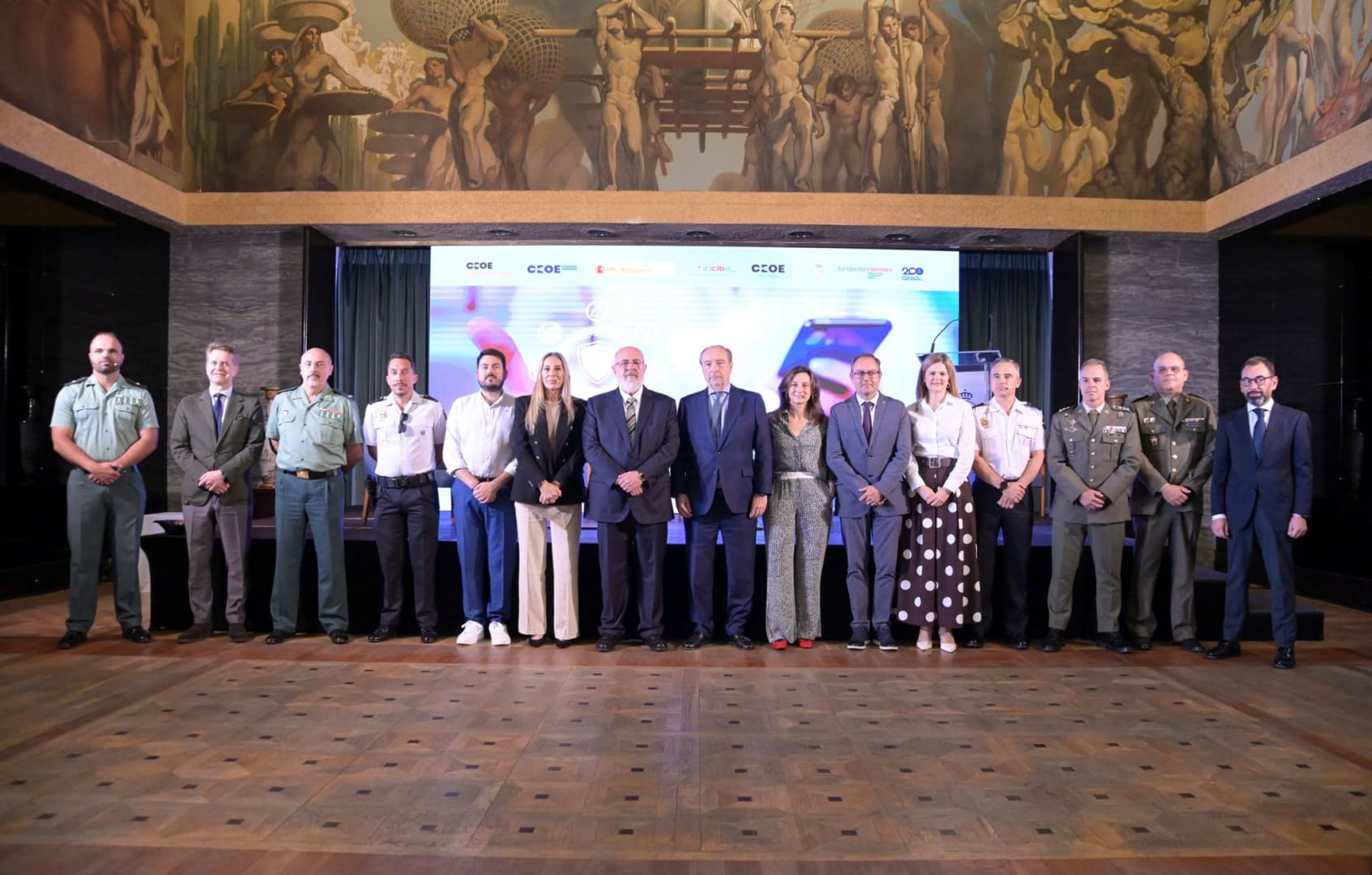
Tenerife hosted a new session of the national project +Cybersecurity, an initiative promoted by INCIBE, Fundación CEOE, CEOE, and CEOE Tenerife, with the collaboration of Guardia Civil, Policía Nacional, and Fundación Hermes. The event brought together institutions, security forces, experts, and Canarian companies at the Real Casino of Tenerife to share practical guidelines on prevention and response to cyberattacks.
The session arrives at a time when cybersecurity is no longer just a concern for technical departments. For many companies, especially SMEs and freelancers, a digital incident can impact sales, operations, reputation, customer data, and business continuity. That’s why the +Cybersecurity project aims to bring useful knowledge closer to the business community, with a less theoretical and more decision-oriented approach.
Canaries face an increasing digital risk
INCIBE’s Director General, Félix Barrio; the Secretary General of CEOE, José Alberto González-Ruiz Martínez; and the President of CEOE Tenerife, Pedro Alfonso Martín, participated in the opening of the event. All three emphasized digital security as an essential element for growth, trust, and internationalization of businesses.
Félix Barrio highlighted the importance of public-private collaboration in territories like the Canary Islands, where awareness and training initiatives can turn SMEs, organizations, and citizens into a frontline defense against digital threats. Pedro Alfonso Martín also pointed out the strategic potential of the Canary Islands to attract activities related to defense, cybersecurity, dual-use technology, and economic intelligence, leveraging its geographic position, European framework, and fiscal advantages.
INCIBE’s data illustrates why initiatives like this are necessary. By 2025, the organization managed 122,223 cybersecurity incidents in Spain, a 26% increase compared to 2024. The Canary Islands accounted for 2.04% of geographically tagged incidents, ranking as the twelfth autonomous community in total incidents nationwide.
The free and confidential service “Your Help in Cybersecurity” handled 142,767 inquiries in 2025, a 45% increase from the previous year. From the Canary Islands, 3,470 inquiries were received, representing 3.5% of the total nationwide, which is a 41.7% increase compared to 2024. Most inquiries came from citizens, with 3,014 contacts, followed by companies with 244, and minors with 212.
| Cybersecurity indicators 2025 | Data |
|---|---|
| Incidents managed by INCIBE in Spain | 122,223 |
| Growth compared to 2024 | 26% |
| Canary Islands’ share of geolocated incidents | 2.04% |
| Inquiries handled by “Your Help in Cybersecurity” | 142,767 |
| Growth in inquiries compared to 2024 | 45% |
| Inquiries from Canary Islands | 3,470 |
| Growth in inquiries from Canary Islands | 41.7% |
| Inquiries from Canarian companies | 244 |
The most common topics from Canary inquiries were vishing (14.5%), fraudulent purchases (10.8%), smishing (9.2%), and identity theft via theft (6.7%). In the province of Santa Cruz de Tenerife, 1,474 inquiries were addressed, with false investments and cryptocurrencies also ranking among the top four most discussed issues.
From diagnosis to practical response
One of the goals of the session was to translate cybersecurity into practical applications. The panel on challenges and opportunities in the digital environment was moderated by César Maurín, Director of the Department of Digitalization, Innovation, Commerce, and Infrastructures at CEOE. Participants included Yolanda Barrientos from INCIBE; Leonardo Rey Rodríguez, Guardia Civil Commander; Juan Carlos Sancho, Commissioner of the Central Cybersecurity Brigade of Policía Nacional; and Luisa Alli, Secretary General of Fundación Hermes.
This segment addressed the evolution of increasingly sophisticated cyberattacks, with broader reach and greater impact on daily organizational activities. The clear conclusion was that companies need to anticipate, train their teams, and improve coordination with institutions and security forces. Reactive responses are no longer enough when an attack can disable systems, leak data, or halt operations.
The highlight of the event was a hands-on seminar-workshop with real cyberattack cases. It featured Manuel Santos Cerezo of INCIBE, Miguel Ángel Godoy of Guardia Civil, and Víctor Muro Reyes of Policía Nacional. The workshop provided guidelines for threat identification, incident management, and strengthening strategic assets.
This approach is especially vital for SMEs. Many small businesses lack internal security teams or clear protocols. Knowing who to contact, how to preserve evidence, which channels to use, and initial steps can make the difference between containing an incident and facing a crisis with economic repercussions.
Cybersecurity as an investment, not a cost
The final panel focused on the business perspective. Leaders from various sectors shared how they integrate cybersecurity into their organizations. Participants included Carmen M. Martín López (Intelequia), María Luisa De Arcos Díaz (Integra Tecnología y Comunicación de Canarias), Héctor Reboso Morales (Atlantis Technology, Binter Sistemas, and One Cyber), Fernando Hernández Baute (Hospiten), and David Santana Fraga (RISKMEDIA Group).
The discussion revealed a mindset shift. Cybersecurity is no longer seen solely as an operational necessity but as a factor influencing customer and supplier trust, business continuity, and competitiveness. In sectors like healthcare, transportation, digital services, and manufacturing, protecting systems and data also means safeguarding core activities.
INCIBE also reaffirmed its commitment to entrepreneurship, talent development, and research. Over the past three years, 103 entrepreneurial training initiatives have been carried out in the Canary Islands. Additionally, three agreements with the University of La Laguna and the University of Las Palmas de Gran Canaria have been funded, involving €1.1 million from INCIBE to promote cybersecurity chairs.
This is complemented by the RETECH-Cybersecurity program, with an investment of €4.26 million through a partnership with the Canary Islands Technological Institute. The Canary Islands also participate in the CIBERREG project, alongside Navarra, Cantabria, Murcia, the Balearic Islands, Extremadura, Castilla-La Mancha, and Asturias.
The event concluded with a networking session, aimed at strengthening connections among companies, institutions, and experts. This component underscores that cybersecurity is built not only with tools but also with culture, trust-based relationships, ongoing training, and coordinated incident response.
As it continues its tour through Spain, +Cybersecurity sends an increasingly urgent message: companies cannot wait for an attack to start preparing. Prevention, training, and coordinated response are already integral to business competitiveness.
Frequently Asked Questions
What is the +Cybersecurity project?
It is a national initiative led by INCIBE, Fundación CEOE, CEOE, and regional organizations to provide companies with practical knowledge on prevention and response to cyberattacks.
Why was a session held in Tenerife?
The project visits different regions of Spain. In Tenerife, the focus was on strengthening the digital security of the Canary Islands’ business fabric and promoting collaboration among companies, institutions, and security forces.
What are the most queried threats in the Canary Islands?
According to INCIBE data, vishing, fraudulent purchases, smishing, and identity theft are most common. In Santa Cruz de Tenerife, false investments and cryptocurrencies also rank among the top inquiries.
Where can companies seek assistance if needed?
INCIBE offers the free and confidential service “Your Help in Cybersecurity,” along with specific resources for companies, including training programs, tools, and technical support.
