
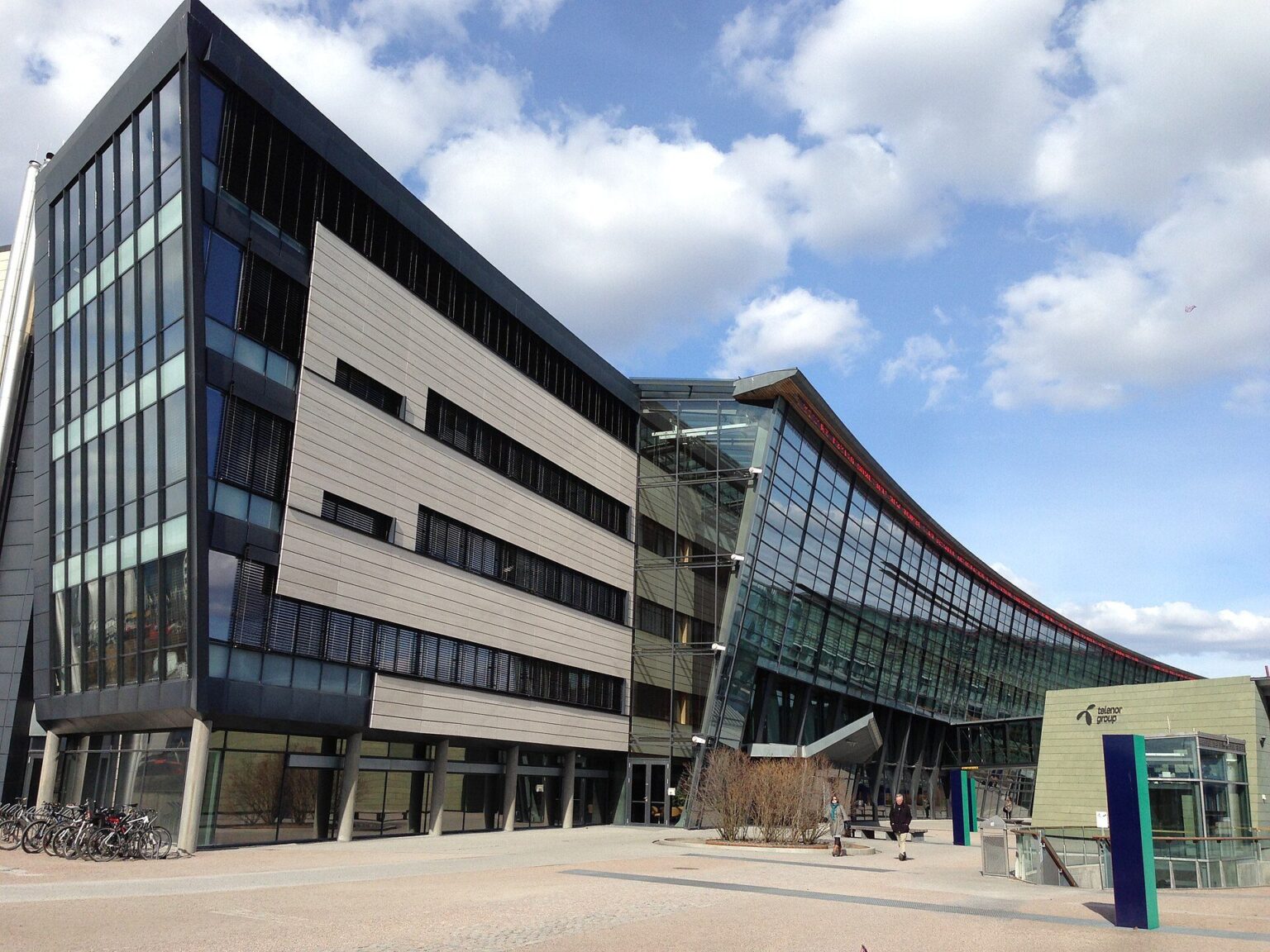
Telenor has reached an agreement to acquire 57.5% of Bahnhof, one of Sweden’s leading independent broadband providers. The deal values the company at 6.1 billion Swedish crowns, approximately $629 million, including its debt, and will elevate the Norwegian group to the second position in the country’s fixed residential access market if the necessary approvals are obtained.
The agreement involves much more than half a million customers. Bahnhof brings its own network, access to open infrastructure, a business division, and five colocation data centers. Telenor gains a foundation from which to sell connectivity, digital services, and enterprise solutions in the largest Nordic market by population.
Bahnhof acquisition: the key points in 20 seconds
- Telenor has agreed to initially acquire 57.5% of Bahnhof.
- The deal values the company at 6.1 billion Swedish crowns.
- Founders are selling directly and indirectly a 50.8% stake.
- Investment AB Öresund is selling another 6.7%.
- Telenor will subsequently need to make a cash tender offer for the remaining shares.
- Bahnhof has over 500,000 residential customers and around 15,000 business customers.
- The purchase will increase Telenor’s fixed broadband residential market share from roughly 15% to 27%.
- Telenor will become the second-largest fixed broadband provider in Sweden.
- Bahnhof will retain its brand following the transaction.
- The closing is expected within four to eight months, subject to regulatory approval.
Founders Jon Karlung and Andreas Norman have agreed to sell their combined 50.8% stake at 60 Swedish crowns per share. This package gave them control of about 86% of voting rights. Telenor will also buy 6.7% of Investment AB Öresund at 62 crowns per share.
Once this initial phase is completed, the Norwegian operator will need to make a mandatory public offer for the remaining shares at 62 crowns. Bahnhof’s shares closed the day before the announcement at 50.90 crowns, so the offer to minority shareholders includes a premium close to 22%.
| Deal Element | Reported Data |
|---|---|
| Enterprise value of Bahnhof | 6.1 billion Swedish crowns |
| Equity valuation | Approximately $629 million |
| Founders’ stake | 50.8% |
| Öresund’s stake | 6.7% |
| Initial control for Telenor | 57.5% |
| Price to founders | 60 crowns per share |
| Price to Öresund | 62 crowns per share |
| Offer to minorities after closing | 62 crowns per share |
| Estimated closing period | Between four and eight months |
Telenor will nearly double its residential broadband share
The most immediate consequence will be Telenor’s increased presence in the Swedish market. Its residential fixed broadband market share will roughly grow from 15% to 27%, positioning the group as the second provider in the country.
This shift allows Telenor to distribute the commercial, technological, and customer service costs across a much larger customer base. It also opens the possibility of combining fiber, mobile, TV, security, and enterprise services into convergent offers.
The company anticipates generating additional revenue through cross-selling opportunities. A residential Bahnhof customer might subscribe to Telenor mobile services, while the business clients served by the Swedish provider could access a broader range of connectivity and digital solutions.
Bahnhof will retain its branding, a decision that reduces the risk of customer loss during integration. The brand has recognition built since its founding in 1994 and will not be immediately replaced with that of the new owner. Karlung and Norman will also join Telenor after the closure.
Continuity in branding does not mean the two companies will remain entirely separate. Telenor will have incentives to unify purchasing, platforms, support systems, and some internal operations. The challenge will be achieving cost savings without eroding the qualities that have distinguished Bahnhof from major operators.
The acquired provider generated 2.3 billion Swedish crowns in revenue during the twelve months ending in Q1 2026. In that period, it achieved an EBITDA of 360 million and free cash flow of 240 million crowns.
Telenor estimates that synergistic effects and the company’s contributions will increase progressively over the first four years. The group expects annual integration costs close to 100 million crowns during this period, indicating that consolidating networks, systems, and equipment will require significant investment before realizing all the expected benefits.
Five data centers that add value to the acquisition
Bahnhof is not just a provider of consumer connections. Its assets include its own network infrastructure, access to open networks, and five colocation data centers. This part of the business enables hosting of customer servers and providing connectivity to companies that need to keep their equipment in specialized facilities.
For Telenor, these centers could serve as points to expand enterprise connectivity, operational continuity, security, and cloud services. This is a strategic inference based on the acquired assets; the group has not yet detailed specific plans for each facility.
Colocation also creates a relationship that’s harder to replace than residential connections. Moving servers, reorganizing links, and migrating services take time and involve risks, so business clients tend to maintain longer-term relationships with their data center provider.
Bahnhof’s network and facilities can also strengthen Telenor’s ability to control more of the end-to-end service. In open access markets, an operator can sell access to customers without owning all the physical infrastructure. Having its own network and presence in data centers improves its decision-making power over routes, interconnections, and quality.
This industrial value helps explain why the deal cannot be simply evaluated by dividing the price by the number of subscribers. Telenor acquires customers, but also technical infrastructure, interconnections, enterprise contracts, and physical assets.
Another deal reducing the number of independent operators
The Bahnhof acquisition is part of a trend of consolidation in the Nordic broadband sector. UBS regards it as the third major recent transaction after Telenor’s purchase of the fiber-to-the-home division of GlobalConnect in Norway and Telia’s acquisition of Bredband2 in Sweden.
The consolidation may increase investment capacity and reduce redundancies but will also decrease the number of independent operators. This issue will be significant in regulatory reviews, especially since Telenor’s market share will rise from 15% to 27%, cementing its second-place position.
The case of Bredband2 shows that the discussion involves more than just the number of brands. Bahnhof previously challenged Telia before the Swedish competition authority over open network access conditions following that acquisition, arguing that they could harm wholesale capacity buyers.
Now Bahnhof will become part of another major telecom group. The acquisition may give it more resources to compete with Telia and other rivals but also shifts the balance between infrastructure owners and independent providers using third-party networks.
Some minority investors have criticized the offer price and consider the 22% premium insufficient. Others have questioned the fact that a company long associated with an independent stance is now under the control of a leading Nordic operator. These are opinions from shareholders and analysts; the Bahnhof management advocates that Telenor will provide greater financial capacity to develop new services.
What might change for Bahnhof customers
In the short term, there has been no announcement of the brand disappearing or mandatory user migrations. Bahnhof will continue operating under its name, and the current management will participate in the new phase.
The main changes may occur gradually through new tariffs, bundled packages, and shared services. Telenor will have the opportunity to offer mobile services to Bahnhof’s fiber customers and to bring its enterprise solutions to a portfolio of around 15,000 businesses.
Customers will also be attentive to the commercial conditions, customer service, and policies that have defined Bahnhof. Maintaining an independent brand only makes sense if it offers genuine differences and does not just serve as a second label within the group.
Regulatory reviews will need to consider the new market concentration and the relationship between wholesale access to networks and retail competition. The deal is not finalized and may be subject to conditions before completion.
Telenor expects to complete the transaction within four to eight months. It will then need to submit a mandatory offer for the remaining shares, potentially giving it a larger final stake than the initially agreed 57.5%.
The acquisition positions Bahnhof as a key element in Telenor’s Nordic strategy. The operator gains scale, enterprise customers, and data centers; Bahnhof gains the backing of a much larger group. The real test will be in integrating both companies without diluting the identity that allowed the Swedish provider to surpass half a million subscribers.
Frequently Asked Questions
Has Telenor bought the entire Bahnhof?
Not yet. The initial agreement covers 57.5%, and it will need to make a mandatory public bid for the remaining shares afterward.
How much will Telenor pay for Bahnhof?
The deal values Bahnhof at 6.1 billion Swedish crowns, or about $629 million, based on enterprise value including debt.
Will the Bahnhof brand disappear?
Telenor has announced that Bahnhof will continue operating under its own brand after the transaction.
What share of the Swedish broadband market will Telenor have?
Its residential fixed broadband share will increase from approximately 15% to 27%, making it the second-largest provider in the country.
