
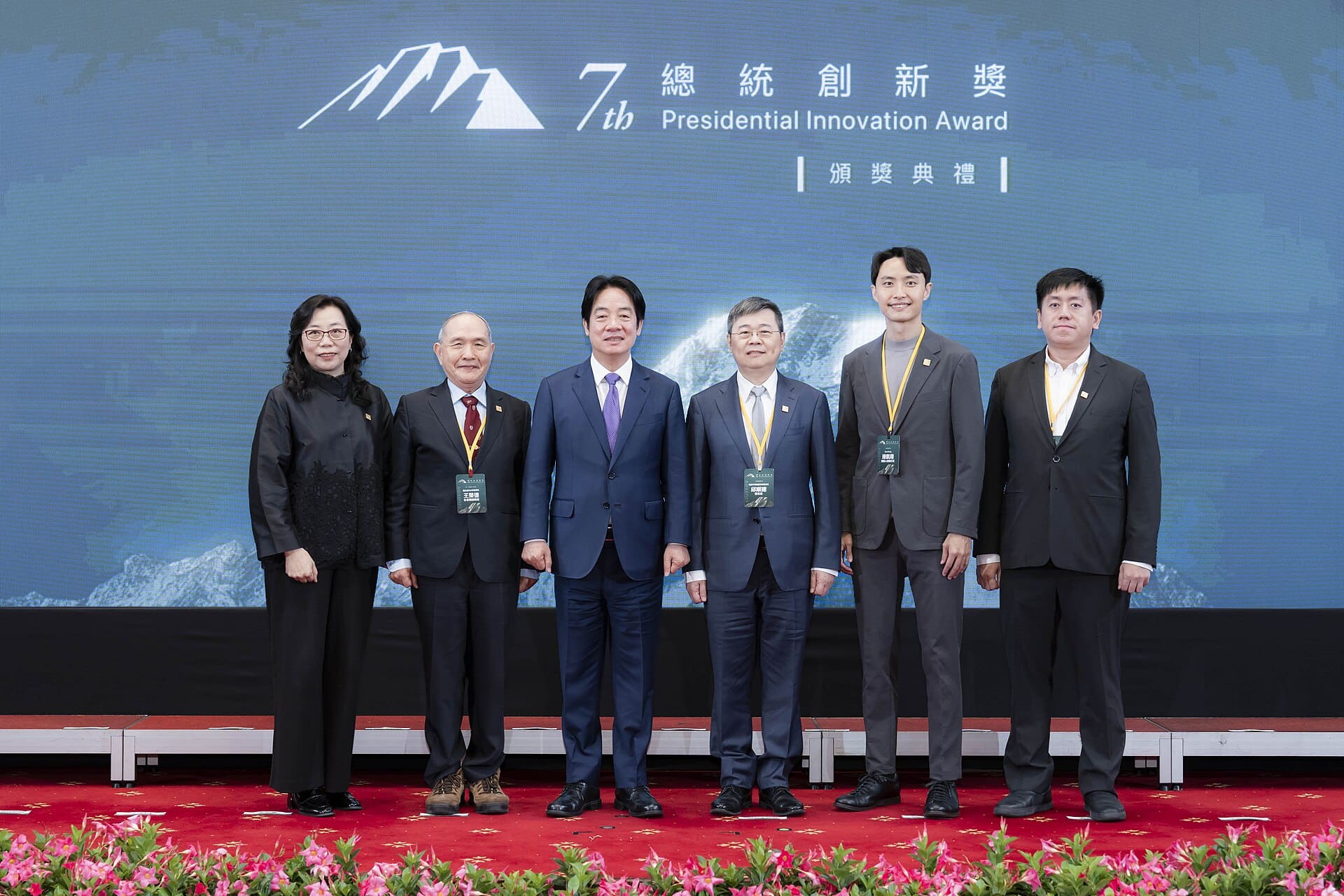
Taiwan wants its relationship with Europe to go beyond just trade and be viewed as a strategic alliance on semiconductors, artificial intelligence, and democratic security. The Taiwanese President, Lai Ching-te, expressed this this week during the European Day dinner organized in Taipei by the European Chamber of Commerce Taiwan, a forum attended by European business representatives and authorities involved in the economic relations between both parties.
Lai’s message used a carefully measured historical comparison. If coal and steel, after World War II, formed the material basis of European cooperation inspired by the Schuman Declaration, today semiconductors and AI occupy a similar place in global prosperity and democratic security. The phrase seeks more than solemnity: Taiwan is trying to frame its tech industry within Europe’s language of resilience, strategic autonomy, and risk reduction.
From the Schuman Declaration to the chip supply chain
The 1950 Schuman Declaration proposed placing the Franco-German coal and steel industries under a common authority. The clear political aim was transforming industries capable of fueling war into tools of cooperation. Lai revisited that idea to talk about today’s digital economy, where chips, AI, servers, advanced computing, and drones are no longer just commercial products.
Taiwan appears in this map as a hard-to-replace piece. Its role in advanced semiconductor manufacturing, with TSMC as a central actor, has made it an indispensable node for European, American, and Asian companies. However, Lai avoided presenting this leadership as an isolated achievement. According to his speech, Taiwan’s semiconductor ecosystem integrates key technologies from European companies, creating a mutual dependency.
This point is significant. Europe doesn’t produce at Taiwan’s level in advanced nodes, but it contributes equipment, materials, optics, precision machinery, chemicals, industrial software, and technical expertise. ASML, Infineon, STMicroelectronics, ASM International, IMEC, and many niche companies are part of a chain where no single block can operate independently without enormous costs.
The cooperation also extends into sectors linked to national security. Lai mentioned drones as a new area of collaboration between Taiwan and Europe, amid efforts to diversify suppliers, reduce critical dependencies, and build more reliable supply chains. The underlying message is clear: experiences from Ukraine, China’s military pressure on Taiwan, and technological competition between the US and China have shifted perspectives on products once seen as purely industrial.
Trade, investment, and a political appeal to Brussels
Taiwan’s president argued that Taiwan’s geographic distance from Europe is offset by a strong economic base. He stated that Europe is Taiwan’s largest source of foreign direct investment and its third trading partner. He also called for progress on a bilateral investment protection agreement and resolving double taxation issues to facilitate more projects between companies on both sides.
A nuance is worth noting. The official figures published by the European Commission for 2025 place the EU as Taiwan’s fifth trading partner in goods, after China, the US, Japan, and South Korea, with €76.2 billion in bilateral trade. Taiwan’s Ministry of Economics also lists the EU as its fifth trading partner in 2025, with $74.89 billion. The difference with the presidential figures may stem from political use of “Europe” in a broader sense, the indicators used, or different aggregations, but the core remains: the economic relationship is significant and focused on high-value sectors.
| Indicator | Highlighted Data |
|---|---|
| EU-Taiwan trade of goods in 2025, according to the European Commission | €76.2 billion |
| EU exports to Taiwan in 2025 | €30.9 billion |
| EU imports from Taiwan in 2025 | €45.3 billion |
| EU trade deficit with Taiwan | €14.4 billion |
| EU-Taiwan bilateral trade in 2025, according to Taiwan | $74.89 billion |
| Accumulated European investment in Taiwan, according to Taiwan | $64.21 billion |
| Increase in Taiwanese investment in EU countries over the past decade, according to Lai | 650% |
The call for a bilateral investment agreement is not new but gains urgency now. Taiwan aims to attract more European capital, better protect its companies in Europe, and provide legal certainty for complex industrial projects. For Brussels, any progress must align with its “One China” policy, which recognizes the People’s Republic of China as the sole legal government of China, although it maintains economic and technical relations with Taiwan through non-diplomatic channels.
This ambiguity characterizes the entire relationship. Europe needs Taiwan for its chips and critical tech supply chains but also manages a vast economic relationship with China. Every step with Taipei is measured carefully. Discussing investment, double taxation, trade, or industrial cooperation is easier than addressing political recognition.
Cross-strait security is now a global concern
Lai also directed the discourse towards geopolitics. He affirmed that peace across the Taiwan Strait is no longer just a regional issue but a global one, and appreciated the European Parliament, NATO leaders, G7 members, and European countries for emphasizing the importance of stability in the Indo-Pacific repeatedly.
The connection with Europe is direct. A conflict in Taiwan would impact chip manufacturing, maritime trade, technological inflation, the automotive industry, defense, consumer electronics, data centers, and digital transition. Europe has learned from Russian energy dependence and the pandemic that critical dependencies can become political vulnerabilities. Taiwan wants this lesson to also apply to semiconductors.
Lai’s speech fits within the European trend of “de-risking”: reducing exposure to strategic risks without necessarily severing commercial ties with China. In this framework, Taiwan emerges as a technological, democratic, and economic partner, even if the relationship remains limited by diplomatic realities.
He also made a nod to global health. Lai appreciated Europe’s support for Taiwan’s international participation, including the World Health Organization and the World Health Assembly. The message aims to reinforce a recurring idea in Taipei: Taiwan wants to be recognized as a useful partner on global issues, even when its international status prevents full participation in many organizations.
Europe must interpret this delicately but understands it as inevitable. If semiconductors and AI are strategic infrastructures, Taiwan can no longer be excluded from Europe’s economic security discussion. The island is more than a chip supplier; it’s a hub where industry, trade, technology, defense, diplomacy, and democratic values converge.
Lai used Europe Day to present this thesis in European terms: cooperation, interdependence, and peace built on critical industries. The question now is whether Brussels and European capitals are willing to turn this language into concrete agreements, greater investment, and a more protected political relationship against pressures from Beijing.
Frequently Asked Questions
What did Lai Ching-te say about semiconductors and artificial intelligence?
The Taiwanese president stated that semiconductors and AI are today’s pillars of global prosperity and democratic security, comparing them to the role coal and steel played in post-war European construction.
What is Taiwan asking from Europe?
Taiwan seeks to move forward on a bilateral investment protection agreement, resolve double taxation issues, and strengthen industrial cooperation in semiconductors, AI, drones, and secure supply chains.
What is Europe’s role in Taiwan’s chip industry?
Europe provides key technologies, equipment, materials, precision machinery, software, and engineering that are part of Taiwan’s advanced semiconductor ecosystem.
Why does Taiwan matter for European economic security?
Because a severe disruption in Taiwan would impact chips, AI servers, automotive, electronics, data centers, defense, and global trade. The stability of the Taiwan Strait has a direct impact on Europe.
via: Wikipedia photo and Taiwan News
