
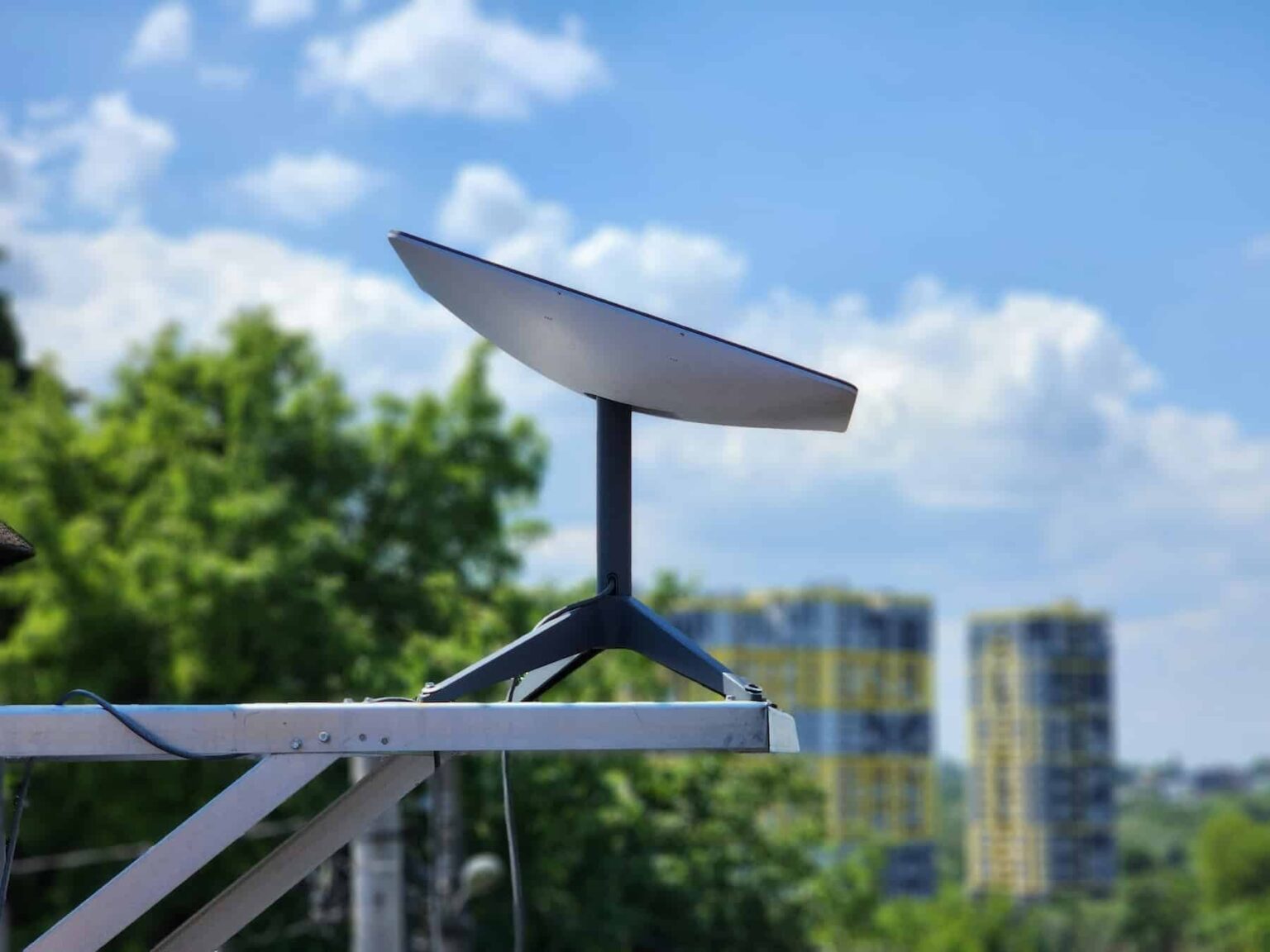
Starlink is entering a less romantic stage—more akin to a traditional telecom operator. After years of using aggressive promotions to accelerate high adoption, SpaceX has begun applying a monthly lease fee for the user kit on new residential plans. The antenna can still appear at no initial cost in some markets, but it should no longer be interpreted as free: the hardware becomes part of a recurring bill.
This change comes at a pivotal moment for the company. The SpaceX IPO has placed Starlink under a more financial lens. Until now, satellite internet was mainly the group’s great promise of recurring revenue. From now on, it must prove something tougher: that it can grow, maintain network quality, fund new satellite generations, and improve margins per customer.
The $10 monthly fee for the standard kit may seem minor, but it represents an important shift. Starlink no longer competes only to reach areas without fiber. It also begins managing its customer base with traditional telco mechanisms: equipment leasing, plan segmentation, gradual price increases, and a separation between core service and additional hardware.
From subsidized hardware to recurring leasing
In the early years, a major obstacle for many users was the initial cost. The antenna, router, and installation kit represented a significant upfront expense compared to conventional fixed lines. To accelerate adoption, the company experimented with discounts, regional promotions, and bundled offers with equipment.
This model makes sense when growth is the priority. Problems arise when the business reaches millions of customers and the cost of each terminal begins impacting finances. A user kit isn’t a cheap router from a carrier; it’s a satellite antenna designed for low Earth orbit satellites, produced at large volumes, shipped across different markets, and maintained within a rapidly evolving network.
| Promotional Model | New Rental Model |
|---|---|
| Lower initial cost to attract customers | More recurring revenue per user |
| Equipment perceived as included | Kit appears as an additional line on the bill |
| Starlink absorbs more acquisition cost | Customer helps finance hardware |
| More attractive commercial offering | Higher total cost over time |
| Growth-oriented approach | Profitability and asset control focus |
Leasing benefits SpaceX by lowering the initial barrier without outright giving away the equipment, facilitating recovery of terminal costs over time, and enabling more controlled upgrade cycles. It also prevents a large portion of the value from being concentrated in a single hardware sale.
For users, the outlook is less favorable. A $10 monthly fee totals $120 annually, and over three years — $360 — which is similar to recent promotional prices for the standard kit in some markets. The key difference is that under a leasing model, the customer might not become outright owner of the equipment and continues paying as long as the service remains active.
Starlink now operates with Wall Street metrics
The SpaceX IPO shifts the framework. When a private company grows rapidly, it can justify huge investments with promises of future scale. Once public, the market demands clearer metrics: average revenue per user, acquisition cost, margins, retention, capital expenditure, and cash flow.
Starlink is the most telco-like business within SpaceX. It has millions of customers, monthly plans, residential and mobile services, enterprise clients, maritime connectivity, aviation, and public sector agreements. This structure allows for a more predictable financial story than space launches but also demands strong commercial discipline.
| Key Metric for Starlink | What it Measures |
| Active Customers | True size of the business |
| Average Revenue per User | Ability to monetize each connection |
| Kit Cost | Investment needed to acquire customers |
| Network Utilization | Effective use of satellite capacity |
| Customer Churn | Revenue stability |
| Margin per Plan | Profitability of each segment |
| Liftoff & Replacement Cost | Ongoing investment needs |
The leasing of the kit aligns with this logic: it increases recurring income, reduces the pressure of subsidizing terminals, and turns hardware into a pricing lever. SpaceX can adjust billing without necessarily changing the base service price, much like traditional operators do.
The Mini Dish’s appeal diminishes
Another notable change is with the Mini Dish. The portable Starlink antenna was one of the most attractive pieces for mobile users, travelers, RVers, temporary installations, and backup connections. Separating it more clearly from the residential plan and selling or contracting it separately makes the offer less straightforward.
Starlink Mini makes technical sense: it’s more compact, portable, and fits with the flexible usage that made the brand popular among digital nomads, content creators, emergency services, and field professionals. However, if the user must pay separately for the residential kit, monthly plan, and Mini, the overall cost increases.
| User Profile | Impact of Change |
| Rural home without fiber | Will pay more if previously received equipment at no real cost | Backup user | Must decide if keeping Starlink active is worth it |
| RVer or traveler | Separate Mini increases mobility costs |
| Remote business | Higher costs but increased operational flexibility |
| User with fiber options | Starlink becomes less attractive vs terrestrial alternatives |
The risk for Starlink is that adding more options could complicate its value proposition. Much of its early appeal came from a simple idea: set up an antenna, connect, and get internet where there was none. As more fees, plans, and accessories are added, the experience begins to resemble contracting a traditional operator.
Increased satellite capacity, but also more usage pressure
Price changes are closely tied to technological advances in the network. Starlink is preparing new generations of satellites with greater capacity, designed to support more users and deliver faster speeds. The V3 satellites, planned alongside Starship launches, are expected to add much more capacity per launch than current generations.
The technical promise is ambitious: wider bandwidth, less congestion, better service in crowded areas, and potential for higher speeds in the future. But each leap requires investment—building satellites, launching, operating ground stations, renewing terminals, and supporting a global network that literally hovers above users.
| Network Element | Why It Matters |
| V3 Satellites | Increase available capacity per launch | Starship | Enables deploying larger satellites in orbit | New Terminals | Can better utilize future capacities | Ground Stations | Connect satellite network to internet infrastructure | Network Software | Manage congestion, mobility, and allocation | Scalable Plans | Adjust demand based on capacity and pricing |
User hardware is also part of this transition. If newer satellites offer more capacity, terminals must be capable of leveraging it. Charging for the kit can help fund upgrades and prepare for a model where hardware is replaced more frequently, similar to advanced routers, set-top boxes, or managed devices.
The paradox: Starlink improves as prices increase
Starlink today is far more mature than during its initial beta. Coverage is broader, the network has more satellites, latency has improved, and the service has transitioned from a tech curiosity to a vital tool for rural areas, ships, aircraft, remote bases, and emergencies.
This improvement comes at a cost. The company no longer only promises; it sells a global network requiring ongoing investment. The paradox emerges: Starlink may be more useful than ever but also more expensive and complex than when it started.
For those without alternatives, the cost increase might be acceptable. In rural areas lacking fiber, fixed 5G, or residual ADSL, paying more may still be reasonable. However, for users with terrestrial options, the comparison shifts. Low-cost fiber or fixed 5G might offer better price, lower latency, or more stability where coverage is good.
| Alternative | Advantages over Starlink | Limitations |
| Fiber | Cheaper and more stable in covered areas | Limited reach in rural zones | Fixed 5G | Quick installation and competitive prices | Coverage and congestion constraints | Traditional GEO Satellite | Broad coverage | Higher latency |
| Starlink | Global coverage with low-latency LEO | Higher cost and hardware fee | Amazon Kuiper | Upcoming LEO competition | Still in early deployment |
Future competition from Amazon Kuiper is also a factor. Starlink arrived first and has a clear scale advantage, but it won’t go unopposed. If Kuiper deploys a competitive offer, hardware costs and plan clarity will come into focus.
A global telco without cables, facing the same dilemmas
Originally a space company, Starlink’s end-user business increasingly resembles that of a telco. It must manage high and low usage, equipment, support, congestion, plans, pricing, roaming, mobility, fair usage, and customer satisfaction. The difference: its network isn’t buried underground or perched on towers but orbiting in low Earth orbit.
That doesn’t exempt it from classic challenges. Raising prices improves margins but enrages users. Keeping hardware cheap boosts growth but pressures finances. Unlimited plans risk capacity saturation. Excessive segmentation complicates the commercial proposition.
The lease fee on the kit signals maturity. Starlink is no longer just proving low Earth orbit satellite internet works; it’s extracting value from its infrastructure. This shift might be essential for sustaining deployment but also alters its initial narrative.
What users should consider before signing up
The monthly plan price alone isn’t enough for comparison. Users should consider total costs—service fee, equipment leasing, taxes, shipping, installation, additional antennas, mobility options, accessories, and expected usage duration.
It’s also wise to check the small print regarding equipment ownership. Buying an antenna differs from leasing, as leasing may involve return conditions, availability by market, and associated limitations. Purchasing involves a higher initial cost but avoids ongoing monthly fees.
| Questions to ask before signing up | Why It Matters |
| Is the kit bought or leased? | Impacts total cost | Is hardware leasing mandatory? | May increase monthly bills | What happens on cancellation? | May require equipment return | Is the Mini included or sold separately? | Affects mobility and costs | Is fiber or fixed 5G available? | Potential cheaper alternatives | Is my area congested? | Performance depends on local capacity |
Starlink remains a powerful solution for those needing connectivity where others can’t reach. But it’s no longer enough to evaluate it based solely on space-based internet promises. It should be considered like any telecom service: total cost, equipment, contract length, actual quality, and price evolution.
The antenna no longer remains a free bonus but becomes a monetizable asset. A small change on the bill, but a significant shift in the model. Starlink doesn’t just want to connect the planet; it wants each connected terminal to clearly contribute to SpaceX’s profitability.
FAQs
What changes in Starlink’s contract?
Starlink has started applying a monthly lease fee for the standard kit in new residential plans in select markets, replacing the previous model where equipment was offered as a free incentive with no recurring cost.
How much is the kit lease?
The recent change announced a $10 monthly fee in applicable markets, added to the service’s monthly fee.
Is the Starlink Mini still included?
The Mini Dish is now treated as a separate piece of equipment in new commercial schemes, so users interested in mobility should review the total cost beforehand.
Why is Starlink making this change?
Leasing allows SpaceX to better recover hardware costs, increase recurring revenue, and present a more profitable model post-IPO.
