
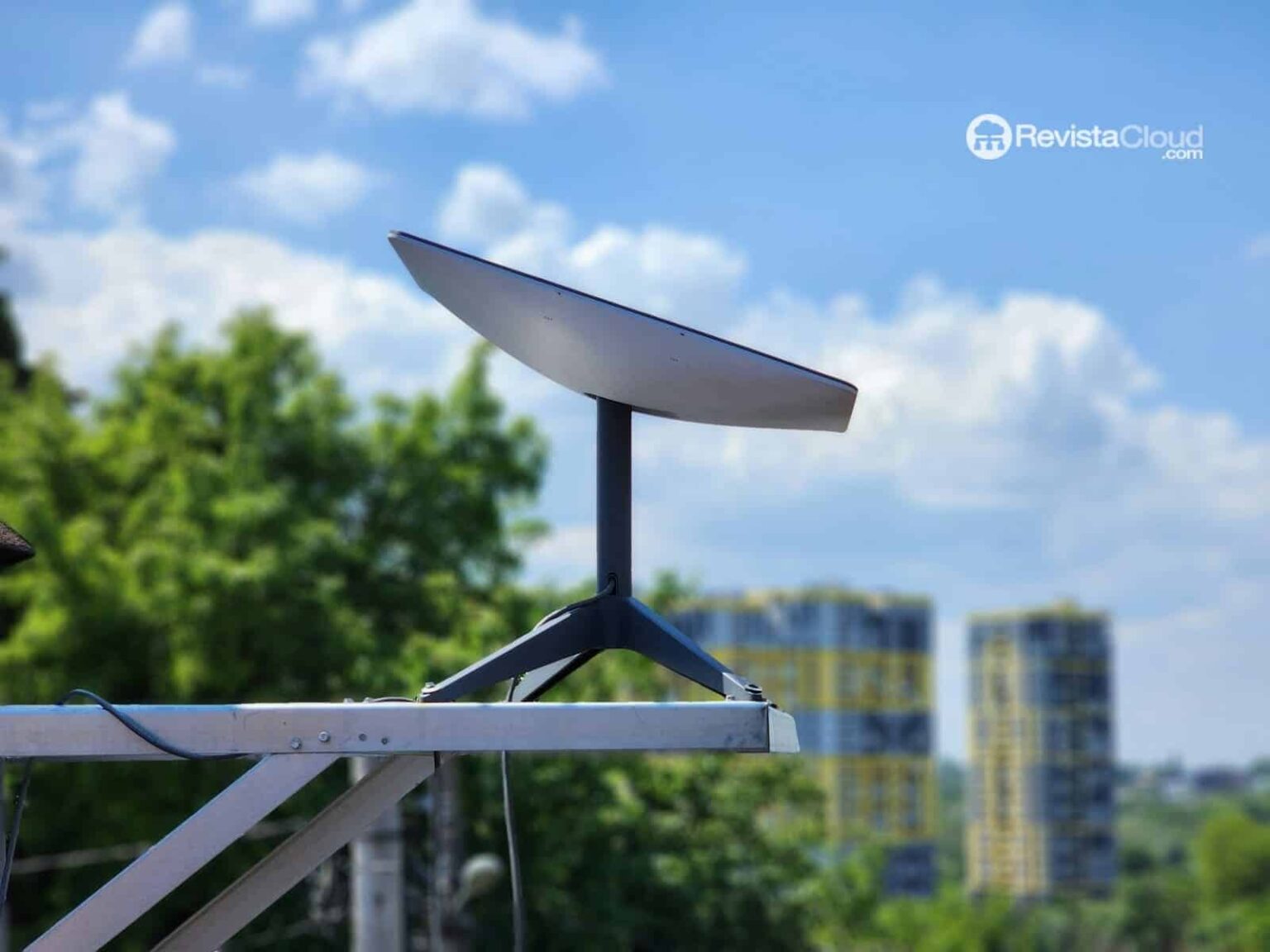
SpaceX has unveiled new details about Starlink’s strategy to directly compete with mobile network operators. Elon Musk’s company doesn’t want to limit itself to providing coverage from space via Direct-to-Cell (D2C) satellites; they also plan to deploy thousands of small ground-based base stations using the antennas already installed in homes and businesses. If this plan comes to fruition, Starlink could build a hybrid mobile network capable of providing coverage both outdoors and inside buildings.
The key points of Starlink’s mobile strategy in 20 seconds
- Starlink aims to complement satellite coverage with small base stations installed on its own antennas.
- These femtocells would use the mobile frequencies the company owns in various markets, including Europe.
- The connection between the femtocell and the network would be made via Starlink’s satellite broadband.
- The goal is to offer a comprehensive mobile service without relying on traditional telecom infrastructure.
During SpaceX’s first-half 2026 earnings presentation, the company’s President and COO, Gwynne Shotwell, and CEO Elon Musk discussed part of the roadmap for evolving Starlink from a satellite internet service into a full-fledged mobile operator.
The approach combines satellites, proprietary radio spectrum, and distributed terrestrial infrastructure, reducing the need to build large cell towers.
From satellite coverage to a hybrid network
Starlink has already begun deploying Direct-to-Cell services that allow compatible phones to connect directly to satellites when there is no ground coverage.
In Spain, this technology was recently used to support emergency efforts during forest fire outbreaks, maintaining basic communication services in affected areas through collaboration between public agencies, telecom operators, and Starlink.
However, direct space coverage has physical limitations, especially indoors, where building structures weaken the satellite signals.
According to Shotwell, the solution involves deploying a “ground component” that complements space coverage.
Starlink antennas could become small base stations
SpaceX’s proposal involves integrating a femtocell into the equipment already used by Starlink customers to access the internet.
These small mobile base stations would leverage the fact that antennas are typically installed on rooftops or elevated areas with a clear view of the sky. From there, they would provide mobile coverage to nearby phones using Starlink’s licensed frequencies, with traffic traveling back to the main network via the satellite connection (backhaul).
Practically, each antenna could function as a small distributed mobile node, reducing the need to deploy new telecom towers.
Existing frequencies already support such deployments
The project relies on the spectrum that Starlink controls in the Mobile Satellite Service (MSS) band at 2 GHz.
European regulations allow the use of Complementary Ground Components (CGC), which enable the installation of low-power ground stations to improve satellite mobile service availability when direct coverage is insufficient.
This mechanism has been used or requested before by other satellite service operators, making it not a completely new concept from a regulatory perspective.
A direct competitor to traditional carriers
If Starlink develops this infrastructure, it would no longer rely solely on agreements with existing mobile operators to offer certain services.
In recent months, the company has strengthened its position by acquiring spectrum rights in different markets and rebranding Starlink Direct-to-Cell as Starlink Mobile. Many analysts interpret this move as a step toward launching its own mobile service.
During the investor conference, Musk argued that a network made up of thousands of small base stations installed in homes and businesses could be easier and less expensive to deploy than the traditional model based on large cell towers.
However, this remains a announced strategy, with no public timeline for large-scale commercial deployment or details on how it will be implemented in each country, where regulatory requirements will still need to be met.
Frequently Asked Questions
What is a femtocell?
It is a small mobile base station designed to provide coverage in a limited area, such as a home, office, or building.
How would Starlink’s system work?
The Starlink antenna would continue connecting to satellites for internet access and would also include a femtocell to provide mobile coverage to nearby phones using the company’s frequencies.
Would it replace cell towers?
Not necessarily. The idea is to complement existing coverage with thousands of small access points, especially in areas where deploying traditional infrastructure is more challenging.
Is this service currently available?
No. SpaceX announced this strategy during its earnings conference and outlined some of its planned features but has not yet announced a widespread commercial deployment.
Sources: bandaancha.eu and Investor Conference
