
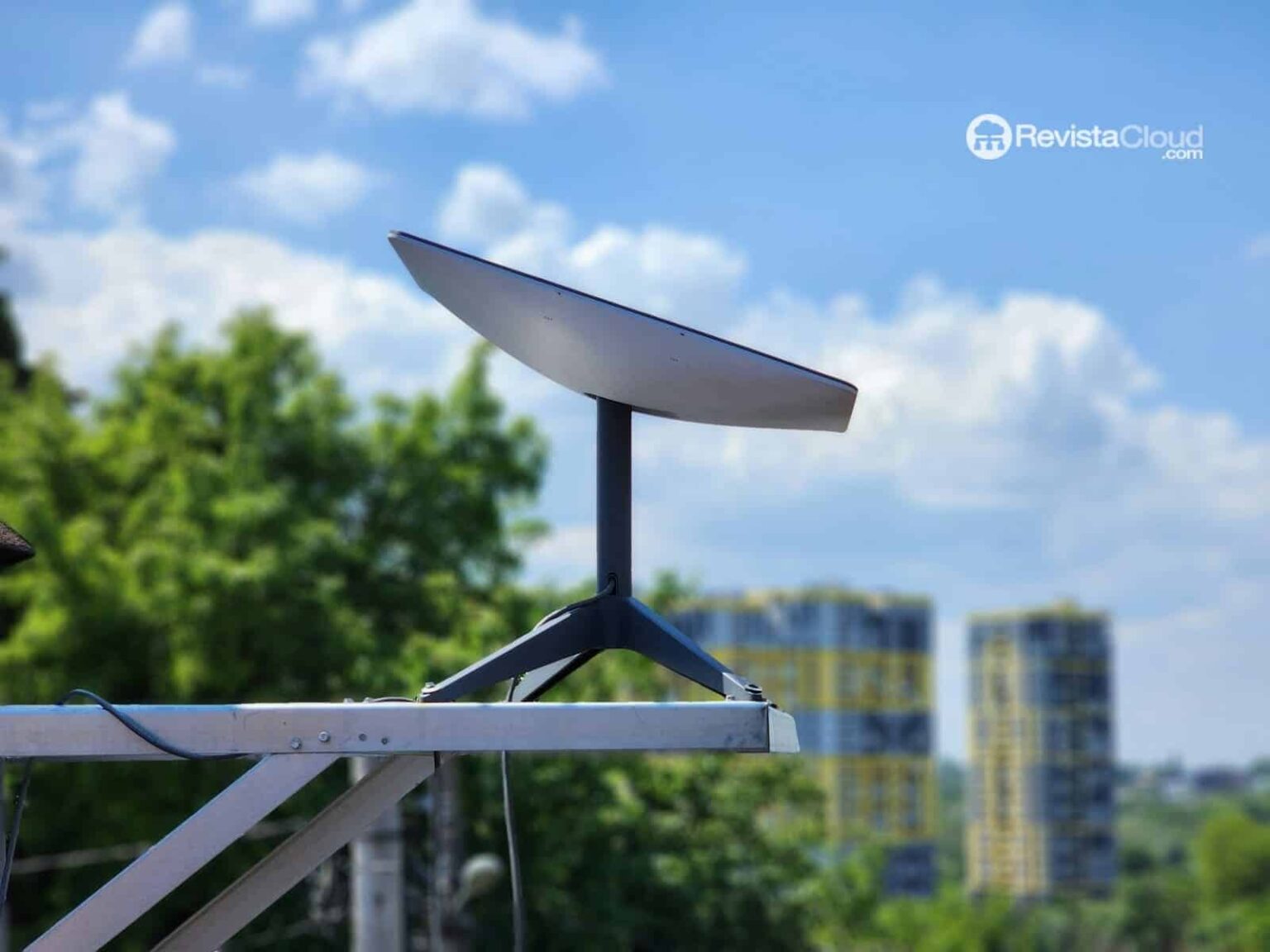
Starlink is bringing the points of presence (PoPs) that deliver its customers’ traffic to the internet closer to users as it expands its ground infrastructure. Between August 2024 and September 2026, the cities with identified PoPs in the markets analyzed went from 31 to 56, while the share of measured households located within 1,000 kilometers of one of these points rose from 79% to 88%. The shift also matters for Spain, where satellite access remains a minority option next to fiber but is already approaching 100,000 connections.
Starlink and its competition in Spain in 20 seconds
- Starlink went from 31 to 56 cities with identified PoPs between August 2024 and September 2026.
- 88% of measured households ended up within 1,000 km of their PoP, up from 79% at the start.
- In Spain, fiber surpasses 18 million lines and remains the dominant fixed broadband technology.
- Satellite internet connections stood at around 100,000 at the end of 2025, according to the CNMC.
- OneWeb, Amazon Leo, Viasat, Hispasat, and Iridium appear alongside Starlink among the players present or expected in the Spanish market.
Starlink’s progress doesn’t depend solely on how many satellites it has in orbit. The network also needs ground infrastructure to deliver traffic to the internet, and in that part of the architecture, the company is progressively bringing its connection points closer to users.
A home connected to Starlink receives traffic via satellite, but that traffic then has to pass through a gateway and reach a PoP before entering the internet’s networks. The gateway and the point of presence can be located in different countries, something especially common in regions where ground infrastructure is more limited.
Speedtest data analyzed over the period shows a relationship between distance to the PoP and latency. Every additional 1,000 kilometers between a household and its point of presence is associated with roughly 25 milliseconds more average multi-server latency.
That doesn’t mean every connection follows that relationship exactly, but it does mean PoP distribution can have a noticeable effect on the user experience.
Starlink brings its ground network closer to customers
The most visible change shows up in geographic distribution. In the markets studied, cities with PoPs went from 31 in August 2024 to 56 in September 2026. At the same time, the share of measured households within 1,000 kilometers of their PoP rose from 79% to 88%.
Starlink’s registered presence on PeeringDB also grew. The public interconnection directory counted 31 facilities and 42 internet exchanges for Starlink on August 1, 2024. By October 5, 2026, those figures had risen to 65 facilities and 78 internet exchanges.
The result is a more distributed delivery network. The satellite link remains the visible element for the user, but a growing share of the experience depends on what happens after traffic leaves the space connection.
Africa offers some of the clearest examples. In August 2024, two-thirds of measured Starlink households on the continent reached the internet through Europe. Nairobi gained its own PoP in January 2025, and Kenya’s average multi-server latency dropped from 229 ms that month to 41 ms in February.
Starlink connections in Botswana, Mozambique, Zimbabwe, and Eswatini were also observed using the Johannesburg PoP in April. That shows how a single point can serve users across several countries when infrastructure or regulatory conditions rule out local facilities.
The gaps remain wide. In the first quarter of 2026, the analysis put average multi-server latency at 222 ms in Liberia and 127 ms in the Democratic Republic of the Congo, compared with 39 ms in Kenya.
Europe shows what happens when PoPs move closer
Europe started from a ground network already close to most users. In August 2024, 99.95% of measured households used Frankfurt, London, or Madrid in the data analyzed.
New locations followed. Sofia appeared in September 2024, Warsaw in November, and Milan in January 2025.
The changes coincided with latency drops in certain markets. In Greece, average multi-server latency fell from 96 ms in August 2024 to 48 ms in December. In Italy, the figure was 74 ms in December while measured households used Sofia, before dropping to 45 ms in February 2025 once the Milan PoP came online.
The share of measured European households within 500 kilometers of their PoP also rose notably, from 45% in August 2024 to 69% in September 2026.
Regulation also shapes this map. Indonesia required a domestic gateway as a licensing condition in 2024, while Vietnam’s 2025 pilot terms included a similar requirement. Kazakhstan approved a requirement of this kind in June 2026.
In that country, measured connections shifted from using Sofia to using Almaty in January 2026. Connections from Kyrgyzstan using Almaty were later observed in May, and from Tajikistan in July.
Spain remains a fiber market, but satellite is gaining ground
Spain’s case is different because Starlink is competing against especially well-developed ground infrastructure. The latest data published by Spain’s National Commission on Markets and Competition (CNMC) puts fiber-to-the-home (FTTH) lines at 18.3 million in July 2026, within a market that topped 20 million fixed broadband connections for the first time.
The CNMC itself puts existing satellite internet connections in Spain at around 100,000 at the end of 2025, up from just over 10,000 at the end of 2022. Although they account for only about 0.5% of fixed broadband, they carry more weight in rural and remote areas where fiber or mobile networks don’t offer the same options.
That’s where much of the real competition for Starlink in Spain lies. The company doesn’t need to displace fiber in cities to gain relevance: it just needs to cover places where terrestrial rollout is costlier or where high-capacity connections are limited.
The market isn’t limited to Starlink either. The CNMC identifies OneWeb, part of Eutelsat, Amazon Leo, Viasat, and Hispasat and Iridium among the relevant players present or with plans to operate in Spain.
Hispasat also represents a Spanish alternative with a different architecture. While Starlink’s residential service relies on a low-Earth-orbit satellite constellation, Hispasat’s traditional services have used geostationary satellites. The difference in orbit has direct consequences for latency, one of the factors that has favored the rise of the new LEO constellations.
Competition can also come from combining satellite with terrestrial operators. Telefónica, Orange, Vodafone, and Deutsche Telekom are holding talks to study a European consortium for direct-to-device satellite connectivity. That’s a different space from Starlink’s residential access, but it shows how major operators are weaving satellite into their connectivity strategies.
Hispasat, for its part, takes part in the SpaceRISE consortium alongside Eutelsat and SES to develop IRIS², Europe’s program for secure satellite communications. The project calls for 348 satellites and is expected to begin its first launches in 2029.
For now, fiber still clearly dominates fixed access in Spain. The CNMC itself considers that satellite will keep acting mainly as a complement to ground networks, especially in rural and remote areas and in situations where communications resilience matters.
But Starlink’s evolution shows why a satellite network’s ground infrastructure matters as much as its space constellation. A user can connect through the very same satellite as someone thousands of kilometers away, but the distance traffic still has to travel to reach the point where it enters the internet can radically change latency.
The growth of PoPs shortens that distance and lets Starlink compete under different conditions depending on the market. In Spain, where fiber already reaches a very large share of homes, the challenge is different: finding the spaces where satellite connectivity offers something ground networks don’t provide as easily.
Frequently Asked Questions
How many points of presence does Starlink have?
The analysis used identifies PoPs in 56 cities as of September 2026, up from 31 in August 2024. In addition, Starlink’s registered presence on PeeringDB grew from 31 to 65 facilities over the period analyzed.
Does Starlink compete with fiber in Spain?
Yes, though from a different starting position. Fiber dominates Spain’s fixed broadband market, while satellite carries far less weight and matters most in rural and remote areas.
Which companies compete with Starlink in Spain?
Besides Starlink, the CNMC identifies OneWeb/Eutelsat, Amazon Leo, Viasat, Hispasat, and Iridium as relevant players present or expected in Spain’s satellite communications market.
Why can PoPs reduce Starlink’s latency?
PoPs are the points from which user traffic is delivered to the internet. Bringing them geographically closer to households shortens the ground distance traffic must travel before reaching internet networks, which can reduce latency.
