
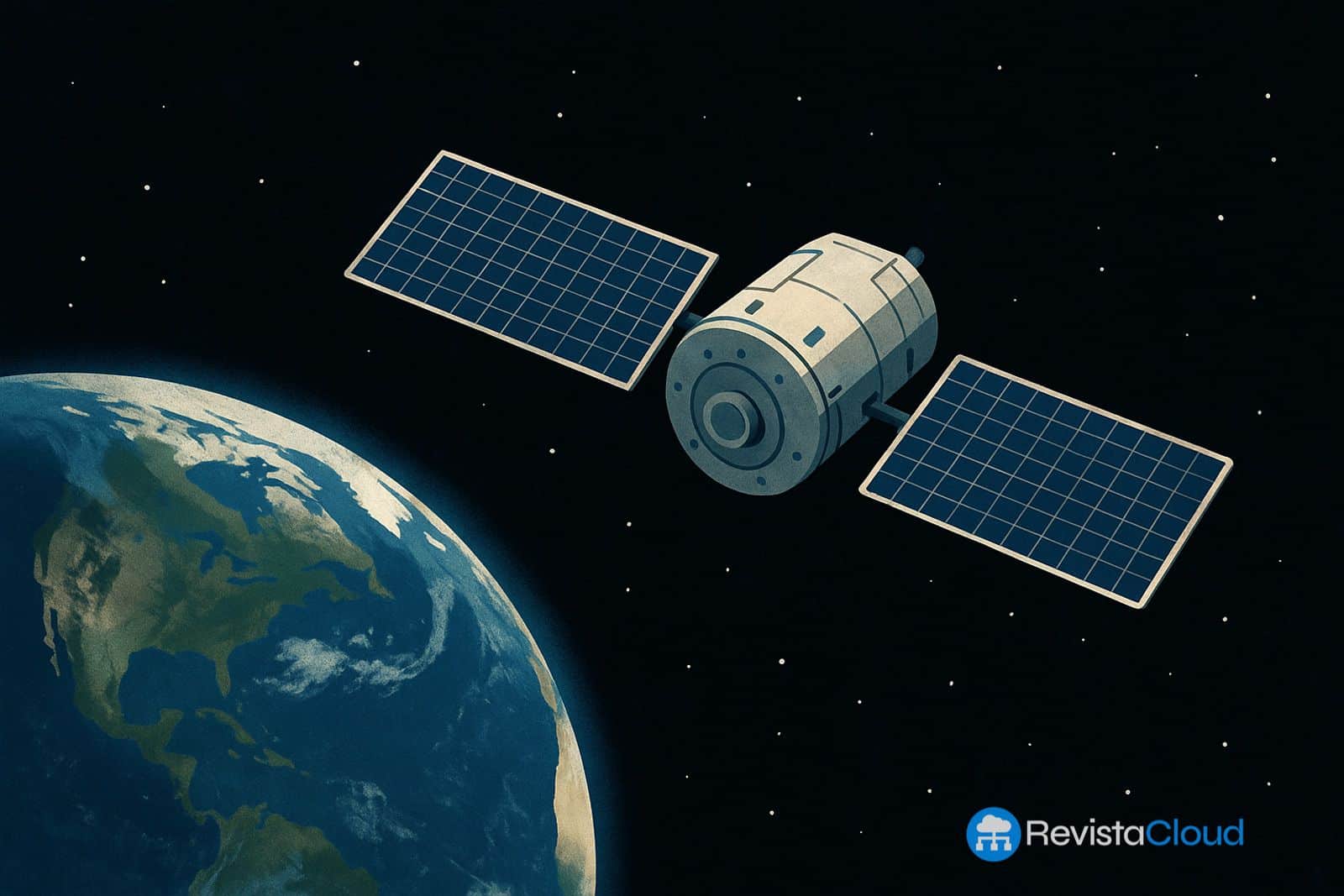
The Spanish company Hisdesat has awarded Airbus Defence and Space and Thales Alenia Space the construction of SpainSat NG III, a new government communications satellite that will replace SpainSat NG II, which was lost during its deployment after being impacted by a space particle.
The key facts about SpainSat NG III in 20 seconds
- Hisdesat has signed the industrial contract with Airbus and Thales Alenia Space to develop SpainSat NG III.
- The new satellite will replace SpainSat NG II, which was declared irrecoverable after an incident during orbital ascent.
- The launch is scheduled for the third quarter of 2030, with entry into service anticipated in early 2031.
- It will be part of secure communications infrastructure for the Spanish Armed Forces, NATO, and other allies.
This decision guarantees the continuation of the SpainSat New Generation (NG) program, considered one of Spain’s most important defense space projects. Once operational, the new satellite will work alongside SpainSat NG I, currently in service, to ensure military communications for the Ministry of Defense over the coming years.
A replacement after an unusual loss
SpainSat NG II, also built by Airbus, was declared “non-recoverable” after suffering impact from a space particle at approximately 50,000 kilometers altitude, during orbit-raising maneuvers after launch.
While micrometeoroid and space debris impacts are common risks in space missions, total loss of such a satellite during this phase is very rare.
Details on the recovery of the program’s investment via insurance have not yet been disclosed.
Airbus to lead the project alongside Thales Alenia Space
Airbus will act as the main contractor, responsible for designing, integrating, and testing the satellite.
Additionally, its centers in Spain will develop the payload in X-band, typically used for secure military communications.
Thales Alenia Space, a joint venture between Thales and Leonardo, will manufacture from its Tres Cantos (Madrid) plant the Ka-band and UHF (Ultra High Frequency) payloads.
The development is expected to take 48 months.
Comparison of SpainSat NG satellites
| Feature | SpainSat NG I | SpainSat NG II | SpainSat NG III |
|---|---|---|---|
| Status | Operational | Lost during orbital ascent | In development |
| Main manufacturer | Airbus | Airbus | Airbus |
| Payloads | X-band, military Ka, and UHF | X-band, military Ka, and UHF | Enhanced X-band, military Ka, and UHF |
| Launch | Completed | Failed due to satellite loss | Scheduled for Q3 2030 |
| Operational since | Yes | No | Early 2031 |
Greater capacity against interference and electronic warfare
Hisdesat states that SpainSat NG III will incorporate improvements over previous satellites.
Key features include:
- Increased bandwidth availability.
- Enhanced protection against interference and electronic warfare attacks.
- X-band antennas capable of reconfiguring coverage up to 1,000 times per second.
- Greater capacity to detect interference or spoofing attempts in real-time.
These features aim to maintain secure communications during military operations in electronically active scenarios.
A strategic program for Spain and NATO
The SpainSat NG program has received an investment of approximately 2 billion euros from the Spanish government to cover development, launch, and operation costs, with an expected lifespan of 15 years.
Beyond serving the Spanish Armed Forces, the infrastructure is part of the GOVSATCOM initiative, aimed at providing secure government communications for European countries and NATO allies.
Airbus Defence and Space’s systems director, Alain Fauré, noted that the new satellite will help reinforce Spain’s and Europe’s strategic autonomy in a global context marked by rising demand for secure communications.
Also strengthening European space strategy
The award comes less than a year after Airbus, Leonardo, and Thales signed a memorandum of understanding to explore creating a major European space company capable of competing more effectively with large international manufacturers.
Announced in 2025 and pending regulatory approvals, the project aims to centralize industrial and technological capabilities within Europe’s space sector.
The development of SpainSat NG III represents one of the first major strategic programs where these three companies will collaborate again following that agreement.
Frequently Asked Questions
What happened to SpainSat NG II?
The satellite was declared irrecoverable after impact from a space particle during orbit-raising maneuvers following its launch.
When will SpainSat NG III be launched?
The schedule foresees launch in the third quarter of 2030, with entry into service expected in early 2031.
Who will build the new satellite?
Airbus Defence and Space will serve as the main contractor, with Thales Alenia Space developing part of the military payloads at its Tres Cantos plant.
What will SpainSat NG III be used for?
It will provide secure government and military communications for the Spanish Armed Forces, NATO, and other allied countries under the GOVSATCOM program.
Sources:
- Hisdesat.
- Airbus Defence and Space.
- Thales Alenia Space.
