
Spain’s government has resolved the RedIA and RedIA Salud funding calls, which will put €180 million into 372 artificial intelligence projects for businesses across all of the country’s autonomous communities. Of that total, €130 million goes to the RedIA program and another €50 million to initiatives specifically tied to healthcare. Small and medium-sized businesses account for 70% of the projects selected under RedIA.
The new AI funding in 20 seconds
- Spain’s government will put €180 million into 372 business AI projects.
- RedIA carries €130 million from EU FEDER funds and will finance 300 initiatives.
- SMEs account for 70% of the projects selected under RedIA.
- RedIA Salud will fund another 72 projects with €50 million.
- The grants cover smart assistants, robotics, digital twins, computer vision, cybersecurity, and predictive systems.
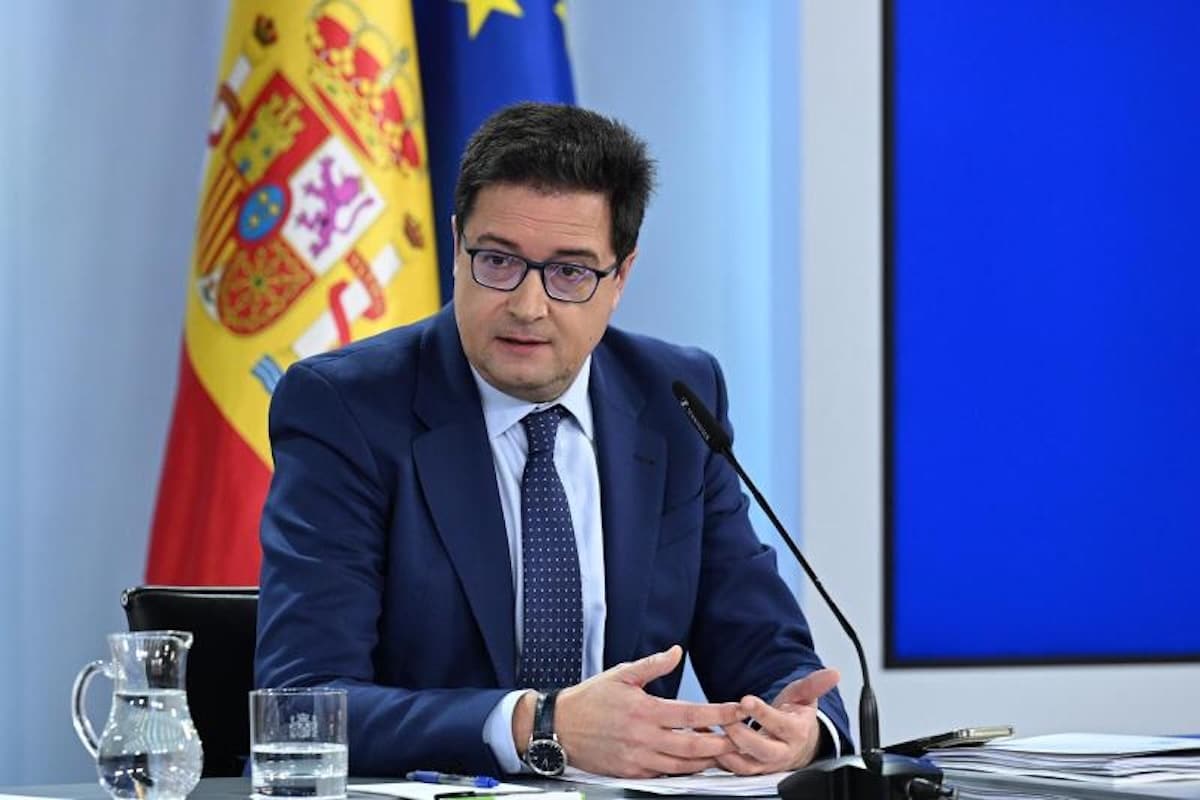
Óscar López, Spain’s Minister for Digital Transformation and the Civil Service, announced the resolution on August 31 during his address at AMETIC’s 40th Digital Economy and Telecommunications Meeting, held in Santander.
The calls, managed by Red.es, aim to move artificial intelligence out of experimental projects and into concrete business and healthcare applications. For RedIA, the government received more than 1,000 proposals and ultimately selected 300.
Spreading the funding across every autonomous community is also meant to extend adoption of these technologies beyond the country’s largest business and tech hubs.
RedIA will fund 300 projects with €130 million
Most of the funding falls under RedIA, a €130 million call financed by the European Regional Development Fund (FEDER, the EU’s ERDF).
Its goal is to fund technology development and innovation projects tied to artificial intelligence, while also encouraging companies to fold these technologies into their production processes and value chains.
The selected applications span a wide range.
The projects include smart assistants, digital twins, advanced robotics, computer vision systems, cybersecurity tools, and predictive technologies.
The most notable business detail is how many SMEs are involved. According to the Ministry for Digital Transformation and the Civil Service, they make up 70% of the selected projects.
That share matters because one of the biggest open questions around business AI is precisely its adoption outside large corporations — a trend a recent study already found gaining traction among Spanish SMEs.
A multinational can put entire teams on building models, standing up infrastructure, or integrating commercial AI services. For an SME, upfront cost, the availability of specialized talent, and uncertainty about return on investment can become much bigger barriers.
Public funding is meant to lower some of that initial risk.
That said, getting funding for an AI project doesn’t by itself guarantee it will end up delivering productivity gains. Its usefulness depends on whether the technology can later be built into real processes and kept running once the funded phase ends.
The minister himself focused part of his remarks on this point. López argued that productivity doesn’t rise simply because a new technology shows up, but when it finds useful applications and spreads among companies and users.
Another €50 million for AI applied to healthcare
The second call is RedIA Salud, with €50 million for 72 projects.
Here, the applications concentrate on different stages of the healthcare process: prediction, diagnosis, treatment, and patient follow-up.
The call will also fund clinical, biomedical, and pharmacological research initiatives, plus projects aimed at emergency response.
Healthcare is one of the sectors where artificial intelligence is finding a growing number of potential applications, from medical image analysis to predictive systems and tools that support clinicians.
But it also comes with especially demanding requirements.
Projects that work with health data have to account for data protection, security, traceability, and applicable regulatory requirements. When AI systems factor into certain decisions or medical products, they can also fall under sector-specific rules and the EU’s AI Act, depending on their function and classification.
If the €50 million were split evenly across the 72 initiatives, the call would work out to roughly €694,000 per project on average, though that’s purely a mathematical reference point: the Ministry hasn’t said in the released information that every project gets the same amount.
The same applies to RedIA. Dividing its €130 million across 300 projects would produce a theoretical average of around €433,000, though actual awards can vary by application.
Combined, the €180 million split across 372 initiatives would work out to close to €484,000 per project, again without that reflecting the real distribution of the grants.
More AI also means more need for compute infrastructure
The announcement also had a second angle tied directly to Spain’s tech infrastructure.
Óscar López linked AI’s growth to the need to expand the country’s available compute capacity.
That connection matters, because rolling out hundreds of business AI projects isn’t just a matter of writing software.
Training models, running inference, processing large datasets, or running computer vision systems all require servers, accelerators, storage, networking, and data centers. How much is needed varies enormously by application: an assistant connected via API to a commercial model has very different infrastructure needs than a system running its own models on GPUs.
The government ties this policy to Spain’s National Artificial Intelligence Strategy, first launched in 2020 and reinforced in 2024. According to figures provided by the Ministry, that strategy has drawn on more than €1.5 billion in funding.
Actions carried out under the strategy so far include the ALIA language model, training programs, university chairs tied to artificial intelligence, cybersecurity, and chips, plus investments and grants aimed at tech companies.
The administration also points to the creation of the Spanish Agency for the Supervision of Artificial Intelligence (AESIA) as part of the institutional groundwork built around this technology.
The government presents these programs as part of a strategy to increase business adoption of AI. It will be up to the execution of the projects, and their later results, to show how much of that funding turns into products, processes, and services that keep running once the public money runs out.
Spain’s government is drafting new rules for data centers
The minister also used his appearance in Santander to bring up the future Royal Decree on data centers the government is preparing — a proposal that has already raised concerns about Spain’s competitiveness as a data center hub.
As he explained it, the rule aims to set requirements around energy and environmental sustainability, resilience, and digital sovereignty.
The government maintains that the initiative isn’t a moratorium on building new data centers, but an attempt to bring order to their growth.
The issue is gaining importance precisely because of AI’s advance.
Data centers built for heavy AI workloads can require huge amounts of electricity and considerably more demanding cooling systems than conventional IT infrastructure. New generations of GPUs are also pushing up power density per rack, forcing operators to adapt their electrical and thermal setups.
Spain is trying to leverage factors like its renewable energy availability, international connectivity, and geographic position to attract new investment, but the growth of these facilities also raises questions about power availability, grid connections, water use, land-use planning, and local infrastructure capacity.
The government wants to fold these elements into the regulatory framework it’s preparing.
López argued during his remarks that Spain needs more data centers, but tied their growth to criteria around efficiency, sustainability, and sovereignty.
The two topics covered at the AMETIC meeting are closely linked. Funding hundreds of AI projects increases potential demand for compute, while supplying that compute requires expanding and modernizing the physical infrastructure those systems run on.
The €180 million behind RedIA and RedIA Salud will now show how much of that investment manages to get past the project stage and turn into business and healthcare applications that stay in continuous use.
Frequently asked questions
How much money is Spain’s government putting into the new AI projects?
The RedIA and RedIA Salud calls together total €180 million and will fund 372 projects spread across all of Spain’s autonomous communities.
How many companies will receive RedIA funding?
RedIA will fund 300 projects selected from more than 1,000 proposals. According to the Ministry, 70% of the funded projects are SMEs.
What kinds of projects will RedIA Salud fund?
The call has €50 million for 72 projects tied to prediction, diagnosis, treatment, patient follow-up, clinical, biomedical, and pharmacological research, and emergency response.
What is Spain’s government preparing to regulate data centers?
The government is working on a Royal Decree meant to set requirements around the energy and environmental sustainability, resilience, and digital sovereignty of these facilities.
Source: digital.gob.es
