
Spain maintains a contradictory position in the European cloud map. The country ranks 21st among the European Union in paid cloud services adoption but exceeds the community average when analyzing strategic use of technology in higher-value business processes, such as ERP, CRM, computing power, or development platforms.
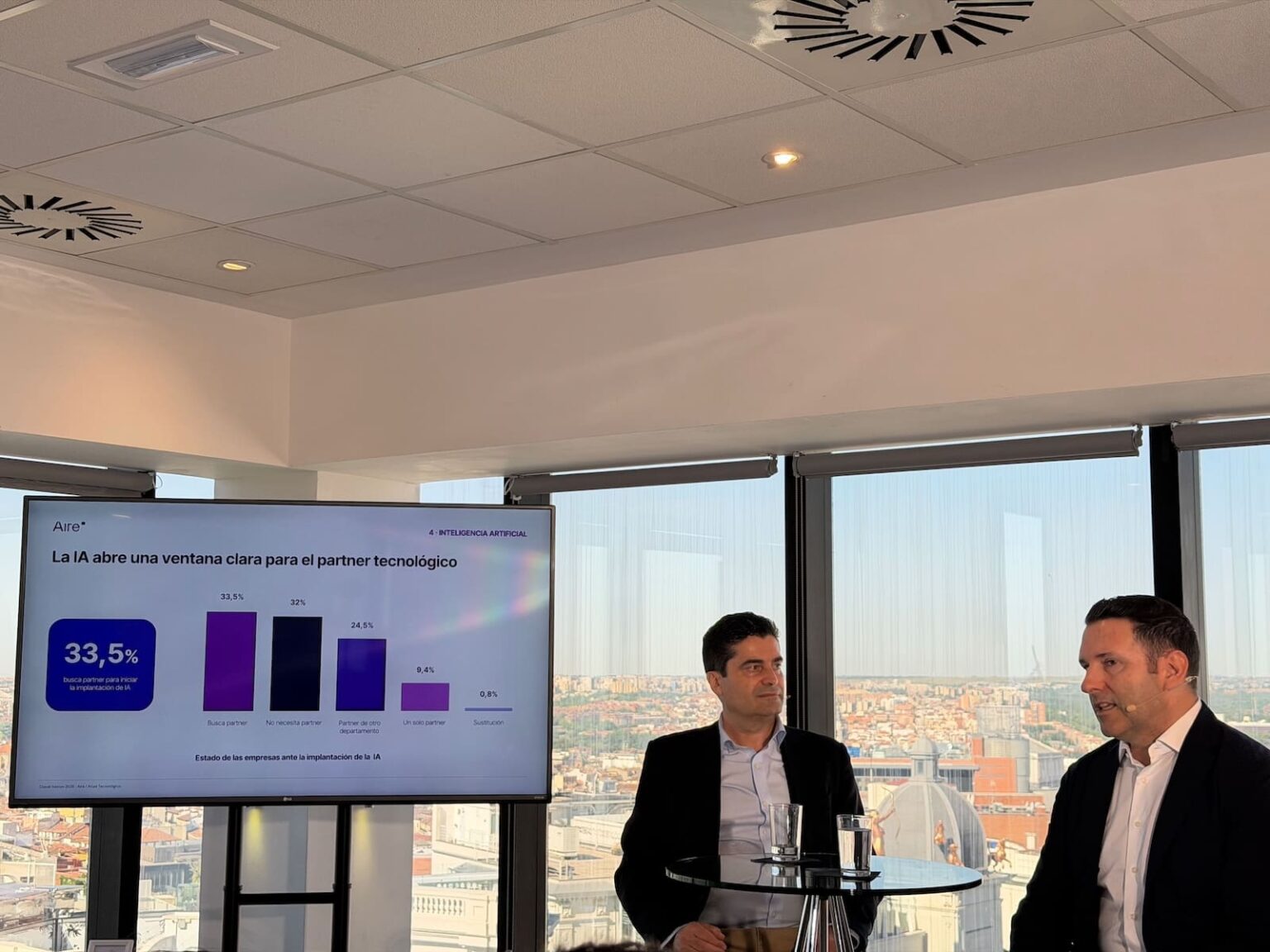
This is outlined in the Cloud Nation 2026 report, developed by the Spanish technology firm Aire in collaboration with Atlas Tecnológico, presented by Santi Magazú, General Director of Cloud and Cybersecurity at Aire, and Zigor Gaubeca, CIO of the company. The study provides a snapshot of cloud adoption, artificial intelligence, and edge computing in Spain and Europe, with a clear conclusion: Spanish companies are not always quick to enter the cloud, but when they do, they tend to seek a direct impact on their operations.
The national paid cloud services adoption rate stands at 44%, leaving room for growth compared to other European countries. However, the behavior shifts when looking at tools linked to critical processes. Cloud ERP application integration reaches 47% in Spain versus a 30% EU average. In CRM, Spanish penetration reaches 41.7%, surpassing the European environment, which is near 28%.
A pragmatic and business-oriented adoption
Data points to a less widespread but more targeted adoption. Spanish companies that move to the cloud often do so to improve specific processes, gain efficiency, and reduce operational burdens. The deployment of computing power for proprietary software reaches 33%, versus the European average of 25%, while the use of application development platforms is nearly 31%, above the 26% community average.
Santi Magazú summarizes this trend by stating that “the Spanish company is highly pragmatic.” According to the executive, when an organization invests in technology, it seeks a direct impact on process efficiency, which explains the prominence of tools like ERP systems.
This perspective is significant because it shows a maturity different from what general rankings reflect. Spain does not lead in cloud volume adoption but shows a practical orientation when the cloud is linked to business operations, management systems, software development, or processing capacity.
The gap between sectors and regions
The report also highlights important differences across sectors and territories. ICT companies clearly lead cloud contracts with a 76.48% adoption rate, followed by the services sector at 48.71%. The manufacturing industry stands at 40.35%, and construction at 35.38%.
Regionally, Catalonia reaches a 58% adoption rate, and the Community of Madrid 54.15%, both well above the national average. Conversely, 11 autonomous communities are still within an adoption range of 30-40%, indicating a territorial gap that could impact the digital competitiveness of many SMEs.
A key challenge is the gap between large corporations and small businesses. While large companies are already engaged in investment cycles linked to artificial intelligence, hybrid architectures, and advanced services, many SMEs remain hampered by technical complexity.
The main obstacle is not only economic. 60% of Spanish companies cite the lack of relevant specialized knowledge as the primary reason for not using the cloud. This talent shortage particularly affects small organizations, which do not always have internal teams capable of designing, migrating, and managing cloud infrastructures with confidence.
Sovereignty, security, and artificial intelligence
The cloud is entering a more demanding stage. The report highlights that flexibility, mentioned by 52% of companies, and the breadth of services, cited by 50%, remain the primary reasons to choose a cloud provider. But the context has changed due to pressure from artificial intelligence, cybersecurity, and European regulation.
The NIS2 Directive, data protection requirements, and debates around technological dependency have elevated the importance of digital sovereignty. According to Cloud Nation 2026, 57% of organizations needing to run their infrastructure within a single country do so out of security or data protection concerns.
The sovereign cloud thus becomes a strategic decision, not just a technical preference. For many companies, keeping data within European territory, working with local providers, and ensuring business continuity are becoming as important as price or scalability.
Magazú warns that the real challenge for the country is to prevent SMEs and the industrial sector from falling behind. To achieve this, he advocates democratizing access to the cloud, reducing technical knowledge barriers with more intuitive solutions, and ensuring data remains secure within European territory.
Artificial intelligence will accelerate this discussion even further. Companies will need more computing power, better data governance, hybrid infrastructures, and tech partners capable of guiding them through increasingly complex decisions. Spain has room to grow but also an opportunity: turning its advanced cloud usage into a real competitive advantage by expanding this maturity across more sectors, regions, and SMEs.
Frequently Asked Questions
What is Spain’s position in cloud adoption within the European Union?
Spain ranks 21st in paid cloud services adoption but surpasses the EU average in strategic uses such as ERP, CRM, computing power, and development platforms.
Which sectors lead cloud adoption in Spain?
ICT companies lead cloud contracting, followed by the services sector. Manufacturing and construction show lower adoption levels.
What is the main barrier for SMEs adopting cloud?
The lack of specialized technical knowledge is the primary obstacle cited by Spanish companies, especially among SMEs and less digitized sectors.
