
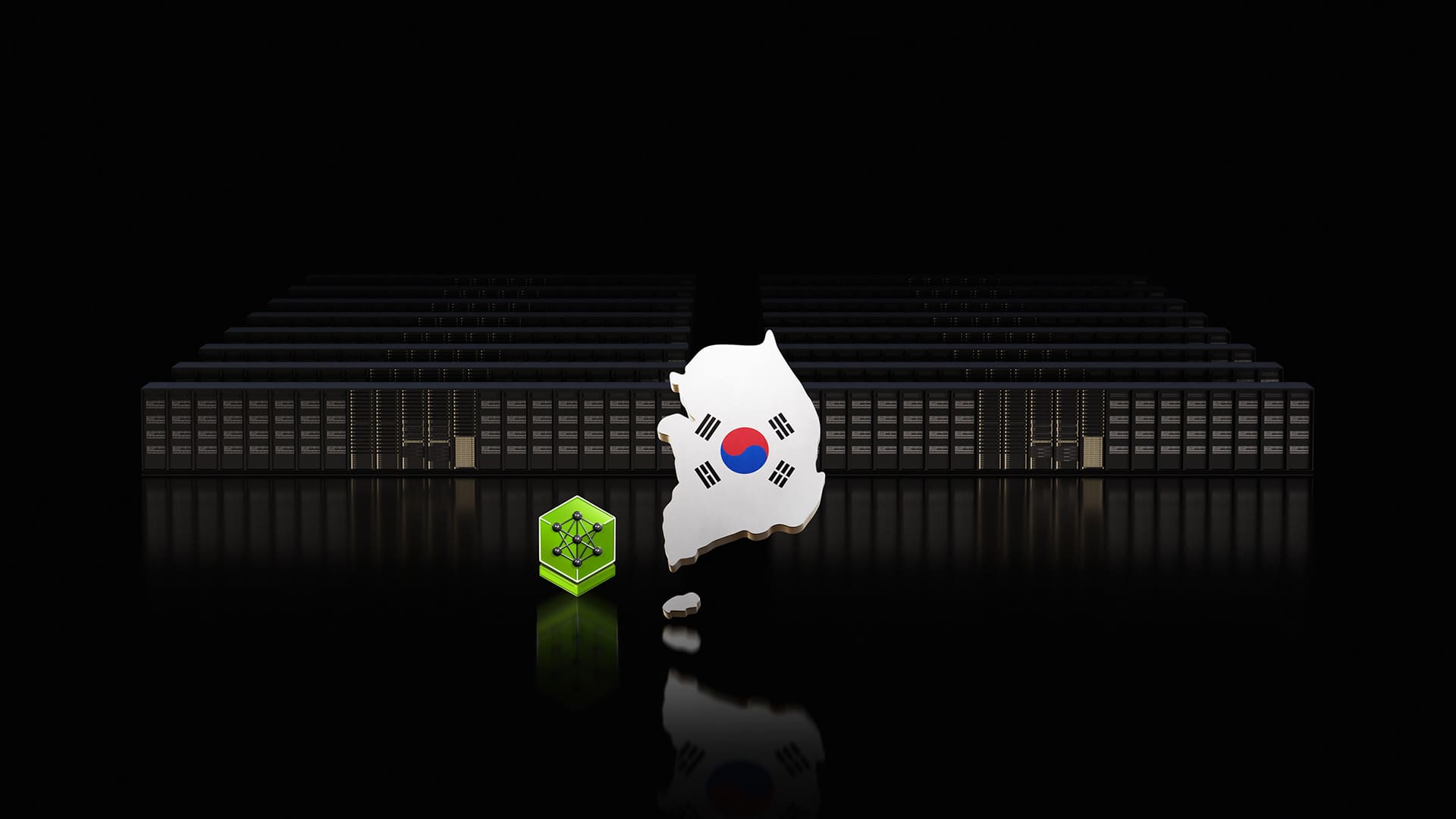
South Korea wants to accelerate the construction of its second major semiconductor hub and is willing to reorganize military infrastructure to achieve this. President Lee Jae Myung has ordered the temporary relocation of operations from the Gwangju Air Base before mid-2028, aiming to free up land for a massive industrial complex backed by investments from Samsung Electronics and SK hynix. The South Korean government hopes that the first factories can start production around 2030.
The key points of South Korea’s new mega-chip cluster in 30 seconds
- South Korea will temporarily move military operations from Gwangju before 2028.
- The land will be used to develop the country’s second major semiconductor manufacturing hub.
- Samsung Electronics and SK hynix plan to invest approximately 800 trillion won in four memory chip factories.
- The regional plan also includes data centers for AI, advanced computing, and semiconductor packaging.
- The government aims to accelerate permits, power, water, and construction to start production around 2030.
This decision is part of a broader industrial policy. South Korea seeks to reduce the hefty concentration of its semiconductor industry around Seoul and respond to rising demand driven by artificial intelligence.
The project in the southwestern region of the country involves four new memory factories and will mobilize corporate investments estimated at hundreds of trillions of won over the coming years. Gwangju’s site was officially selected in July, but it presents an unusual challenge for a tech project: relocating an operational military facility first.
Four chip factories and 800 trillion won
This project’s scale is difficult to compare with most new investments currently announced in Europe or the U.S.
South Korea’s government initially announced around 800 trillion won (about $518 billion USD at the exchange rate used in the announcement) in investments from Samsung Electronics and SK hynix to build four memory chip factories in Gwangju and Jeolla regions.
Later, the regional program expanded to 896 trillion won by including other investments related to AI and advanced packaging. According to official South Korean government data, SK hynix plans about 470 trillion won, Samsung Electronics around 425 trillion, and Amkor Technology anticipates roughly one trillion additional for expanding its advanced packaging facilities in Gwangju.
Not all this funding will go solely to chip factories.
SK hynix’s plan includes two memory factories and a 1 GW AI data center. Samsung’s plan includes two more memory factories and the National AI Computing Center. Out of the 896 trillion won announced, about 800 trillion would be allocated to memory factories, with roughly 95 trillion expected for other advanced infrastructure.
This would create a second major global hub for semiconductor production outside Seoul’s metropolitan area.
The geographic diversification also addresses physical constraints. The South Korean Ministry of Industry has noted that concentrating even more capacity around Seoul is problematic due to, among other factors, the needs for electricity and water for new factories.
A military airbase in the middle of the project
The most immediate obstacle is the land.
The Gwangju military airport was chosen on July 6 as the site for the new cluster. It is used by the Republic of Korea Air Force and functions as a pilot training facility. The Ministry of Defense acknowledged then that it had not finalized a detailed relocation plan.
Now, President Lee Jae Myung wants to accelerate that schedule.
According to instructions shared this week, Gwangju Air Base’s functions must be temporarily moved to other military airfields before mid-2028. The goal is to allow land use as soon as possible for industrial development.
The president has also requested that construction projects on land near the airport, which could start earlier, proceed even before the full relocation is completed.
The timeline is ambitious because relocating the base depends not only on finding alternative industrial land but also on maintaining military operational readiness and deciding the final use of the existing facilities.
In July, Muan County was preliminarily considered a candidate to host the military airport, although local authorities had requested review of the transfer conditions and additional incentives.
There’s also a U.S. dimension.
The U.S. Seventh Air Force confirmed in July that it maintains significant military interests at Gwangju Air Base and would continue coordinating with the Republic of Korea Air Force to ensure operational requirements and joint readiness.
This does not imply opposition from Washington, but it indicates that transforming the land involves military coordination along with industrial and urban planning decisions.
South Korea aims to build factories at TSMC’s pace in Japan
Lee Jae Myung pointed to a specific benchmark to illustrate the desired speed: TSMC’s factory in Kumamoto, Japan.
He has urged that the new South Korean cluster progress at least at a rate comparable to that facility, which was completed in approximately 22 months, according to the reference used during the government meeting.
This comparison is particularly interesting because semiconductor factories typically take several years from initial administrative decisions to reach commercial production.
Regional authorities are working on an accelerated process that aims to handle permits, land acquisition, compensation, design, and construction simultaneously, along with coordinating electricity and water supply. The goal is to cut process time from the typical decade down to about five years.
Plans announced in July targeted semiconductor production beginning around 2030.
Electricity will be a key factor. Advanced factories consume large amounts of energy, and the planned facilities will include data centers for AI and other energy-intensive infrastructures.
They will also require vast quantities of ultrapure water for manufacturing processes.
Thus, South Korea’s president has called for electricity and water planning to advance alongside land and permitting decisions, rather than waiting for each administrative phase to complete.
Semiconductors, AI, and data centers in a unified strategy
The Gwangju project is part of what are called three mega-projects through which South Korea aims to distribute new tech investments outside Seoul’s core area.
This strategy combines semiconductors, physical AI development, and AI data centers.
The southwest region, around Gwangju and Honam, would become South Korea’s second major chip manufacturing hub. The Chungcheong region in the central part of the country is expected to take on a bigger role in advanced packaging and other tech industries, while Yeongnam in the southeast will focus on projects related to physical AI development.
The distribution reflects both technological and territorial logic.
South Korea is home to two of the world’s largest memory chip manufacturers, Samsung Electronics and SK hynix, and a significant portion of new AI chip demand depends on advanced memory technologies.
High bandwidth memory (HBM) has become essential for accelerators used to train and run AI models. This trend is forcing manufacturers to increase capacity both in memory fabrication and advanced packaging.
The Gwangju project aims to prepare industrial capacity for this growth over the next decade. However, its figures should be viewed as long-term investment plans, not immediate funding commitments.
Speed will now be a major test for the South Korean government. Building four memory factories, data centers, and all necessary energy infrastructure is already highly complex. Adding the relocation of a military airbase makes it even more so.
South Korea has decided that this challenge should not delay its next large-scale chip manufacturing phase. The deadline to vacate the military infrastructure by mid-2028 makes the next two years critical to determine whether this massive industrial plan can meet its goal of starting semiconductor production by around 2030.
Frequently Asked Questions
Why is South Korea relocating the Gwangju Air Base?
The base land has been selected as the site for a new semiconductor manufacturing cluster. The government plans to temporarily move its functions to other military airfields before mid-2028.
How much will Samsung and SK hynix invest in the new cluster?
The program includes approximately 800 trillion won for four memory chip factories by Samsung Electronics and SK hynix. The total announced investments for the southwestern region reach about 896 trillion won when including AI centers, infrastructure, and advanced packaging.
How many semiconductor factories will be built?
The plans include four memory chip factories, with two linked to Samsung Electronics and two to SK hynix.
When will the Gwangju cluster start production?
South Korean authorities aim to begin production around 2030. However, the schedule depends on the airport relocation, permitting, construction, and the availability of electricity and water.
Source: newsable.asianetnews
